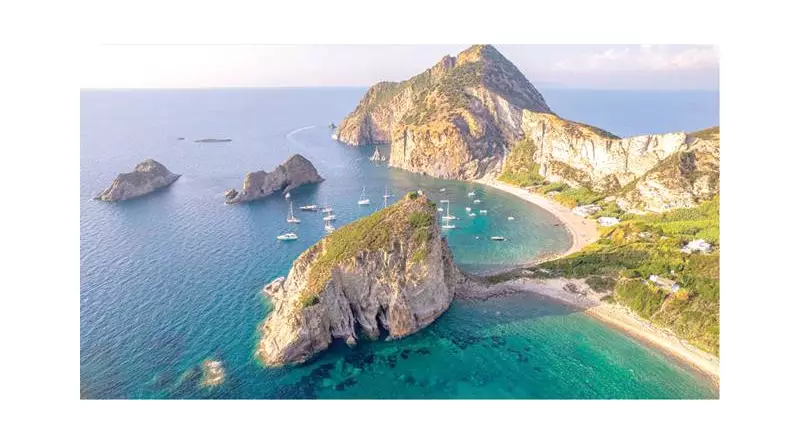
Palmarola stands as a stark contrast to the bustling metropolis of Rome, offering a serene and untouched escape in the Tyrrhenian Sea. This small island, located west of the Italian capital, has no town, no roads, no electricity, and no mobile phone coverage, making it a true off-the-grid destination. On most days, the only way to reach Palmarola is by small boat from Ponza, which is five miles away, adding to its secluded charm.
A Journey to Isolation
Reaching Palmarola from Rome involves a multi-step journey that begins with a train ride to the port of Anzio, followed by a ferry to Ponza. From there, visitors must negotiate with a fisherman or private boat owner for a ride in both directions, as there is no ferry terminal on the island. This lack of infrastructure ensures that Palmarola remains largely absent from tourist itineraries, with many tourists never hearing of it and even many Romans never visiting.
Natural Beauty and Limited Amenities
What draws the people who do make the crossing is not convenience, but the absence of it. Palmarola rises sharply from the water in dramatic volcanic cliffs, broken by sea caves and narrow inlets. There is a single beach, made of pink coral pebbles, and a network of footpaths leading inland, with little sign of modern development. The island's coastline is best explored by dinghy, revealing sea stacks, tunnels, and grottoes that attract snorkelers, canoeists, and scuba divers.

With no permanent residents, Palmarola is a destination shaped more by weather, geology, and seasons than by tourism. The only animals visitors are likely to encounter on land are wild goats, which shelter among the low palms that give the island its name. This creates a primeval, castaway experience that many find unmatched.
Accommodation and Experiences
There is one restaurant on the island, O’Francese, which serves fresh fish and rents out a limited number of basic rooms carved into old fishermen’s grottoes along the cliffs. Guests must book months in advance and stay on a full-board basis, with nightly rooms starting at 150 euros, or approximately $175. This exclusivity adds to the island's allure as a hidden gem.
Maria Andreini, a 44-year-old remote IT worker from Treviso in northern Italy, visits Palmarola each summer with her family. She describes the experience as having "so much, and so little, to do," with days spent snorkeling and suntanning on the beach, and nights stargazing or walking with torches. At dawn, the owners wake guests for a hiking trip to the island's highest peak to admire the sunrise, which she calls "stunning."
Historical and Cultural Elements
Footpaths lead inland from the beach, climbing toward the ruins of a medieval monastery and the remains of a prehistoric settlement, adding a layer of historical intrigue to the natural scenery. Andreini advises visitors to bring hiking boots along with beachwear to fully explore these paths and the island's terrain.
She compares the experience to living like the Flintstones family on holiday, emphasizing the primitive feel of the island. Despite traveling widely, including to destinations like the Maldives, she finds Palmarola unmatched for its spell-binding scenery and proximity to Italy, calling it a fantastic place in her own backyard.
In summary, Palmarola offers a unique escape for those seeking solitude and natural beauty, far removed from the traffic and crowds of Rome. Its volcanic landscapes, limited amenities, and remote accessibility make it a destination for adventurous travelers looking to disconnect and immerse themselves in a pristine environment.