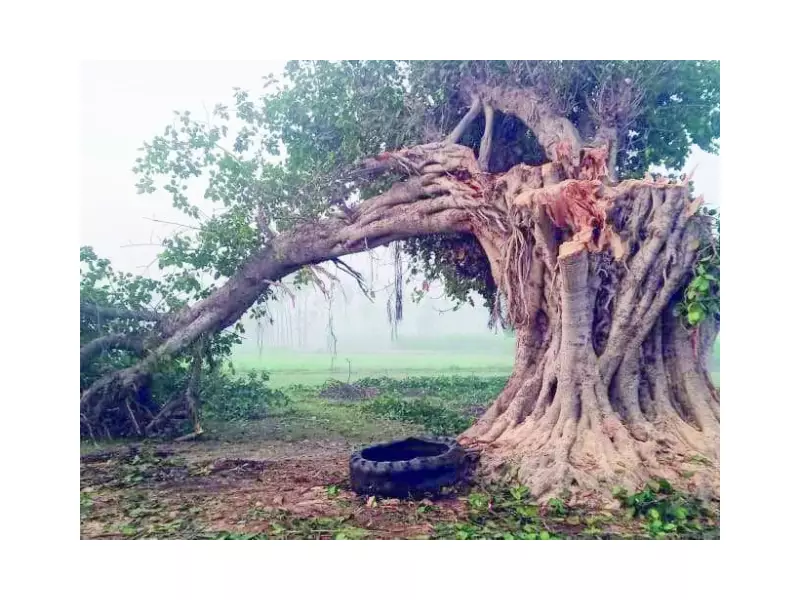
A piece of living history has been brutally erased in Faisalabad district, leaving a community in mourning. A majestic banyan tree, believed to be over a century old and revered as a symbol of ancestral roots, was cut down and sold this week in Ramdiwali village, also known as Arfa Karim Nagar.
A Living Legacy Axed for a Meagre Sum
The tree stood proudly at the dera (farm outhouse) of the late Chaudhry Muhammad Akbar Randhawa. According to local accounts, the late Baba Akbar himself stated eight years ago that the tree was already 109 years old. Having passed away five years ago, his testimony confirms the tree had comfortably crossed the 114-year mark before meeting its end.
Villagers trace their connection to the tree back to their forefathers who migrated from Amritsar in eastern Punjab in the late 19th century. The land became fertile with the advent of canal irrigation from the Jhang Branch, with some accounts placing the settlement around 1880 during the British era. For generations, the banyan was not just a tree; it was a communal hub.

More Than a Tree: A Community Heartbeat Lost
Resident Yasin Masih shared that elders considered the banyan a direct legacy of those early settlers. It served as the village's living room—a place where elders rested, shared water, and held daily discussions. Its sprawling branches offered shelter and its presence symbolized stability.
Despite strong objections from within the community and the family, some members proceeded to sell this historic giant. Zahid Akbar revealed the tree was sold for what many describe as a "meagre" sum of Rs300,000, a transaction that has ignited grief and anger.
Experts Decry the "Murder of Local History"
The felling has drawn sharp condemnation from cultural and scientific experts. Dr. Ijaz Tabassam, a retired scientist at the Ayub Agricultural Research Institute, emphasized that banyan trees hold deep cultural and sacred significance in the region, symbolizing longevity, shelter, and stability.
Echoing the sentiment of loss, Dr. Shakeel Yousaf termed the act nothing short of a "murder of local history." The incident has amplified existing fears among residents about the rapid erosion of rural heritage. They point to increasing land purchases by property developers as a looming threat to their identity and historical landscape, with the fate of the ancient banyan tree serving as a painful precedent.