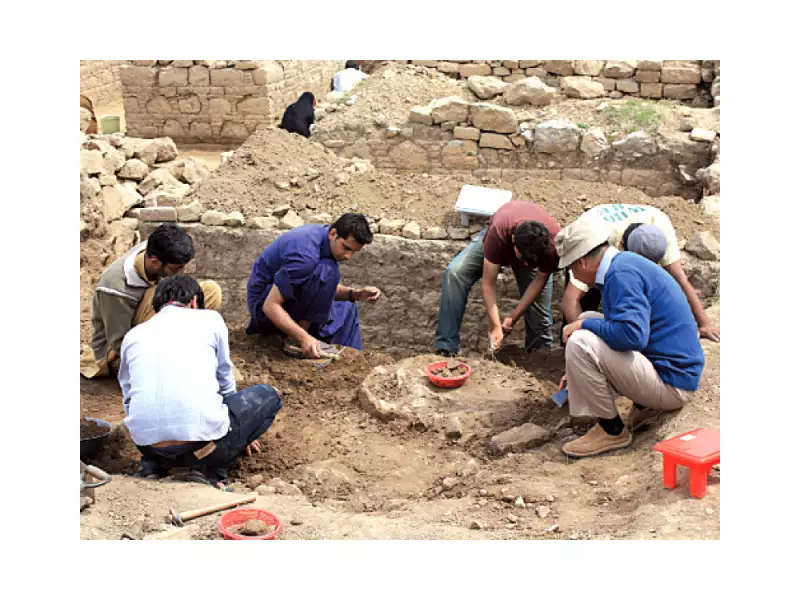
In a landmark discovery, archaeologists working in WAH CANTT have unearthed a wealth of ancient artefacts dating back to the 2nd century BC. The ongoing excavations at the historic site near Taxila are dramatically reshaping our understanding of the region's early urban history and its pivotal role as a major centre of civilisation in South Asia.
A Treasure Trove from the Past
Officials from the Punjab Department of Archaeology announced the recovery of a rich collection of antiquities. The significant finds include finely decorated pottery, ancient coins, and seals from the 2nd century BC. Alongside these, researchers have discovered stone and metal tools, ornamental beads, and large storage vessels.
According to the experts, these artefacts are not random objects. They collectively point towards a well-developed social and economic system that thrived centuries ago. This system was supported by organised craftsmanship and active trade networks, indicating a complex and interconnected society.

Unearthing an Ancient City's Blueprint
The excavations are concentrated at the Bhir Mound, widely regarded as the earliest city of the Taxila civilisation. Here, archaeologists have made structural revelations that are equally impressive. They have uncovered the remains of stone and mud-brick walls, carefully planned streets, and an advanced drainage system.
This urban infrastructure confirms the existence of a sophisticated urban settlement that predates the 6th century BC. The team has successfully identified distinct cultural layers from the 2nd, 4th, and 6th centuries BC. Furthermore, deeper trenches at the site suggest the potential to reveal even earlier phases of human habitation, pushing the timeline of this civilisation further back.
Redefining Taxila's Historical Significance
Deputy Director of the Punjab Department of Archaeology, Aasim Dogar, has hailed these findings as among the most significant archaeological discoveries in recent decades. He emphasised that the evidence goes beyond previous assumptions about Taxila.
The discovery solidifies that Taxila was not merely a centre of learning or political activity, as often highlighted in historical texts. Instead, it was a fully developed urban civilisation with its own robust economic structures, skilled artisans, and complex urban planning. This new perspective elevates Taxila's status, showcasing it as a foundational pillar of early urban life in South Asia long before previously documented periods.