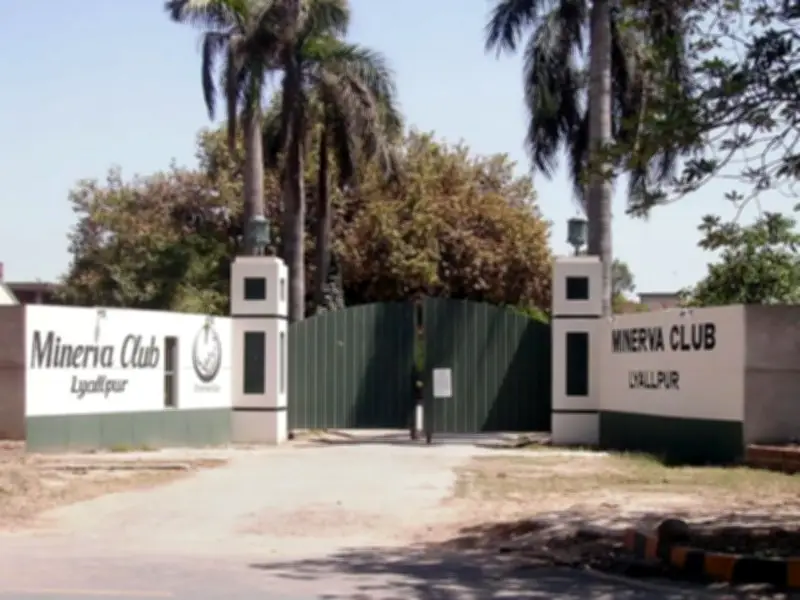
FAISALABAD: The Minerva Club, one of Faisalabad's most recognizable historical landmarks, has been demolished following the expiry of its lease, ending a chapter that spanned more than nine decades in the city's social and cultural history. The district administration, assisted by police and paramilitary personnel, took possession of the property during a joint operation and handed it over to the provincial government. Heavy machinery of the Municipal Corporation was subsequently used to demolish the club building.
Government Action and Land Recovery
According to Assistant Commissioner City Adil Umer, more than 28 kanals of government land, estimated to be worth around Rs40 billion, was vacated during the operation. Officials said the action was taken after the lease of the property expired. The land recovery operation was conducted in accordance with legal procedures following the lease termination.
Historical Significance of Minerva Club
Established in 1935, the Minerva Club was among Faisalabad's oldest recreational and social institutions. During the pre-independence era, it served as a gathering place for British officials and affluent residents of Lyallpur. Over the decades, it evolved into a prominent social venue frequented by lawyers, politicians, businessmen, and other influential citizens. The club featured a range of recreational facilities, including tennis courts, a swimming pool, event halls, and dining areas. It also hosted weddings, social functions, and community gatherings, becoming an integral part of the city's social life.

Concerns Over Heritage Preservation
Human rights activist and lawyer Rana Sufyan Arshad expressed concern over the demolition, questioning why greater efforts were not made to preserve the site despite its historical significance. "This was not just a building; it was part of Faisalabad's identity and heritage," he said. "If the lease had expired, alternative solutions could have been explored to preserve the structure as a historical and cultural landmark." He noted that many other properties operating on leased land had survived through legal remedies or administrative arrangements and questioned why similar efforts were not undertaken in the case of the Minerva Club.
According to Arshad, the property had remained the subject of legal and administrative disputes for several years. Various attempts were reportedly made to reclaim the land, but the matter remained unresolved until the recent operation by authorities.
Public Reaction and Debate
The demolition has sparked debate among residents, historians, and former members of the club, many of whom view the loss as a setback for the preservation of Faisalabad's architectural and cultural heritage. The club reportedly had more than 500 members at the time of its closure. While officials maintain that the operation was carried out in accordance with the law following the expiry of the lease, critics argue that the historical significance of the site warranted special consideration.
Many residents have called for greater efforts to protect the city's remaining heritage sites, warning that once such landmarks are lost, they cannot be replaced. With the Minerva Club now reduced to rubble, a prominent symbol of Faisalabad's social history has disappeared from the city's landscape, leaving behind questions about the balance between land recovery, urban development, and heritage conservation.