The Punjab government has initiated a significant and controversial policy shift, targeting 25 government colleges in Rawalpindi for potential privatisation. This move is part of a broader strategy to alleviate the financial burden on the provincial exchequer by transferring the management and operational costs of these institutions to the private sector.
Details of the Privatisation Plan
The decision was formally communicated through an official notification issued by the Punjab Higher Education Department (HED). The directive mandates the respective deputy commissioners (DCs) across Punjab to compile and submit detailed reports on colleges identified for this public-private partnership model. In Rawalpindi, the list is extensive and includes some of the city's prominent institutions.
The colleges slated for privatisation span both genders and include major names such as Government Postgraduate College for Women, Satellite Town; Government Postgraduate College for Women, Gulzar-e-Quaid; Government Postgraduate College for Women, Asghar Mall; and Government Postgraduate College for Women, Dhoke Kala Khan. On the men's side, institutions like Government Postgraduate College for Men, Asghar Mall; Government Postgraduate College for Men, Satellite Town; and Government College for Men, Dhoke Kala Khan are also on the list. The plan also encompasses numerous intermediate and degree colleges located in areas like Sadiqabad, Misrial Road, Morgah, and Westridge.

Rationale and Government's Stance
The core reasoning behind this drastic measure, as outlined by the government, is purely financial. Authorities argue that the soaring operational expenses of running these colleges have become unsustainable for the provincial budget. By handing them over to private entities, the government aims to offload this financial responsibility while theoretically maintaining, or even improving, the quality of education through private investment and management.
A senior official from the Higher Education Department, speaking on the condition of anonymity, confirmed the development. The official stated that the primary goal is to reduce the government's financial liabilities, suggesting that the private sector could run these institutions more efficiently. The government's role, post-privatisation, would shift from direct management to one of regulation and oversight.
Potential Implications and Concerns
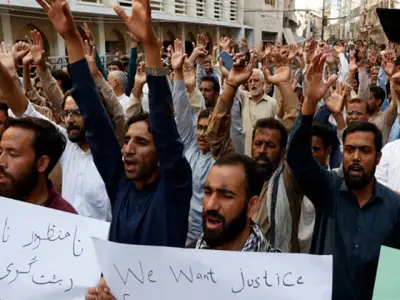
This policy has sparked immediate concern among educators, students, and parents. The most pressing worry is the impact on affordability. Government colleges currently provide higher education at a highly subsidised cost, making it accessible to students from middle and lower-income families. Privatisation could lead to a substantial hike in tuition and other fees, potentially putting quality education out of reach for many.
Further concerns revolve around job security for existing teaching and non-teaching staff, the potential change in curriculum focus, and the overall shift in institutional ethos from a public service to a profit-oriented model. Critics argue that instead of divesting, the government should focus on reforming and adequately funding public education to ensure both quality and accessibility.
The directive to deputy commissioners is a clear indication that the plan is moving beyond the conceptual stage. The detailed reports they submit will form the basis for the next steps in the privatisation process. This development marks a pivotal moment for the education landscape in Rawalpindi, setting a precedent that could be replicated in other districts across Punjab if deemed successful by the authorities.
As the process unfolds, stakeholders are calling for transparency and a thorough debate on the long-term consequences of such a fundamental change in the management of public educational assets.