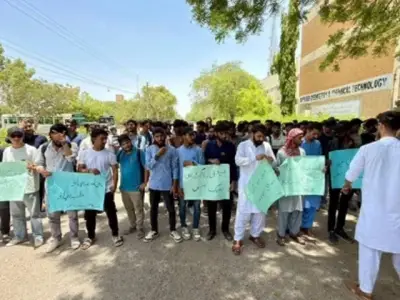
RAWALPINDI: The Punjab Teachers Union (PTU), Educators Association, and Education Pensioners Association have strongly condemned the privatisation of government schools and colleges under the banners of Public-Private Partnership (PPP) and "Schools of Eminence", describing the initiative as a "brutal killing" of the public education system and demanding its immediate withdrawal.
Union Leaders Speak Out
Speaking to the media, PTU President Ramzan Inqalabi, Educators Association President Basharat Iqbal Raja, education leader Akhiyan Gul, and Education Pensioners Association Central Secretary General Shafiq Bhalowalia alleged that approximately 15,000 schools had been outsourced last year alone, resulting in the abolition of nearly 50,000 teaching posts.
According to the union representatives, permanent teachers in the outsourced institutions had effectively been replaced by graduates and MPhil degree holders employed by private managements on monthly salaries ranging between Rs8,000 and Rs10,000. They further claimed that these teachers were not even paid during summer vacations, while principals, headmasters and headmistresses were reportedly receiving salaries of only around Rs12,000 per month.

Exploitative Wage System
"The Punjab government has fixed the minimum wage for an unskilled labourer at approximately Rs45,000, yet teachers are being paid merely Rs8,000 to Rs10,000. This is an exploitative and deeply unjust system," the leaders said. The organisations also criticised the expansion of the Public-Private Partnership model through the newly introduced "Schools of Eminence" programme, under which additional educational institutions are reportedly being handed over to private entities.
They stated that although initial salaries of Rs50,000 to Rs60,000 had been announced for teachers recruited under the Schools of Eminence scheme, such positions offered neither pension nor gratuity, nor any form of long-term financial security. "In effect, the doors to permanent employment are being completely shut on the younger generation," the representatives warned, adding that a similar situation was likely to emerge in colleges that may also be outsourced or converted into "Eminence" institutions.
Broader Social Concerns
The union leaders argued that the education and health sectors had historically provided large-scale employment opportunities for young people, and that continued privatisation would sharply increase the number of unemployed and underemployed graduates across society. They maintained that outsourcing, Public-Private Partnerships and privatisation were not merely issues affecting teachers alone, but broader social concerns impacting unemployed youth and their families as well.