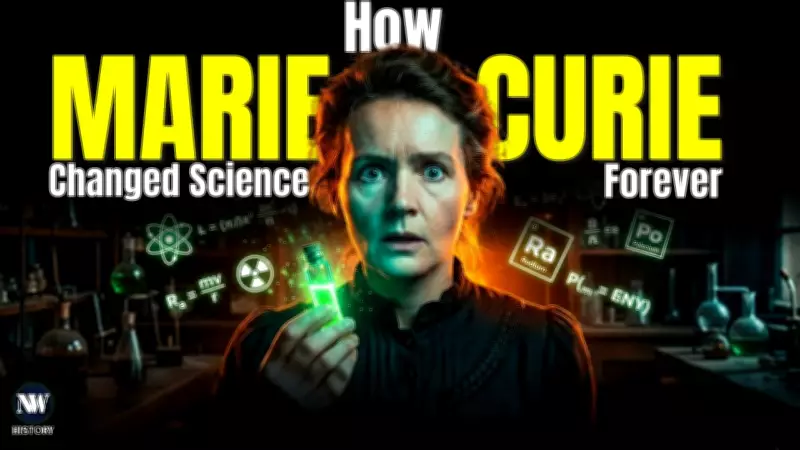
Marie Curie: The Pioneering Scientist Who Achieved Unprecedented Nobel Success
Marie Curie stands as an iconic figure in the annals of scientific history, renowned for her extraordinary contributions to physics and chemistry. Born Maria Skłodowska in Warsaw, Poland, in 1867, she overcame significant societal barriers to become a trailblazer in the field of radioactivity. Her relentless dedication and intellectual prowess led to discoveries that revolutionized modern science and medicine, cementing her legacy as one of the most influential scientists of all time.
Groundbreaking Research and Nobel Recognition
Marie Curie's scientific journey began in earnest when she moved to Paris to study at the Sorbonne, where she met and married fellow physicist Pierre Curie. Together, they embarked on research that would change the course of science. In 1903, Marie Curie made history by becoming the first woman to win a Nobel Prize, sharing the Nobel Prize in Physics with Pierre Curie and Henri Becquerel. This award recognized their joint work on the phenomenon of radioactivity, a term coined by Marie herself, which stemmed from their studies on uranium rays.
Her achievements did not stop there. In 1911, Marie Curie earned her second Nobel Prize, this time in Chemistry, for her discovery of the elements polonium and radium. This made her the first person ever to win Nobel Prizes in two different scientific fields, a feat that remains rare and celebrated to this day. Her research laid the foundation for numerous advancements, including the development of X-ray machines and cancer treatments, showcasing the profound impact of her work on both theoretical science and practical applications.

Challenges and Legacy
Despite her monumental successes, Marie Curie faced immense challenges, including gender discrimination and health risks from prolonged exposure to radioactive materials, which ultimately contributed to her death in 1934. However, her perseverance and brilliance inspired generations of scientists, particularly women, to pursue careers in STEM fields. Today, her legacy is honored through institutions like the Curie Institute in Paris, which continues to advance research in oncology and radiology.
Marie Curie's story is not just one of scientific achievement but also of resilience and innovation. Her work on radioactivity opened new frontiers in science, leading to critical developments in nuclear physics and medical technology. As we reflect on her contributions, it is clear that her dual Nobel Prizes symbolize not only personal triumph but also a lasting impact on global scientific progress.