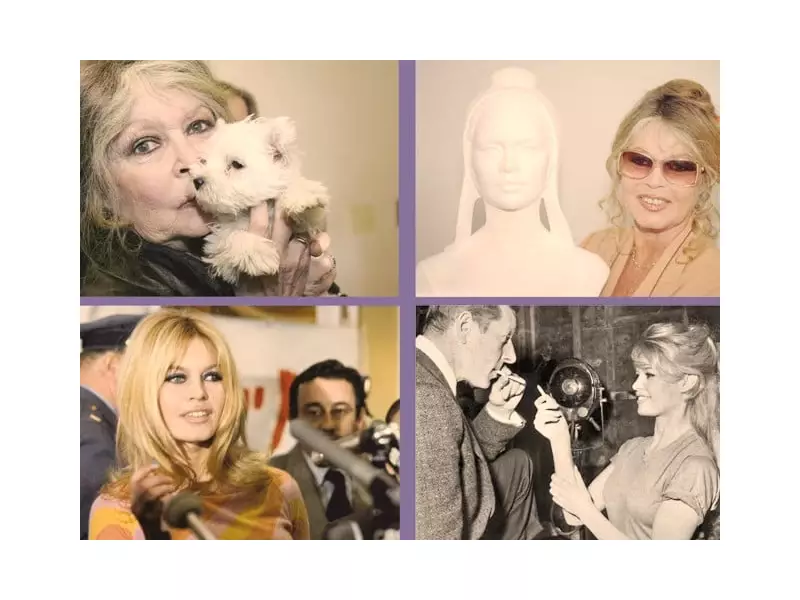
The world of cinema and animal advocacy has lost one of its most iconic figures. Brigitte Bardot, the French screen legend, has died at the age of 91, as announced by her foundation. The cause of her death was not immediately disclosed.
From Shy Girl to Global Sex Symbol
Born in Paris on September 28, 1934, Bardot grew up in a comfortable upper-middle-class family. She described herself as a shy, bespectacled child who felt unattractive. Her life transformed at 15 when she graced the cover of Elle magazine, launching a modelling career that seamlessly led to films.
Her breakthrough was monumental. Directed by her then-husband Roger Vadim, the 1956 film 'And God Created Woman' shot in Saint Tropez, made her an international sensation. Her role as the free-spirited Juliette, especially her barefoot, tousled-hair mambo dance, broke away from the demure heroines of the past. It shocked censors and mesmerized audiences, creating a new archetype of womanhood on screen.

Philosopher Simone de Beauvoir praised Bardot's "dazzling genuineness," noting she didn't try to shock but simply followed her instincts. This authenticity made her a global icon, inspiring artists from Andy Warhol, who painted her portrait, to Bob Dylan, who reportedly wrote his first song about her.
The Prison of Fame and a Life of Turmoil
Despite the adulation, Bardot found global fame to be a horrific ordeal, a prison that robbed her of life's simple pleasures. Her personal life, relentlessly public, was marked by four marriages, numerous affairs, and long battles with depression. On her 26th birthday, she was found unconscious after a suicide attempt on the French Riviera, with rumours of further attempts in later years.
Beyond acting, she recorded music, most famously collaborating with Serge Gainsbourg on the controversial duet 'Je t'aime ... moi non plus'. Her face was even chosen as the model for Marianne, the national symbol of the French Republic, installed in town halls across France.
Yet, she confessed to deep unhappiness despite her beauty and riches. After 42 films, she quit cinema in 1973, calling the industry "rotten," and stated she had given it 20 years, which was enough.
A Fierce Final Chapter: The Battle for Animals
Bardot retreated to Saint Tropez, finding true solace in animals and the Mediterranean landscape. She devoted the rest of her life to animal welfare with uncompromising passion. In 1986, she founded the Brigitte Bardot Foundation, auctioning personal belongings to fund its work, declaring it the only battle that mattered.
Her activism was legendary. She campaigned against whaling, supported activists like Paul Watson, and even threatened to leave France over issues like the euthanasia of sick circus elephants. Her later years, however, were also marked by political controversy due to her support for far-right figures in France, including Jean-Marie and Marine Le Pen.
A Nation Mourns a Legend of the Century
News of her death prompted an outpouring of tributes. French President Emmanuel Macron stated that her films, voice, and passion for animals embodied a life of freedom and "universal radiance," calling her a "legend of the century." Her foundation said she had given up everything to defend animals.
Far-right leader Jordan Bardella said France had lost "the Marianne it loved." Brigitte Bardot, known simply as BB, lived and died on her own terms: a star who reshaped cinema, fled from fame, and ultimately chose animals over people, leaving behind a complex and indelible legacy.