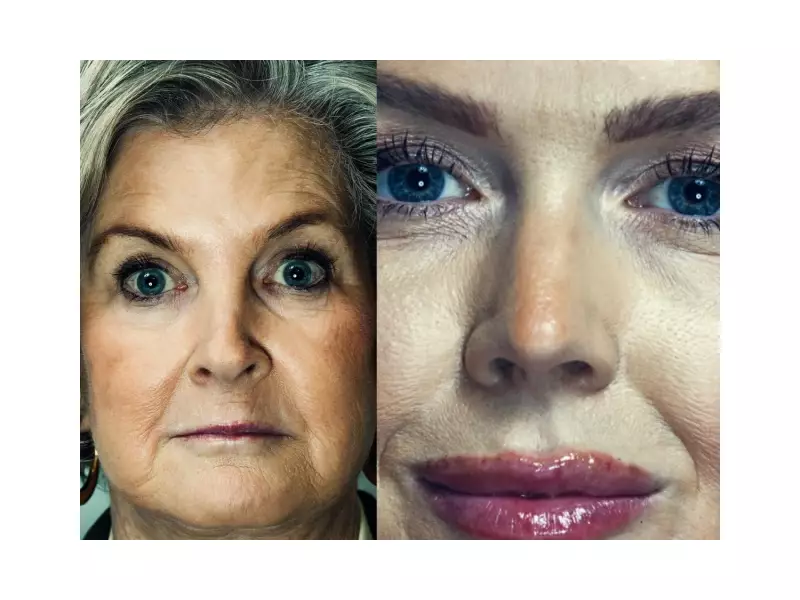
The release of a series of strikingly intimate portraits featuring senior officials from Donald Trump's administration by Vanity Fair magazine has set off a firestorm of reactions across social media platforms. The images, which zero in on the facial details of figures like Vice President JD Vance and Secretary of State Marco Rubio, have been met with a wave of mockery and puzzled comments from online users.
The Portraits That Captured Attention
Published as part of a feature reflecting on the first year of Trump's second term, the portfolio includes tightly framed photographs of several key personalities. The subjects captured on November 13 in their White House offices include White House Chief of Staff Susie Wiles, Vice President JD Vance, Press Secretary Karoline Leavitt, and Secretary of State Marco Rubio, among other senior aides.
Diverging from the typically polished style of official political photography, these images lay bare fine facial textures and details. The portrait of the 28-year-old Press Secretary, Karoline Leavitt, became a particular focal point, amassing over 2,000 comments within just hours of being shared on Vanity Fair's Instagram.

Social Media Erupts with Reactions
The online response was swift and largely critical. Instagram users flooded the comments with descriptions like "jump scare," "done dirty," and "mugshot." Comedian Kelsey Darragh notably quipped, "Jesus Christ a warning next time please," encapsulating the startled reaction of many viewers. The discourse centered on the unflinching and raw nature of the portraits, with many questioning the intent behind presenting the officials in such a revealing light.
The Photographer's Defense and Artistic Vision
Acclaimed photographer Christopher Anderson, who shot the series, addressed the controversy in statements to The Independent. He clarified that the style was consistent with his long-standing artistic approach. "Very close-up portraiture has been a fixture in a lot of my work over the years," Anderson stated. He explained his goal was to "penetrate the theater of politics" and present an unvarnished look at his subjects.
Anderson firmly rejected any suggestion that he aimed to portray the officials in a negative light. He emphasized that he applied the same technique to every subject, using a medium-format camera and controlled lighting to achieve the desired effect. The final image selection, he noted, was based on choosing the strongest representation for each individual. This process included using a candid shot of Marco Rubio alongside his formal portrait.
The accompanying Vanity Fair article primarily focused on Susie Wiles, the first woman to serve as White House Chief of Staff. While Wiles later contested parts of the written feature's accuracy, she offered no comment on the photographs themselves. For Anderson, his core responsibility was to portray what he encountered in front of his lens, even if the resulting images made some audiences uncomfortable. This episode highlights the powerful and often divisive intersection of politics, media, and artistic representation in the digital age.