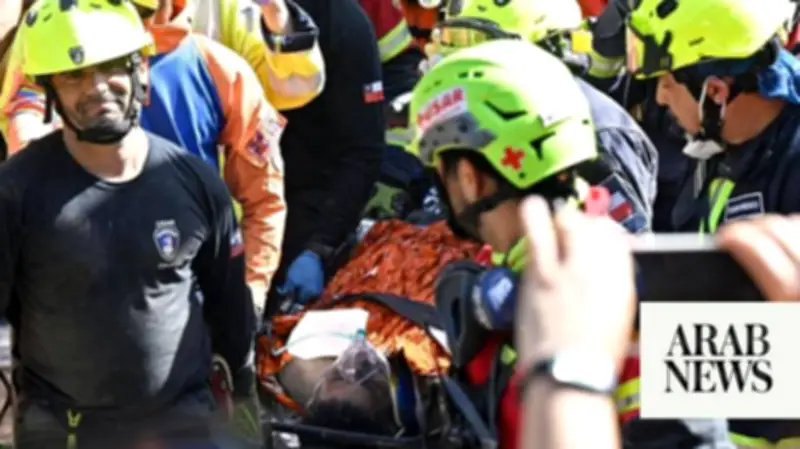
Rescuers pulled a 44-year-old security guard alive from the rubble of a collapsed shopping mall in La Guaira, Venezuela, more than a week after twin earthquakes devastated the country's northern coast. Hernan Alberto Gil was extricated from the nine-story Galerias Playa Grande shopping center on Thursday morning, July 2, 2026, after being trapped for nearly eight days.
Rescue Operation Details
The effort to save Gil began on Monday, June 29, according to Salvadorean President Nayib Bukele, who posted updates on X about the operation involving teams from Chile, the United States, Portugal, Mexico, Costa Rica, and Venezuela. Rescuers provided hydration via tubing but needed to dig two separate tunnels due to the instability of the ruins. They abandoned the first tunnel after determining it could provide structural support but was unsafe for the rescue, prompting a second access route.
Gil was carried out on a stretcher and loaded into an ambulance as cheering rescuers and reporters looked on. His wife, Gusbimar Gonzalez, said: “I’m grateful to God for keeping him alive for so many days, despite not being able to eat or stay hydrated. He endured it all like a warrior.”

Quake Impact and Casualties
The 7.2- and 7.5-magnitude quakes struck less than a minute apart on June 25, 2026, killing 2,295 people, according to the latest government figures. The number of people listed as missing on an unofficial online list dropped to about 38,600 by Thursday morning, down from a peak of nearly 60,000. A United Nations envoy said it was procuring 10,000 body bags for Venezuela, and the USGS estimated more than 10,000 deaths were possible. Catastrophe modeling firm Verisk expects economic losses to exceed $10 billion.
Civilian-Led Response
Venezuela's socialist government has promoted “civilian-military-police unity,” but the disaster response has been led by civilians, many of them volunteers. Victims have spent days digging out loved ones with hands, shovels, and pickaxes, assisted by firefighters, civil protection corps, foreign rescue teams, student doctors, nurses, and civilians who normally work as teachers and veterinarians. Soldiers working alongside civilians in the six collapsed towers of a major public housing project in La Guaira told Reuters they had volunteered to help. Many rescuers have decried a lack of heavy machinery to move huge slabs of concrete.
Oil minister Paula Henao on Thursday said a cargo of diesel was sent from the Paraguana refining complex to La Guaira for rescuers' use. Authorities were also inspecting state-run PDVSA's Catia La Mar fuel terminal for damage, located in one of the areas most affected by the quakes.
Medical Response and Humanitarian Aid
At a main medical center in the Vargas municipality, the flow of patients has eased. Beds and mattresses that filled areas outside the emergency ward eight days earlier had thinned out. Patients requiring specialized treatment are being transferred to hospitals in Caracas after receiving emergency care, said hospital official Carolina Leon. Francia Rodriguez, 61, whose sister was hospitalized after a stroke, said care remained available and she only needed to provide medications.
A Brazilian Navy field hospital that began operating on Monday had treated 180 people by Thursday, according to commander Leonel Mariano. The facility includes an intensive care unit, operating theater, orthopedics, pediatrics, general medicine, and a pharmacy. “We are coordinating buses to bring people here from the shelters,” Mariano said. “We haven’t performed surgery yet, but we’ve had some intensive care cases, some serious cases.”
The World Health Organization said the earthquake compounded an already severe humanitarian crisis and strained a health system struggling to meet demand. Healthcare workers were also among the victims, affecting the medical response, said WHO incident manager Ian Clark. The agency released $1.5 million from its emergency contingency fund and shipped medical supplies including trauma kits, protective equipment, and body bags.

Security and Looting Concerns
Even when security officials are present at collapsed buildings, their presence has not always been welcomed. Some Venezuelans vented frustration on social media, sharing videos showing security officials picking through destruction and taking clothes, appliances, and cash. Reuters has not verified the videos' authenticity, but the Interior Ministry said four crime scene police officials have been detained and removed from their jobs for “appropriating financial assets acquired amid the ruins.”