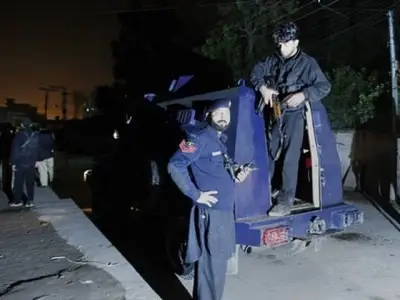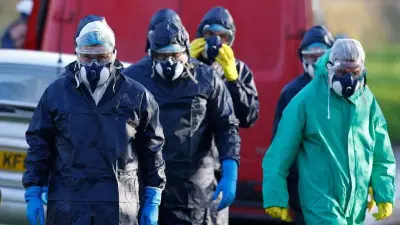
Venezuela's interim president Delcy Rodriguez announced on Thursday that the death toll from the devastating earthquakes has risen to at least 164, with 971 people injured. Rodriguez reported that approximately 30 aftershocks have been recorded following the two strongest quakes on Wednesday. Authorities had initially reported 32 dead and more than 700 injured.
State of Emergency and International Response
On Wednesday, Rodriguez declared a state of emergency after two massive earthquakes caused buildings in the capital to crumble and forced the closure of the country's main airport. US President Donald Trump offered aid, stating on his Truth Social platform, "The U.S.A. stands ready, willing, and able to help! I have instructed all agencies of our government to get ready to move quickly. We will be there for our new and great friends. Early reports are not good!!!"
Details of the Quakes
According to the United States Geological Survey (USGS), the first quake, with an epicenter 21 kilometers west of the coastal town of Moron, occurred at 2204 GMT. Within a minute, a 7.5-magnitude quake struck about 45 kilometers away. USGS described the event as a doublet: "This magnitude 7.5 mainshock was preceded by 39 seconds by a 7.2 foreshock." The tremors struck at depths of 22 kilometers and 10 kilometers, respectively.

Impact on Infrastructure and Casualties
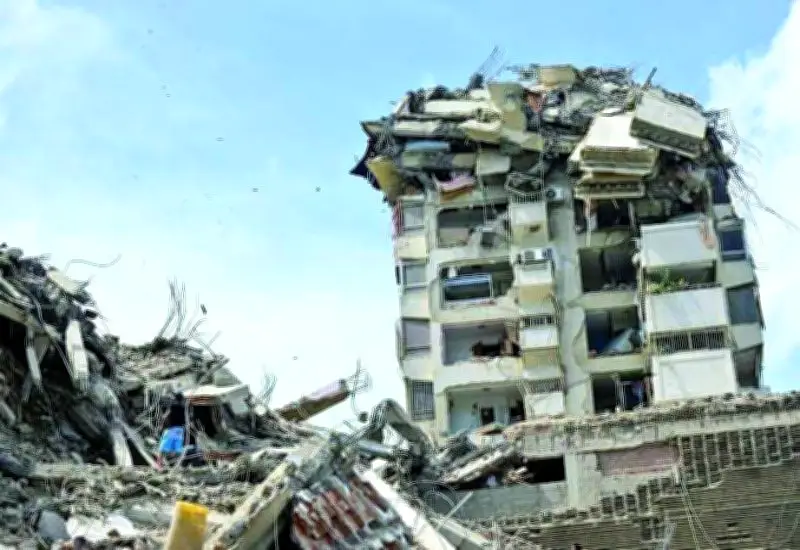
An AFP journalist witnessed a 22-story building destroyed in Caracas's Altamira neighborhood, where volunteers climbed over rubble and people cried out relatives' names. The Maiquetia International Airport near Caracas was closed due to "serious damage" to its infrastructure, according to Rodriguez. Social media posts showed severely damaged facilities at the airport. Interior Minister Diosdado Cabello said it remained unknown if there were fatalities, but some people were injured and buildings had collapsed. He asked people to leave their homes and noted that gas supplies had been cut to several buildings as a precaution.
Eyewitness Accounts
Odalis Escalona, a 54-year-old bank employee, recounted, "The stairs came away, the whole wall cracked. Things fell from the ceiling. It was horrible." Shopkeeper Heidi Romero, 42, who was on the top floor of a shopping center when the quake struck, said, "It was unbelievable, I don't even know how long it lasted. We went out through the emergency stairs; that's how they got us out." Carmen Guedez, 69, was with her bedridden sister when she felt the jolt: "It kept getting stronger. I started to see the windows begin to move and then everything shook. We couldn't get out. The neighbors are still out on the street."
Regional Impact and Aftershocks
The hardest-hit states were Trujillo, Carabobo, Miranda, and La Guaira, according to Cabello. The quake was felt as far away as Bogota, Colombia, where alarms sounded and some residents evacuated buildings. Freddy Tovar, coordinator of Colombia's National Seismological Network, said they had received more than 200 reports of tremors nationwide. He warned that aftershocks could be widely felt across Colombian territory. The Colombian disaster management agency UNGRD ruled out the possibility of a tsunami, and the US National Tsunami Warning Center confirmed, "NO tsunami, NO danger from a recent earthquake."
Historical Context
The strongest tremors in earthquake-prone Venezuela's recent history occurred in the northeast in 1997, killing 73 people, and in Caracas in 1967, when 236 people died. Shortly after the twin quakes on Wednesday, a 7.2-magnitude tremor hit northern Japan, with no casualties or material damage reported.