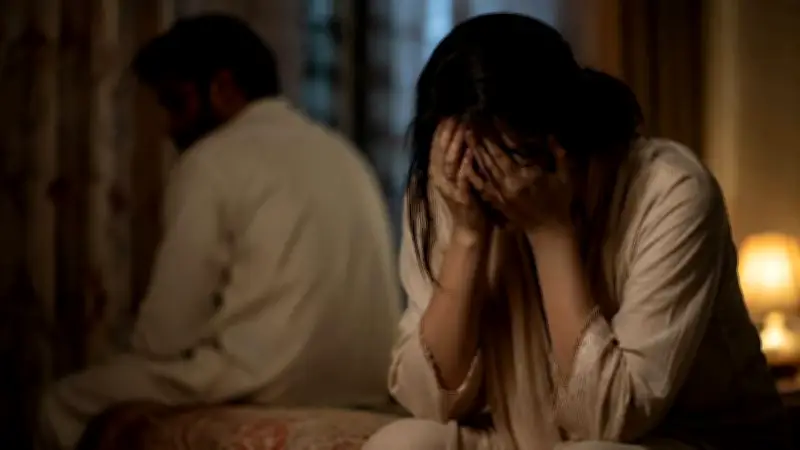
The recent killing of a woman in Karachi, allegedly following a dispute over marital intimacy, has shocked the nation. While the incident demands legal accountability, it also raises a broader question that rarely enters public debate: what does this tragedy reveal about the changing nature of marriage and family life in Pakistan?
The Family as a Cornerstone Under Strain
For decades, the family has been celebrated as the cornerstone of Pakistani society. Anthropologist Stephen Lyon argues that kinship and family networks have historically provided stability and cohesion even when political and economic institutions appeared fragile. In many ways, the resilience of Pakistani society has rested upon the resilience of its family system. Yet beneath this image of stability, signs of strain are increasingly visible. Rising divorce rates, growing reports of domestic violence, marital conflicts, and changing gender expectations suggest that the family institution is undergoing a significant transformation. The Karachi incident may be an extreme manifestation of tensions that often remain hidden behind the walls of respectability and silence.
The Neglected Dimension of Marital Intimacy
One of the most neglected dimensions of family life in Pakistan is marital intimacy. Marriage is treated as a social necessity, a religious obligation, and a cultural ideal. However, discussions about emotional compatibility, sexual expectations, consent, and conjugal well-being remain largely absent from public discourse. As a result, many couples enter marriage with expectations shaped by tradition, family pressures, social norms, and, increasingly, digital media, but with little preparation for negotiating intimacy and emotional needs. This silence matters because intimacy is not merely a private issue; it is also a social one. Expectations surrounding marriage, sexuality, and gender roles are shaped by culture and power relations. Men and women are often socialised differently, producing unequal understandings of rights, responsibilities, and expectations within marriage.

Socially Produced Mismatch in Marital Intimacy
In our recent work on erotic capital and gender relations, we highlighted what may be described as a socially produced mismatch in marital intimacy. This mismatch is not simply an individual problem. It emerges from broader social conditions, including gender inequalities in health and nutrition, the socialisation of women into passive and accommodating roles, patriarchal regulation of female sexuality, and the limited privacy often associated with extended family living arrangements. Together, these factors shape how intimacy is experienced and negotiated within marriage.
Cultural Change and the Gap Between Expectations and Realities
At the same time, Pakistani society is experiencing unprecedented cultural change. Social media and digital technologies have transformed how people understand relationships, romance, sexuality, and personal fulfilment. Younger generations are increasingly exposed to ideas of emotional compatibility, mutual consent, and individual choice. Yet many marriages continue to operate within traditional frameworks emphasising authority, obedience, and sacrifice. This creates a growing gap between expectations and realities. Sociologically, this can be understood as a period of transition in which established norms no longer fully correspond with emerging social realities. The consequences often surface in the most intimate spaces of social life—the family.
Lack of Research and Public Discussion
What is striking is how little research and public discussion exist on these issues. Family studies in Pakistan have focused extensively on fertility, family planning, and women's health. Still, much less attention has been paid to marital intimacy, emotional compatibility, and the changing dynamics of conjugal relationships. Cultural discomfort has rendered these subjects social blind spots despite their significance to family stability.

Call for a Broader Conversation
The Karachi tragedy should therefore prompt more than outrage. It should encourage a broader conversation about the conditions shaping marital relationships in contemporary Pakistan. Strong families are not sustained solely by tradition or social obligation. They are sustained through communication, mutual respect, emotional understanding, and the ability of couples to negotiate changing expectations. If the family remains the cornerstone of Pakistani society, then the quality of the marital relationship must become a matter of serious scholarly, policy, and public concern. The future of family life in Pakistan may depend not only on preserving institutions but also on understanding how those institutions are being transformed by changing social realities. The Karachi incident may be the tip of the iceberg. Beneath it lies a larger, largely invisible crisis of intimacy, communication, and adjustment within Pakistani families—one that can no longer be ignored.