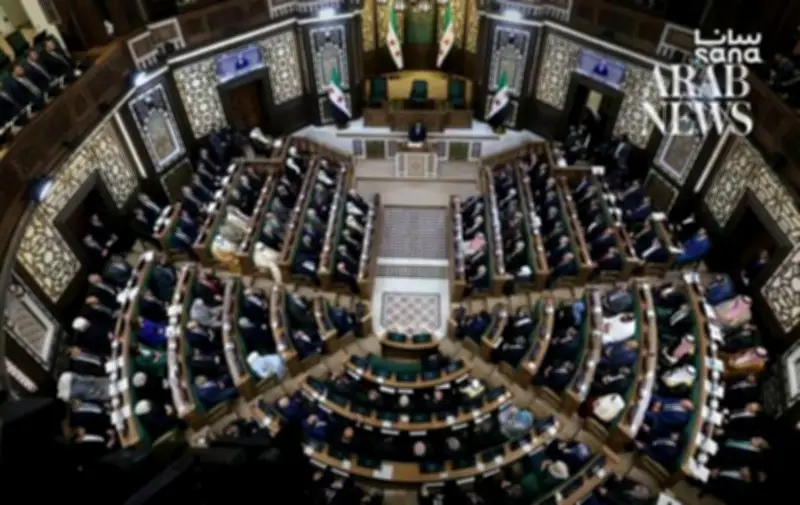
Syria's transitional parliament convened its inaugural session on Sunday, state television reported, marking a key step in the country's political transition after the ouster of longtime ruler Bashar Assad in December 2024. The assembly is tasked with drafting a new constitution and laying the groundwork for democratic governance.
Background and formation of the parliament
The new authorities dissolved the former rubber-stamp legislature after Assad's fall and adopted a temporary constitutional declaration to cover a five-year transition period. In October last year, local committees appointed by the electoral commission — itself appointed by President Ahmed Al-Sharaa — began selecting two-thirds of the 210 members. Sharaa appointed the remaining 70 members this week.
On Sunday, 206 members were present, excluding the Druze-majority Sweida province in the south and one deceased member. Sweida has not yet designated its representatives following sectarian bloodshed last year, though Sharaa appointed two members from the province. In formerly Kurdish-run areas of the north and northeast, the selection process was held earlier this year after Damascus authorities assumed control and signed a deal integrating Kurdish institutions into the state.

Opening remarks and mandate
In his opening address, President Sharaa urged lawmakers to be "models of responsibility and competence, and to contribute to establishing a culture of dialogue, the rule of law, and respect for institutions." He added that Syria was writing "a new chapter in its history."
The parliament's renewable 30-month mandate includes forming a committee to draft the constitution, approving the budget, and proposing and amending laws. However, analysts point to major challenges regarding the legislature's independence and the separation of powers.
Criticism and challenges
Syrians have criticized the mechanism for forming parliament, citing the absence of direct elections and the underrepresentation of women. Civil society organizations have also decried the concentration of all executive power in Sharaa's hands, amid the absence of a prime minister. The underrepresentation of Syria's various religious and ethnic groups has also drawn criticism.
Representatives were sworn in and are expected to elect the assembly's presiding body later on Sunday. The success of the transitional process remains uncertain as the country navigates its post-Assad era.