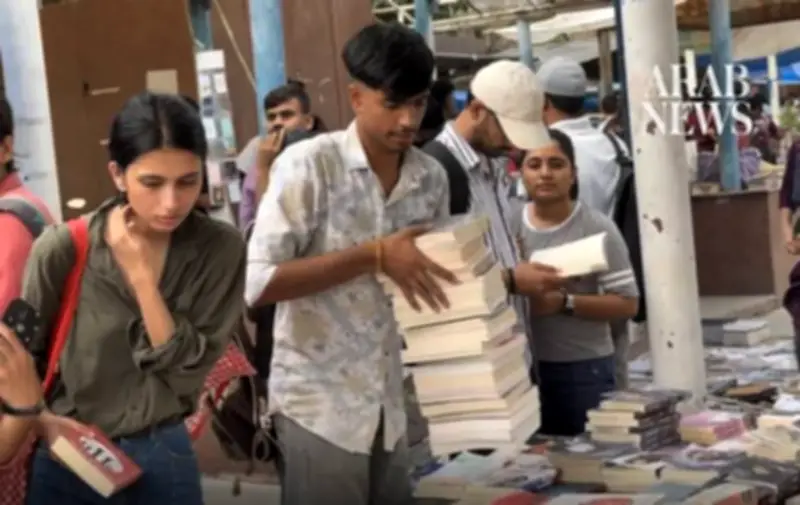
For 70 years, the Sunday book bazaar in Delhi has been a cornerstone of the city's reading culture, offering a vast array of secondhand books at affordable prices. Originally located in Daryaganj, the market moved to Mahila Haat in 2019, but continues to attract thousands of visitors each week.
A 70-year-old tradition
Qamar Sayed, president of the Daryaganj Sunday Patri Welfare Association, has been selling books at the market since the 1970s. He notes that the bazaar began with a few shops and grew as literacy and education expanded. Today, there are 320 stalls at Mahila Haat, each offering a unique selection of books ranging from romances to classics, manga to philosophy.
“We procure these books from publishers, from junk shop owners who procure books from students, households. We reach out to these scrap dealers and procure the books, then we dust them off and present them here,” Sayed told Arab News.

Affordability and accessibility
The market's affordability makes it a haven for students and budget-conscious readers. Aishani Tomar, an undergraduate student of English and political science, visits almost every Sunday to find textbooks and new reads without straining her budget. “I find a lot of students here that are preparing for various exams, too. I think it’s important to make reading accessible for everyone, and books here are sold obviously cheaper,” she said.
Jatin Nagdev, a Delhi University student, prefers physical books over digital versions because they help increase his attention span and reduce eye strain. “When you are increasing the attention span, you can literally imagine what the stories are. It could increase your imagination,” he said.
Shaping Delhi's reading habits
Kanupriya Dhinagra, author of the monograph “The Sunday Book Bazar,” credits the market with expanding Delhi's reading culture over decades. “It is also motivating a lot more people to not just read for their exams, but also have a library of their own because here they can afford it,” she told Arab News.
Dhinagra emphasizes the serendipitous nature of the market, which encourages readers to explore beyond their usual lists. “What that accessibility offered to the readers of Delhi is to go beyond a set reading list. That could happen because of the seemingly chaotic and serendipitous nature of this book market, which would allow a reader to not just look for a certain book, but also find a lot more.”
Enduring appeal in a digital age
Despite the rise of online retailers and e-books, the Sunday book bazaar remains popular. Sellers report no drop in interest, especially among students who value the tactile experience of physical books and the thrill of discovery. The market continues to be a vibrant hub for book lovers from all over Delhi, who spend hours browsing and often leave with stacks of books.