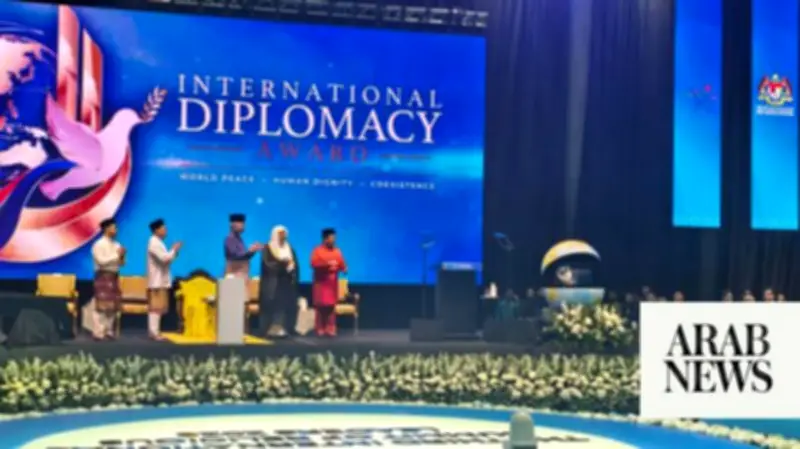
The Third International Summit of Religious Leaders, held at the Kuala Lumpur Convention Center, was opened by the Sultan of Perak, Sultan Nazrin Shah, in the presence of Malaysian Prime Minister Anwar Ibrahim and Muslim World League Secretary-General Mohammed Al-Issa. The event brought together about 2,000 young participants from diverse religious and cultural backgrounds under the theme "Religious Leaders and Youth Empowerment."
Call for Preventive Peace
Addressing the gathering, Al-Issa urged religious leaders to embrace what he described as "preventive peace," arguing that humanity's greatest challenge is stopping conflicts before they begin. "Humanity is not tested after wars erupt; it is tested before they begin," he said. "The world does not need heroes who win wars as much as it needs wise people who prevent them."
Al-Issa warned that religious hatred, Islamophobia, racism, and sectarianism are increasingly exploited by extremists and political actors, particularly through digital platforms targeting young people. He stressed that religious institutions must move beyond rhetoric and translate shared ethical values into education, dialogue, and practical action. "True harmony in our world lies not in extinguishing the flames of conflict, but in preventing them from igniting in the first place," he added.

Religious Diplomacy and Youth Engagement
The Muslim World League chief emphasized that religious diplomacy can complement traditional political diplomacy by mediating disputes, bridging divisions, and promoting long-term peacebuilding. "Our religious and humanitarian voice says that the world does not need more weapons; it needs more wisdom to prevent their use," he said. Al-Issa also called for a just resolution to the Palestinian issue through a two-state solution and announced the launch of an International Diplomacy Award aimed at promoting global cooperation and harmony.
Prime Minister Anwar Ibrahim noted that growing geopolitical fragmentation, weakening multilateral institutions, and ongoing conflicts, including the war in Gaza, underscore the importance of religious leaders as voices of moderation and moral authority. He urged interfaith engagement to focus on practical cooperation, highlighting Malaysia's experience as a multicultural and multireligious society. "Genuine harmony is based not on uniformity but on the fair management of differences," Ibrahim said.
Challenges of Digital Age
Sultan Nazrin Shah warned that many young people are increasingly influenced by algorithm-driven digital environments that amplify division and mistrust. "Young people today are asking fundamental questions: Where do I belong? Who can I trust? What values still matter?" he said. He argued that peace cannot be simply declared at international gatherings but must be cultivated within communities and everyday relationships. "In an age of fragmentation, coexistence becomes an act of courage," he added.
Samy El-Sherif, secretary-general of the Islamic Universities League and Egypt's former minister of information, told Arab News that the growing detachment of young people from religion is a global challenge. He attributed this to a disconnect between religious leaders and younger generations, as well as a digital skills gap limiting institutions' ability to engage youth online.
Badriyah Saleem of Malaysia's UTM University agreed that technology presents both challenges and opportunities, calling for greater investment in digital religious education and youth-led initiatives. She said workshops, training programs, and integration of technology into religious teaching can bridge generational divides and strengthen engagement with younger audiences.
The summit comes amid growing international concern over rising religious intolerance, online radicalization, and the impact of geopolitical conflicts on social cohesion. Participants called for stronger cooperation between faith leaders, governments, and civil society to promote peace and understanding.