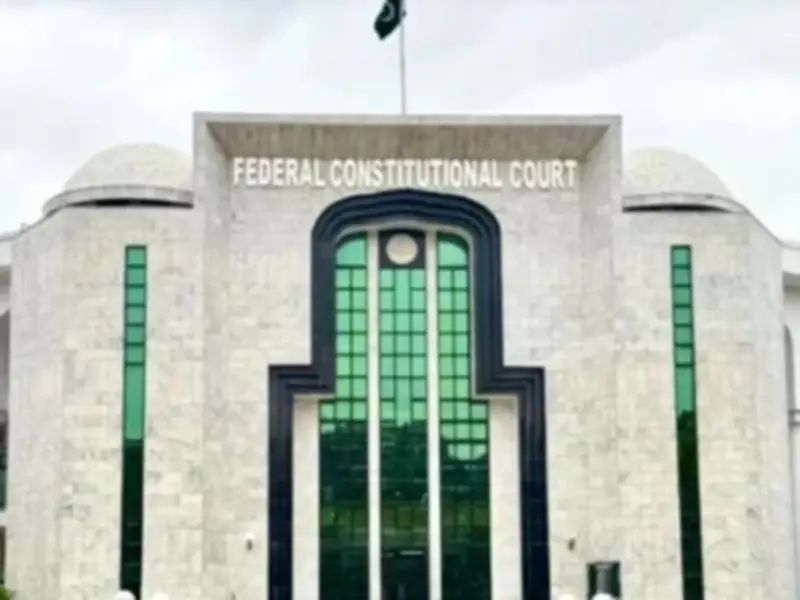
The Federal Constitutional Court (FCC) has delivered a landmark ruling on the powers of interim governments, declaring that appointments made during the caretaker period in Khyber-Pakhtunkhwa (K-P) were unlawful, while simultaneously upholding the constitutionality of a law enacted to terminate those employees.
Court's Observations on Caretaker Mandate
A three-member bench headed by Justice Hassan Azhar Rizvi issued a detailed written judgment, emphasizing that caretaker governments are strictly limited to managing day-to-day administrative affairs and cannot undertake decisions of a permanent nature. The court observed that a caretaker setup can never be equated in authority with an elected government, adding that all actions taken by such governments are subject to prior approval from the Election Commission of Pakistan.
According to the judgment, the recruitment of employees constitutes a permanent action rather than a temporary measure, and therefore falls outside the mandate of a caretaker government. The court ruled that all appointments made between January 2023 and February 2024 during the caretaker period in K-P were illegal.

Constitutionality of Termination Law Upheld
The court held that the K-P Employees Termination Act 2025 does not violate fundamental rights. It clarified that the fact that a law affects certain individuals does not automatically render it unconstitutional. The judgment noted that the K-P Assembly, formed following general elections, holds the constitutional authority to legislate, including enacting laws related to public employment.
Consequently, the court dismissed appeals filed by the terminated employees who had challenged both their dismissal and the law under which they were removed.
Background of the Case
The case pertains to the recruitment of Grade-IV employees by the K-P caretaker government ahead of the 2024 general elections. Following the general elections, the PTI government terminated those employees through legislation, prompting the affected individuals to challenge the move in court. The ruling sets a significant precedent regarding the scope of interim governments' powers in Pakistan.