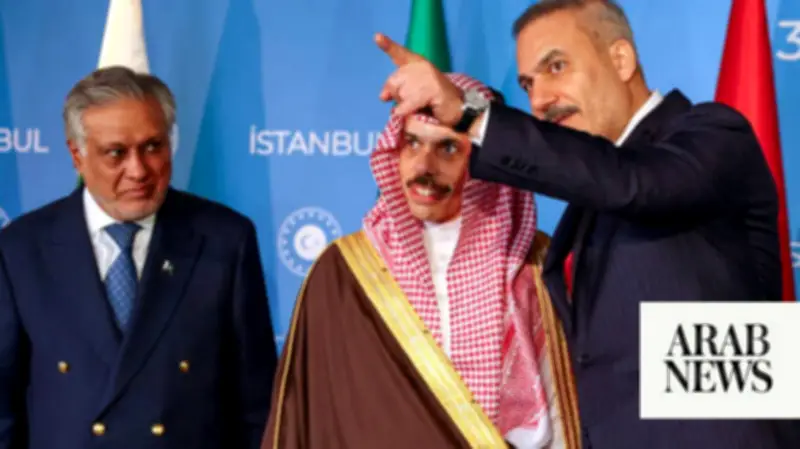
Pakistan's Foreign Minister Ishaq Dar discussed the progress on the US-Iran peace deal with his counterparts from Saudi Arabia, Switzerland, and Turkey this week, the foreign ministry said on Sunday, hoping that an agreement would pave the way for lasting peace in the region.
Diplomatic Engagements
Dar, who also serves as Pakistan's deputy prime minister, spoke to Turkish Foreign Minister Hakan Fidan on Saturday to discuss the evolving regional situation. Both welcomed the encouraging progress toward an understanding between the US and Iran, the Pakistani foreign ministry said.
They expressed hope that these positive developments would pave the way for lasting peace and stability in the region, the ministry added.

Dar also spoke to Saudi Foreign Minister Prince Faisal bin Farhan on Saturday. They both welcomed that the US-Iran negotiations were at their final stage, hoping peace would prevail. The Saudi foreign minister appreciated Pakistan's consistent and sustained efforts in support of mediation and dialogue throughout the process, the foreign ministry said.
Additional Calls
Dar discussed progress on the US-Iran peace deal with Swiss Foreign Minister Ignazio Cassis on Saturday and Egyptian Foreign Minister Dr. Badr Abdelatty in separate phone calls. All three agreed to remain in close contact on regional developments, the foreign office said.
Pakistan's Mediation Role
Pakistan has mediated between the US and Iran since their war began in February. Islamabad hosted the first round of direct talks between the two sides in April and has exchanged messages and peace proposals between the two sides.
US President Donald Trump and Pakistan's Prime Minister Shehbaz Sharif both expect that the long-elusive peace deal between the US and Iran will be signed today. However, Iran has refused to commit to signing the deal on Sunday, saying instead that an agreement could happen in the coming days.
Momentum toward a peace agreement between the US and Iran built up days after Iran exchanged fire with the US and Israel earlier in the week, threatening to rupture the ceasefire and push the Middle East back into war. Iran's nuclear program and highly enriched uranium have long been at the center of tensions with the US and Israel.