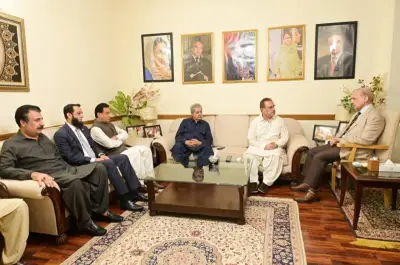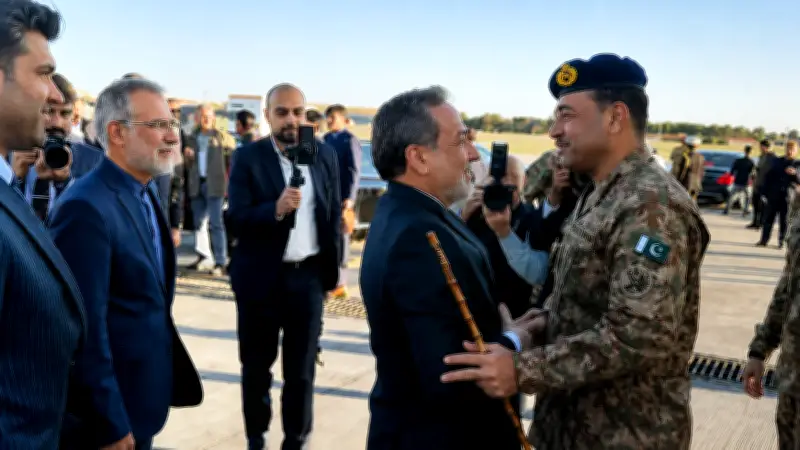
It took Pakistani mediators months of relentless negotiations, extensive travel, message-passing, and even enduring backlash from the UAE—one of its oldest and most trusted allies in the region—to forge an agreement acceptable to both the United States and Iran. Pakistan remained constantly engaged with both parties, even when missiles were being exchanged.
Pakistan's Diplomatic Balancing Act
Many predicted Pakistan would be forced into a war with Iran due to its mutual defense agreement with Saudi Arabia. Instead, Pakistan used that leverage to reduce tensions between Saudi Arabia and Iran at a time when the IRGC was targeting Saudi oil facilities. Some suggested Pakistan might allow the US to use its soil for a ground invasion of Iran, but Pakistan flatly refused.
Two of Pakistan's closest allies in the region—Turkey and Azerbaijan—were attacked by Iran. Pakistan advised patience and diplomacy. Without diminishing their efforts, Turkey and Azerbaijan understood their own interests best. These are the only two countries, besides Pakistan, that have fought wars and are capable of doing so. They grasp geopolitics better than many of Pakistan's other regional allies.

Collective Regional Efforts
Diplomacy of this magnitude is rarely the work of a single country. Qatar, Turkey, and Saudi Arabia all played constructive roles in preventing the crisis from escalating further. Qatar remained unwavering in supporting the Pakistan-led mediation and consistently backed every serious attempt to keep communication channels open. Saudi Arabia deserves appreciation for the patience and restraint it demonstrated during a period of high regional emotions.
Whatever disagreements exist over who deserves the most credit, ending the war required cooperation from multiple regional actors. All those who worked toward de-escalation deserve recognition.
Criticism of Pakistani Credibility
It pains Pakistanis to see people, whose bills are paid by governments of brotherly countries, sharing Indian propaganda on social media to prove that their paymasters—not Pakistan—brokered the deal. These individuals, despite hosting military bases on their soil and allowing those bases, airspace, and facilities to be used by Americans, somehow claim more credibility with Iran than Pakistan.
These critics ignore how Pakistan has suffered since 2015 for not sending its army to Yemen, because Pakistan did not want to risk involvement in an intra-Muslim conflict. The UAE had promised to teach Pakistan a lesson then, over a decade ago. Yet parties to that conflict—involving Iran directly—think they enjoyed more credibility with Iranians than Pakistan. That is astounding.
Pakistan's Unique Position
For decades, the Pakistani embassy in Washington DC has maintained a designated Iran's Interests Section, as the US refuses to allow an Iranian embassy on its soil. Pakistan is home to the largest Shia population in the world after Iran. In a normal world, that might not mean much. But for a country operating under 'Wilayat-e-Faqih' (Rule of the Islamic Jurist), where sect and religion are central to political identity and administration, it matters for a country sharing a 909-km border with Iran.
Pakistan has been consistent on Israel for longer than Iran. Iran, under the Shah, recognized Israel in 1950, becoming the second Muslim-majority country after Atatürk's Turkey to establish diplomatic ties. Pakistan has withstood all pressure for 80 years to soften its stance on Israel. Even on the eve of the Islamabad process, Pakistan's defense minister openly called Israel “an evil, a curse for humanity,” making clear to Israelis and Americans that Pakistan would not consider joining the Abraham Accords.
Strategic Alignment with Iran
Pakistan and Iran are tied at the hip. Pakistan's interests align more closely with Iran than with any other country claiming more leverage. Insiders have said for months that Pakistan would not let the Islamic Republic fall and allow Israel to establish a base at its doorstep. Pakistan pushed the Americans out in 2012 because it did not need CIA listening posts nearby. That policy hasn't changed.

Pakistan is China's closest ally, closer than Iran, which spent years pursuing Russian fighters while delaying Chinese aircraft acquisitions. Pakistan knows its nuclear capability is threatened by Israelis, Indians, and Americans alike. Pakistan has a restive province, Balochistan, part of which lies across the Iran-Pakistan border. Israel's MEMRI runs a Balochistan Studies Project employing a dummy X account called Mir Yar Baloch as a Special Advisor. On February 28, when Israel attacked Iran, its prime minister called on all ethnic groups in Iran, including the Baloch, to rise up against the “yoke of tyranny.”
Thus, Pakistan enjoyed more credibility in Iran than all other countries combined. Pakistan refused to offer its soil or airspace for attacks on Iran. It was Pakistan's military and political leadership that first opened peace dialogue with Iranians, back when Arabs were angry about retaliation despite their honey-tongued press releases urging “calm on both sides.”
National Sentiment and Economic Impact
On April 1, Dawn newspaper reported that the Iranian rial's value increased fourfold against the Pakistani rupee during March, well before the ceasefire was announced, at a time when the White House threatened to wipe out a whole civilization “never to be brought back again.” Pakistan believed in Iran when it faced threats of nuclear annihilation. No amount of Indian propaganda amplified by Western orientalists can take that credit away.