History rarely announces the arrival of a new diplomatic actor with fanfare. More often, states rise in influence gradually through a succession of crises in which they demonstrate competence, restraint, and strategic relevance. The true test of diplomacy is not eloquence in conference halls but the ability to shape outcomes when tensions escalate and established mechanisms falter. In recent years, Pakistan has begun to exhibit precisely these qualities.
Amid regional conflict, great-power competition, energy insecurity, and the gradual erosion of international norms, Islamabad has quietly emerged as a state increasingly capable of managing disruption rather than merely reacting to it. While this transformation remains incomplete and significant structural challenges persist, Pakistan's recent conduct suggests a country seeking to redefine its place in the international system—not as a passive observer of geopolitical events, but as an active contributor to regional stability and crisis management.
A Changing International Environment
The international environment in which Pakistan now operates is markedly different from that of previous decades. The assumptions that underpinned the post-Cold War order are increasingly under strain as wars in Europe and the Middle East, intensifying strategic rivalry among major powers, disruptions to global trade routes, and the weakening authority of international institutions combine to produce a world where uncertainty has become the norm rather than the exception.

In such circumstances, influence belongs not only to those possessing overwhelming military or economic power, but also to those capable of managing complexity. States that can facilitate communication, maintain relationships across competing blocs, and preserve stability during periods of tension acquire strategic value disproportionate to their size. Pakistan has begun to occupy precisely this space.
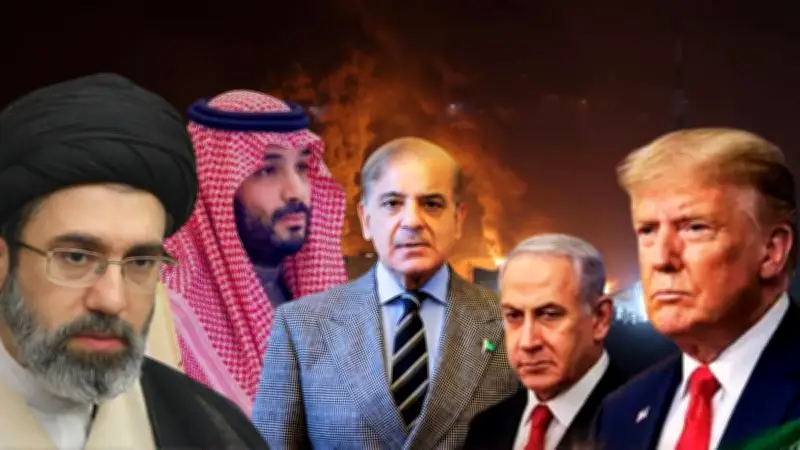
Recent regional crises have highlighted Islamabad's ability to sustain productive relationships with actors who often stand on opposite sides of geopolitical divides. Pakistan has simultaneously preserved its strategic partnership with China, maintained functional engagement with the United States, strengthened ties with the Gulf monarchies, and cultivated constructive channels with Iran. This balancing act is neither accidental nor easy. It reflects a growing recognition among Pakistani policymakers that influence in the twenty-first century derives less from rigid alignment and more from strategic flexibility.
Hard-Power Response in a New Era of Global Disorder
The significance of this approach became particularly evident during recent efforts aimed at encouraging de-escalation amid mounting regional tensions. Pakistan did not seek the spotlight nor attempt to portray itself as a conventional mediator. Instead, it contributed to shaping the conditions under which dialogue remained possible. The real significance of Pakistan's recent diplomatic performance lies not in any single crisis or ceasefire initiative, but in the broader pattern that is beginning to emerge.
Traditional mediation implies neutrality and distance; Pakistan's role increasingly resembles something more sophisticated—the management of outcomes within constraints. By maintaining communication with multiple actors, avoiding inflammatory rhetoric, and emphasising stability over confrontation, Islamabad demonstrated an ability to influence the trajectory of events without becoming a direct party to the conflict.
Nuclear Deterrence and Crisis Management
A critical component of Pakistan's growing relevance remains its status as a responsible nuclear power. Nuclear capability fundamentally alters how a state is perceived and treated within the international system, providing deterrence against direct coercion and compelling even powerful actors to approach crises involving Pakistan with caution and calculation. Yet Pakistan's significance extends beyond deterrence itself.

Decades of navigating complex security challenges have endowed its institutions with a sophisticated understanding of escalation dynamics. Crisis management is not an abstract academic concept for Pakistan but an operational reality rooted in lived experience. This familiarity with deterrence, signalling, and conflict management enables Islamabad to appreciate both the dangers of miscalculation and the importance of maintaining diplomatic channels even during periods of intense tension. In an era where strategic misunderstandings can rapidly spiral into wider conflict, such capabilities represent a form of diplomatic capital increasingly valued by regional and global actors alike.
Geographic Position as Strategic Utility
Equally important is the recognition that Pakistan's diplomatic evolution cannot be understood solely through the prism of security. Geography remains one of the country's greatest assets, but geography alone does not create influence. Strategic location becomes meaningful only when it is transformed into strategic utility. Positioned at the crossroads of South Asia, Central Asia, the Gulf, and Western China, Pakistan occupies a location whose importance is being rediscovered as global supply chains become more vulnerable and critical maritime routes face growing uncertainty.
The challenge is no longer simply to serve as a transit route but to evolve into a genuine corridor state capable of facilitating trade, energy flows, and regional commerce. In a world increasingly defined by disruption, the ability to provide continuity becomes a source of power. Pakistan's ports, connectivity projects, transport networks, and energy corridors, therefore, represent more than infrastructure; they are instruments through which the country can translate geography into lasting geopolitical relevance.
Economic Vulnerability as a Constraint
Yet no discussion of Pakistan's growing diplomatic role can ignore the central constraint that continues to shadow its ambitions: economic vulnerability. Strategic autonomy ultimately rests upon economic foundations. A state struggling with fiscal instability, debt pressures, recurring balance-of-payments crises, and dependence on external financial support inevitably faces limitations in exercising fully independent foreign policy choices. Economic weakness narrows options, reduces negotiating leverage, and increases susceptibility to external influence.
The lesson is therefore clear. Diplomatic relevance and economic resilience must advance together. Military capability may secure sovereignty in the narrow sense of territorial defence, while diplomacy may enhance international influence, but neither can permanently compensate for economic fragility. Pakistan's pursuit of strategic autonomy will remain incomplete so long as its economic foundations remain uncertain.
A Broader Pattern of Engagement
The real significance of Pakistan's recent diplomatic performance lies not in any single crisis or ceasefire initiative, but in the broader pattern that is beginning to emerge. The country has demonstrated an ability to engage multiple actors simultaneously while preserving its own interests. It has shown that restraint, communication, and strategic balance can generate influence in an increasingly polarised international environment.
More importantly, it has suggested the outlines of a new role for Pakistan—one that moves beyond the traditional stereotypes of a security state or frontline ally and towards something more nuanced: a state capable of shaping outcomes, managing constraints, and contributing to regional stability through diplomacy rather than confrontation.
An Opening, Not an Arrival
This evolution should not be mistaken for an arrival. It is an opening. Pakistan still faces formidable challenges, from economic reform and institutional capacity to governance and political stability. Yet the opportunity is real. If Islamabad can institutionalise its recent diplomatic gains, strengthen its economic foundations, and develop the confidence to articulate its own strategic narrative, it may gradually emerge as one of the most consequential middle powers in the broader Asian and Middle Eastern landscape.
In a fragmented world increasingly defined by uncertainty, countries capable of preserving dialogue, facilitating cooperation, and managing crises will matter more than ever. Pakistan has begun to demonstrate that it can be one of them. Its greatest contribution may not be the resolution of every conflict, but the creation of the political space in which conflicts can be contained, dialogue can continue, and stability can endure. In an age of disorder, that is no small achievement; it is the foundation upon which lasting diplomatic influence is built.