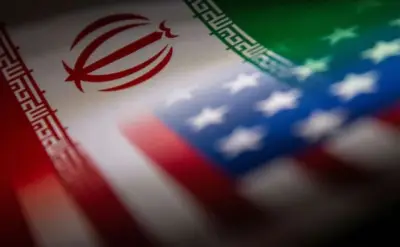
The conclusion of a peace agreement on the Persian Gulf conflict is on the horizon, leaving a vital aspect to be addressed: the establishment of a viable regional management architecture. Unless a permanent structure for conflict management is established and the states reach a strategic accommodation with Iran, the security concerns will go unanswered, thereby allowing extra-regional powers to manipulate the many seams of discord within the regional context.
The foundation of the Arab side of the Persian Gulf is built on foreign investment and the steady flow of tourists of all kinds; only peace in the region will encourage foreign entrepreneurship. On the other hand, Iran, with a huge and dynamic population of 90 million, needs sustainable economic development and social tranquillity to solidify its role as an emerging middle power in the Middle East. For that, it needs to reallocate its resources from defence to economic projects.
It might seem odd to the Western observer that, even during the height of recent crises, meaningful lines of communication were established between Iran and Saudi Arabia, as well as between Iran and Qatar, and messages of understanding were exchanged. Nevertheless, for indigenous researchers, this is not surprising, as the history of mutual understanding dates back centuries. After all, the people of these nations have existed side by side for thousands of years, dealing with matters such as trade and the sharing of values and knowledge. Iran, though non-Arab, occupies a pivotal position within the mosaic of Islamic civilisation, which reached its zenith in the 16th and 17th centuries. The cultures and aspirations of Gulf societies mingled, understanding each other’s psyches and needs. Staying together, they prosper, while the other choice is not even an alternative.

Photo Exhibition in Istanbul Honours Quaid-i-Azam’s 150th Birth Anniversary
To go deep into the dynamics of the Persian Gulf region, we need to examine the environment that emerged after the British withdrawal in 1970-71. There has been a series of ad hoc measures with economic, political and security agendas, especially among the six oil-rich Gulf monarchies — Bahrain, Kuwait, Oman, Qatar, Saudi Arabia and the United Arab Emirates (UAE) — which first established the Gulf Cooperation Council (GCC) in 1981. Before this, although the Organization of the Petroleum Exporting Countries (OPEC) was functional, it expanded its membership in 2016, including Iran, though with a limited role. However, whatever regional arrangements exist to date, they clearly lack long-term strategic coherence and have no mechanism for addressing mutual concerns among these countries.
This vacuum created an insecure regional environment, in which external powers, especially the United States, were relied upon with the assumption that US security guarantees would resolve all outstanding issues. However, the recent conflict has demonstrated that the US is not only unable to guarantee the security of its Gulf partners but also struggles to protect its own forces stationed in these countries. Iranian strikes on American military installations in these countries also inflicted considerable damage on regional oil and gas infrastructure, which tarnished the facade of the Gulf as a secure haven for capital for the international community, which transferred vast amounts of global wealth to the region through money laundering, capital accumulation in Dubai’s banking sector and extensive real estate purchases by affluent individuals from the Global South. Additionally, multinational corporations from the United States and Europe established regional headquarters there, drawn by perceptions of stability. However, the brief but intense period of hostilities has revealed that these foundations were largely illusory.
Alhamra Honours Veteran Actor Firdous Jamal’s Contributions
Looking forward, if the ruling elites of the Gulf states conduct a serious post-conflict assessment and derive any lessons from this war, they are likely to move away from their previous reliance on external powers with the realisation that entrusting their security to the United States or any other outside actor has made them more insecure instead. (To be continued)

Dr Farooq Hasnat & Dr Zamurrad Awan
Dr Farooq Hasnat is a Professor of Politics & International Relation and Dr Zamurrad Awan is Associate Professor of Political Science at Forman Christian College