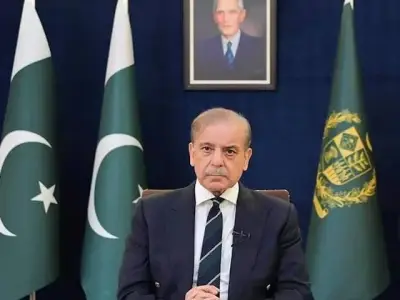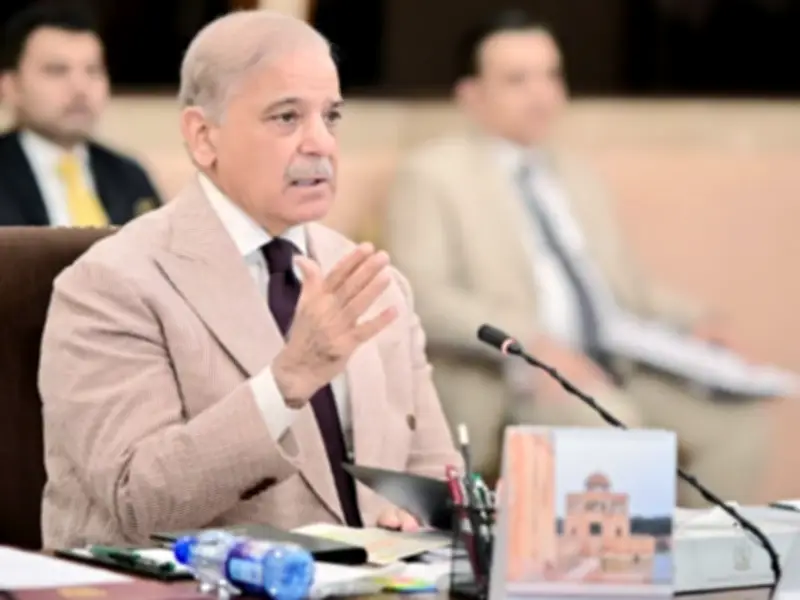
Prime Minister Shehbaz Sharif will hold bilateral meetings with delegations from Iran, the United States, Qatar, and Switzerland during his visit to Bürgenstock, Switzerland, where he is participating in high-level talks on implementing the Islamabad Memorandum of Understanding (MoU), the Foreign Office (FO) said on Sunday.
Bilateral Meetings to Reaffirm Commitment to Dialogue
According to the FO, the meetings will be held “to reaffirm Pakistan's enduring commitment to dialogue and durable peace in the region.” The prime minister, accompanied by Chief of Army Staff and Chief of Defence Forces Field Marshal Syed Asim Munir, traveled to Switzerland Saturday night to attend the talks, which the FO described as “the first formal engagement after the signing of the Islamabad MoU on June 17, 2026.”
Background of the Islamabad MoU
The talks in Switzerland mark the first formal follow-up engagement since the signing of the agreement earlier this week. Senior delegations from Iran, Qatar, and the United States are participating in the discussions. The FO said, “Pakistan will continue to support and advance the implementation of the understandings reached between the Islamic Republic of Iran and the United States.”

Highlighting Islamabad’s diplomatic role, the FO said Pakistan’s facilitative efforts reflected its “principled, balanced, and constructive approach throughout the crisis,” including “hosting earlier rounds of US-Iran talks and sustained diplomatic contacts that culminated in the Islamabad Memorandum of Understanding.”
PM Shehbaz as Mediator
On Thursday, PM Shehbaz signed the 'Islamabad Memorandum of Understanding' as a mediator, formalizing a major diplomatic breakthrough between the United States and the Islamic Republic of Iran. Israel, left out of the peace talks, has distanced itself from the US-Iran accord and kept up fighting against the Iranian-allied Hezbollah militant group in Lebanon, raising questions about whether the agreement would hold.
The US and Israel launched the war on Iran on February 28, assassinating the 86-year-old Supreme Leader Ayatollah Ali Khamenei and military leaders on the first day. It quickly spiraled into a regional conflict that has killed more than 7,000 people, mostly in Iran and Lebanon; driven up energy prices; renewed inflationary pressures; and sparked concerns about a major food supply crisis in developing countries.
Key Provisions of the Agreement
The 14-point agreement extends a ceasefire announced in April by another 60 days, including in Lebanon, to allow the two sides to negotiate a final truce. Both US President Donald Trump and Iranian President Masoud Pezeshkian have digitally signed the memorandum in English and Farsi, US and Iran officials said, with Iran's foreign ministry saying the agreement was already in effect as of Wednesday.
Trump signed just before a grand dinner with French President Emmanuel Macron at the Palace of Versailles, the site of the signing of the eponymous treaty that formally ended World War One. The US and Iran released the text of the Islamabad MoU that their presidents signed on Wednesday to end their war.
Trump's Threats and Remarks
However, US President Donald Trump had threatened to resume attacks and kill Iranian officials if they failed to honor their commitments. Trump, attending the G7 with other leaders in France, also withdrew at least one of his stated rationales for attacking Iran in the first place, saying it would be "unfair" for Tehran not to have ballistic missiles, having previously vowed to obliterate them. "We're going to bomb the hell out of them if they violate the agreement," Trump said of Iran at a press conference. "I don't want them to. I want them to honor the agreement." He also called Iranians "smart people" as US and Iranian negotiators work on a permanent truce over the coming 60 days, which Trump said he hoped would usher in peace in the Middle East and lower oil prices.
Iran's leaders did not address the new threats while celebrating the moment, releasing photographs of what is believed to be the first agreement signed by both a US and Iranian president since the Islamic Republic's founding in 1979.