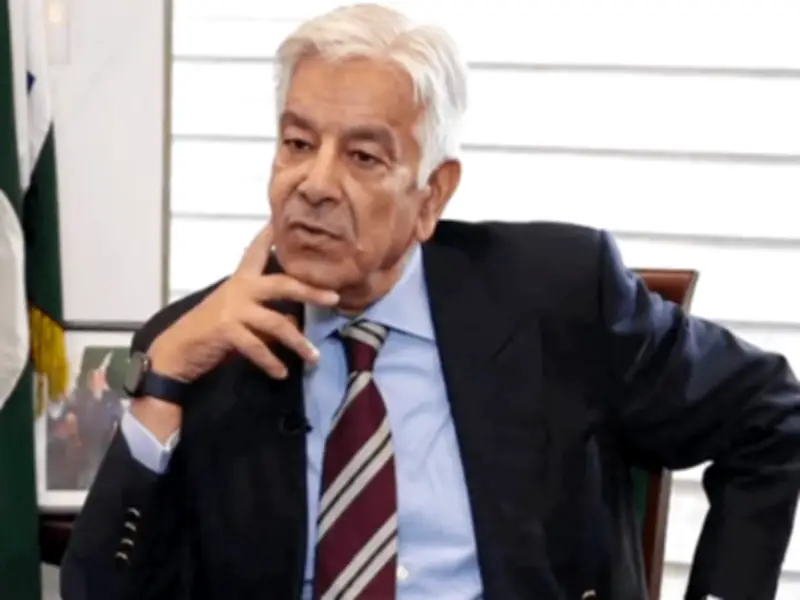
The National Assembly's budget debate took a sharp turn on Tuesday as Defence Minister Khawaja Asif stated that laws in the past were discussed in meetings attended by intelligence officials, triggering renewed political debate over alleged institutional roles in lawmaking.
Khawaja Asif's Admission
Speaking on the floor of the House, Khawaja Asif said, "We used to legislate in the presence of ISI officers." He added that he had attended meetings at the residence of former Speaker Asad Qaiser where discussions were held with individuals sent by former DG ISI General Faiz. "I admit that at Asad Qaiser's house, we used to fine-tune laws in the presence of ISI officers. I want to lighten the burden of my conscience by speaking the truth," he said. He further noted that during deliberations on several legislative measures, including amendments to anti-money laundering laws, intelligence officials had provided input on legislative direction.
Opposition Reaction
The opposition benches reacted strongly to the broader tenor of the budget debate. PTI lawmaker Junaid Akbar Khan lambasted governance and institutional conduct, alleging that members often praised institutional heads because they expected to benefit from the same system in future. He claimed "it has been four years of an establishment-imposed government." He slammed the finance minister and said the government had no real connection with ordinary citizens, asserting that even the prime minister functions only after seeking permission. Junaid Akbar Khan further alleged that constitutional norms and institutional respect had been undermined, while those raising dissenting voices were being disqualified. He said that if justice could not be delivered, "then the judiciary should be shut down because the people cannot bear its extravagant expenditures."

PPP's Defense
Responding to opposition criticism, PPP lawmaker Abdul Qadir Patel defended institutional performance-based recognition, saying praise for leadership was based on achievements rather than allegiance. He noted that political and military leadership had played a decisive role in global developments, adding that Pakistan had contributed to preventing a wider international conflict. He hailed Chief of Army Staff General Asim Munir as a "hero, whether someone accepts it or not." Patel also rejected allegations of political bargaining against the PPP, saying the party acted only in the national interest.
Diplomatic Achievements
Asif also lauded Pakistan's recent diplomatic engagements, saying the country had achieved outcomes that "no one thought possible" in both Iran-US diplomacy and regional security developments. He praised coordination between political and security leadership, particularly at a time of heightened regional challenges, and said institutional alignment should be acknowledged rather than criticised.