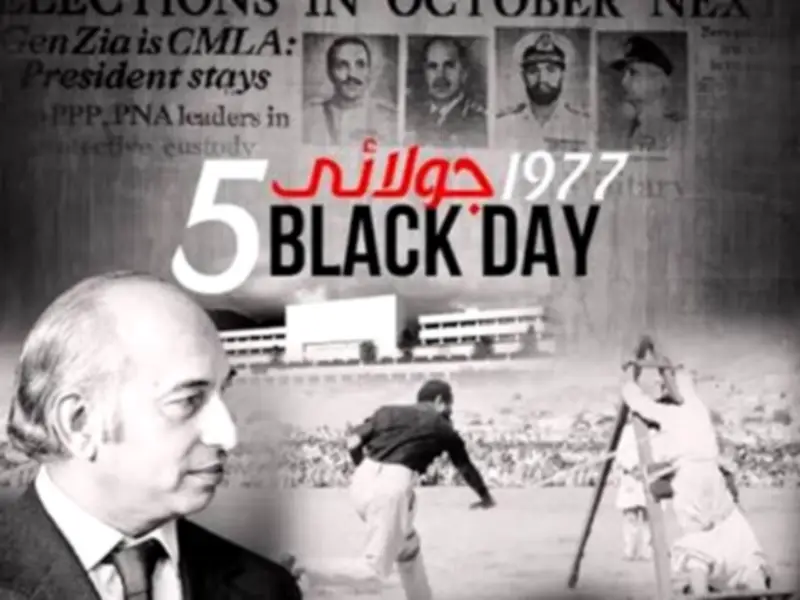
July 5, 1977, stands as a pivotal date in Pakistan's history, profoundly affecting its political, constitutional, and democratic trajectory. On this day, martial law was imposed, interrupting the democratic process and leading to long-term consequences for state institutions and governance. The event is often cited as a turning point that reshaped the nation's political landscape.
Background of the 1977 Crisis
In 1977, Pakistan faced severe political tensions between the government of Prime Minister Zulfiqar Ali Bhutto and opposition parties. The general elections held in March 1977 were marred by allegations of rigging, leading to widespread protests and a breakdown in dialogue. Despite hopes for a constitutional solution, the situation escalated, culminating in the military takeover on July 5, 1977, led by General Muhammad Zia-ul-Haq.
The martial law was justified by the military as a temporary measure to restore order and pave the way for new elections. However, history shows that this transitional period extended for years, altering Pakistan's political system. According to political analysts, the interruption of democratic processes during this time had lasting effects on the country's institutions and public trust.

Impact on Democracy and Constitution
The imposition of martial law on July 5, 1977, dealt a severe blow to Pakistan's democratic journey. The 1973 Constitution, which had been unanimously adopted and represented a national consensus, was suspended. This constitution, with its principles of federalism, judicial independence, and fundamental rights, remains the cornerstone of Pakistan's legal framework. The event underscored the fragility of democratic institutions when faced with political crises.
According to Sindh Senior Minister, "The real strength of any state is not the change in governments but the supremacy of the constitution, its stability, and the trust of the people." The period after July 5 saw restrictions on political activities, limited space for dissent, and a slowdown in democratic evolution, which affected state stability and social attitudes for years.
Zulfiqar Ali Bhutto's Legacy
Zulfiqar Ali Bhutto holds a prominent place in Pakistan's political history. He brought common people into national politics, empowering workers, youth, and the middle class. His government achieved significant milestones, including the unanimous approval of the 1973 Constitution and the initiation of Pakistan's nuclear program, which later became a cornerstone of national defense. However, his tenure also faced criticism and political opposition.
Bhutto's arrest after July 5, 1977, his controversial trial, and subsequent execution in 1979 are considered one of the most tragic chapters in Pakistan's history. Legal experts and historians continue to debate the fairness of the case. Despite differing opinions, Bhutto's name remains central in discussions on Pakistan's political evolution.
Benazir Bhutto's Perspective
Shaheed Mohtarma Benazir Bhutto, in her autobiography "Daughter of the East," described July 5, 1977, as a decisive tragedy not only in her life but also for Pakistan's democracy. She argued that the day ended an elected government and severely damaged the democratic process. Benazir Bhutto spent her political career advocating for the restoration of democracy, constitutional supremacy, and the people's right to vote.
According to her, "The only lasting solution to political differences lies in the popular mandate, the supremacy of the constitution, and the democratic process." Despite facing imprisonment, exile, and personal trauma, she remained committed to democratic ideals. Her struggle is seen as a symbol of continuity in Pakistan's democratic tradition, emphasizing tolerance, constitutional institutions, and political processes as guarantees of national stability.

Long-Term Consequences
The period following July 5, 1977, left a profound impact on Pakistan's political, social, and constitutional development. Restrictions on political activities, limited space for dissent, and stagnation in the democratic process emerged as key challenges. Journalists, lawyers, and civil society activists faced difficulties in exercising their rights. These experiences highlight the importance of freedom of expression, political participation, and fundamental civil rights in a democratic society.
Democracy is not merely about holding elections but encompasses constitutional supremacy, rule of law, mutual respect among institutions, transparent accountability, and public participation. When these elements are strengthened, the state becomes more stable and responsive to the aspirations of the people. The events of July 5, 1977, serve as a reminder that sustainable stability is achieved through dialogue, constitutional processes, and public trust, not through force.