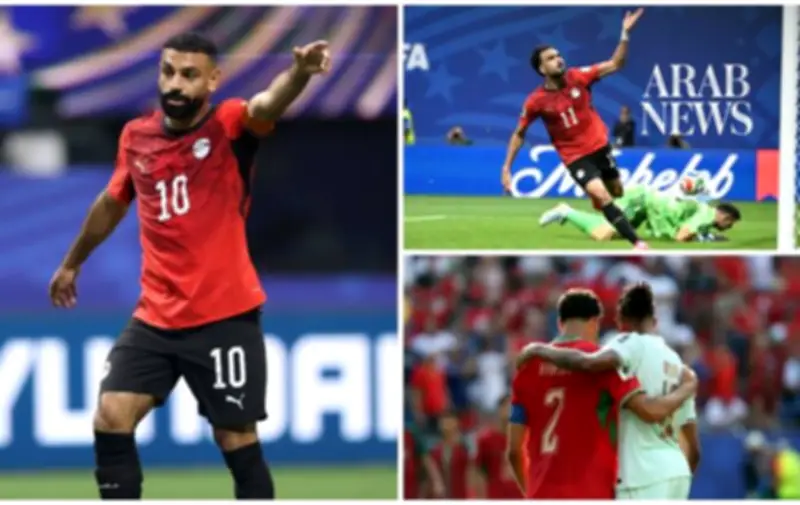
As the last of eight Arab teams was eliminated from the final rounds of the 2026 FIFA World Cup, American Arab community leaders and sports enthusiasts voiced concerns over what they perceived as bias by FIFA referees and officials during several matches.
Eight Arab Teams Eliminated
The World Cup returned to North America after 32 years, co-hosted by Canada, Mexico, and the United States. The tournament attracted intense international interest, including a visit by Jordan’s King Abdullah II to the Dallas Stadium for the match against Argentina on June 27. All eight Arab nations have now exited the tournament following Morocco’s 2-0 quarter-final loss to France. Egypt was the first Arab team to qualify for the World Cup in 1934, but no Arab team has ever won the tournament or reached the final.
Community Leader Optimistic Despite Losses
Chicago Arab Retail Business Association Chairman Mohammed Abdullah told Arab News: “The future is bright for Arab football and we continue to hope that an Arab team will win the FIFA World Cup. The United States did a very good job hosting FIFA and did so while spending far less than Qatar spent on the previous World Cup competition. I am hopeful that the participation of Arab teams in future tournaments will lead to even better results. We have already seen significant progress, with Arab teams becoming more competitive and Morocco making an impressive run deep into the tournament.” Abdullah noted that many American Arab restaurants and businesses experienced surges during the games as groups hosted watch parties, receptions, and gatherings, citing a watch party for Egypt’s Round of 16 match against Argentina hosted by Mary Alexander-Basta, the Egyptian-American mayor of Bolingbrook, Illinois.

Refereeing Bias Allegations
Veteran sports coach Abder Ghouleh told Arab News that many in the community were hopeful that Egypt and Morocco might break the record and make it to the final on July 19 at MetLife Stadium in East Rutherford, New Jersey. “Morocco made it to the final eight, showing the world again that they are an elite world team. But they just couldn’t overcome France, which has some of the most talented front line players in World Cup history with Kylian Mbappe Lottin, Michael Akpovie Olise, and Masour Ousmane Dembele,” Ghouleh said. He highlighted the controversy surrounding the Egypt-Argentina game: “Egypt continues to have a talented team and had a lead against top contender Argentina but lost in the end. The consensus among worldwide commentators and fans was that the officiating was obviously biased as Argentina had 13 fouls but received zero yellow cards. Selective enforcement of rules and use of the VAR system in Argentina’s favor further reinforces FIFA as a corrupt organization only interested in money and making sure their golden boy Messi makes it to the final. Though Egypt had a heart-breaking loss, they gained the admiration of the world and also Arab Americans.” Ghouleh also alleged that Argentina fans displayed a “shockingly open racist and thuggish attitude” during the game.
FBI Investigation and FIFA Response
The controversy is aggravated by news that the FBI is investigating allegations that the Argentina Football Federation engaged in money-laundering of more than $300 million through a Florida-based company, TourProdEnter LLC. A record eight Arab nations—including Qatar, Iraq, Jordan, Saudi Arabia, Algeria, and Tunisia—qualified for the 2026 World Cup due to the expanded 48-team format, Ghouleh noted. WCPT 820 AM Radio Talk Show host Mohammed Faheem said that the controversies involving players in games against Muslim nations cast a dark cloud over the games. “The allegations of unfair officiating, especially in the Egypt vs Argentina game, should be investigated when supported by evidence, and all teams should have confidence that FIFA applies its rules consistently and impartially. Broad participation by Arab nations remains an important part of making the World Cup a truly global competition and should be continued,” Faheem told Arab News. FIFA’s chief refereeing officer Pierluigi Collina pushed back against the criticism, stating that refereeing calls in the Egypt-Argentina game were justified.

Other Controversies
There were also major controversies involving non-Arab teams. After the US-Bosnia and Herzegovina game on July 1, which the US team won, President Donald Trump placed a direct call to FIFA President Gianni Infantino, urging him to review decisions against the US team during the game, blurring the line between sports and politics.