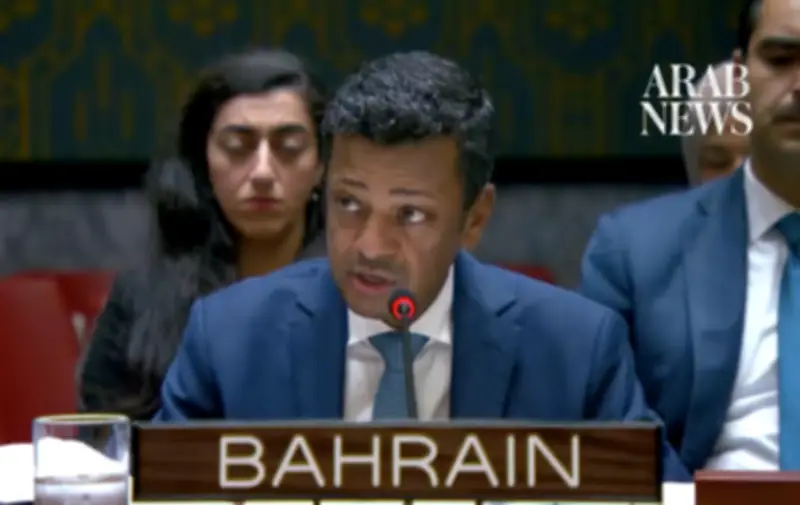
Bahrain's United Nations envoy Jamal Al-Rowaiei has accused Iran of leveraging diplomatic agreements as a tactic to "manage crises and gain time" while continuing its aggressive actions against Gulf Cooperation Council (GCC) states and Jordan. Speaking at the UN Security Council on Friday, Al-Rowaiei made the remarks during a review of the latest report on the implementation of Resolution 2231, which endorsed the 2015 Joint Comprehensive Plan of Action (JCPOA) nuclear deal.
Escalation of Attacks Since February
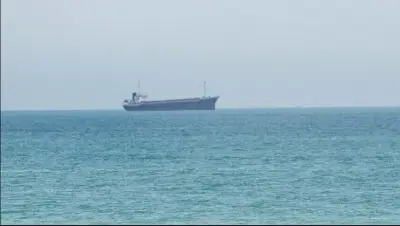
Al-Rowaiei stated that since February 28, the region has experienced one of the most dangerous waves of escalation in its modern history, attributing it to what he described as Iran's brutal and unjustified attacks against GCC states and Jordan. These attacks, he said, involved ballistic missiles and drones targeting civilian objects, energy facilities, and vital infrastructure. He also highlighted Iran's closure of the Strait of Hormuz to international navigation, creating an unprecedented challenge for the global economy, trade, energy, and food supplies.
Diplomatic Efforts Conditioned on Regional Conduct
The Bahraini envoy emphasized that diplomatic efforts on Iran's nuclear program will fail unless they are reflected in Tehran's regional conduct. He argued that the core problem has never been the absence of agreements but rather Iran's consistent failure to implement them. His comments came amid renewed Iranian attacks against Bahrain, Kuwait, and Jordan, as well as commercial vessels in the Strait of Hormuz. Al-Rowaiei accused Tehran of violating the Islamabad Memorandum, signed on June 17, and failing to honor commitments under Resolution 2817, adopted on March 11, which called on Iran to halt attacks against regional states.

Diplomacy as a Means to Gain Time
“This reinforces the impression that for Iran, diplomacy is not a path for resolving disputes, but rather a means of managing crises and gaining time, while its positions and aggressions on the ground are expressed through ballistic missiles, drones and the support, financing, training and arming of Iran’s proxies,” Al-Rowaiei added. He warned that diplomatic progress would be unsustainable without full and transparent compliance with international obligations and cooperation with the International Atomic Energy Agency (IAEA). He referenced the secretary-general’s report, which warned of continuing challenges regarding verification, monitoring, and loss of continuity of knowledge about Iran’s nuclear program.
Broader Pattern of Destabilization
Al-Rowaiei stressed that restoring confidence extends beyond the nuclear file to Iran’s broader regional conduct, including attacks on maritime passages and support for armed proxies. He described these actions as a single pattern that undermines security and confidence in diplomacy. He called on the Security Council to ensure full implementation of its resolutions, including 2231, and warned against allowing Council texts and international obligations to go unenforced. “The Council should not allow for its resolutions or international obligations to become mere texts without implementation,” he said, calling this essential to preserving the Council’s credibility and promoting peace and stability.