The foreign ministers of Egypt, Pakistan, Saudi Arabia, and Türkiye have welcomed the signing of the historic Islamabad Memorandum of Understanding (MoU) between the United States and Iran, describing it as a significant breakthrough for regional diplomacy and a constructive step toward de-escalation in the Middle East.
The endorsement came during the Fourth Consultative Meeting of the Foreign Ministers of Egypt, Pakistan, Saudi Arabia, and Türkiye held in Cairo under the R4 framework. The four countries reviewed regional developments and explored ways to strengthen cooperation for peace, security, and stability across the Middle East and beyond.
High-Level Participation and Vision
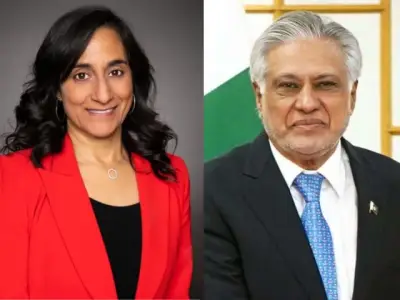
The meeting was convened at the invitation of Egypt and was attended by Pakistan’s Deputy Prime Minister and Foreign Minister Senator Mohammad Ishaq Dar, Saudi Foreign Minister Prince Faisal bin Farhan Al Saud, Turkish Foreign Minister Hakan Fidan, and Egyptian Foreign Minister Dr. Badr Abdelatty. The ministers expressed their appreciation to Egyptian President Abdel Fattah El-Sisi for sharing his vision for the future of the region and acknowledged Egypt’s efforts in promoting dialogue and stability amid growing regional challenges.

In a joint statement issued after the meeting, the ministers noted that the Islamabad MoU, signed on June 18, represented a major diplomatic achievement that could help reduce tensions and prevent a wider conflict with potentially serious consequences for regional security, global energy markets, maritime trade routes, and international supply chains.
Role of Pakistan and Qatar
The four countries commended the efforts of regional and international stakeholders that contributed to facilitating the understanding between Washington and Tehran and stressed the importance of faithfully implementing the commitments undertaken by both sides. The ministers particularly lauded Pakistan’s role in helping secure the landmark agreement, describing Islamabad’s efforts as instrumental in achieving the breakthrough. They also acknowledged the support provided by Qatar in facilitating the negotiations and praised Pakistan’s close coordination with regional partners throughout the process.
Building on the momentum created by the agreement, the ministers emphasized the need for a swift and successful conclusion to the next phase of negotiations aimed at achieving a lasting, verifiable, and mutually acceptable settlement of remaining issues. They stressed that future diplomatic efforts must adequately address the concerns of regional countries, particularly those related to the security and stability of the Gulf Arab states and the Levant, in order to strengthen collective security and ensure long-term regional stability.
Palestinian Issue and Regional Stability
The ministers also reaffirmed the centrality of the Palestinian issue to lasting peace in the Middle East, underscoring that a just resolution of the Palestinian question remains essential for achieving a stable regional order. Expressing concern over the humanitarian and political situation in Gaza, the occupied West Bank, and East Jerusalem, they reiterated their support for the legitimate rights of the Palestinian people, including their right to self-determination and the establishment of an independent Palestinian state based on the pre-June 4, 1967 borders with East Jerusalem as its capital, in accordance with relevant United Nations Security Council resolutions.
Meeting with Egyptian President
Following the ministerial consultations, President Abdel Fattah El-Sisi received the foreign ministers of Pakistan, Saudi Arabia, Türkiye, and Egypt for a joint meeting focused on regional developments and the future of diplomatic engagement in the Middle East. During the meeting, Deputy Prime Minister Ishaq Dar conveyed the warm greetings and best wishes of President Asif Ali Zardari, Prime Minister Shehbaz Sharif, and Field Marshal Syed Asim Munir to President El-Sisi and reaffirmed Pakistan’s commitment to further strengthening its longstanding and brotherly relations with Egypt.

Dar welcomed the positive momentum generated by recent high-level exchanges between Islamabad and Cairo and expressed satisfaction over the growing cooperation between the two countries across multiple sectors. He also welcomed President El-Sisi’s acceptance of Prime Minister Shehbaz Sharif’s invitation to visit Pakistan and expressed hope that leadership-level exchanges would take place at the earliest mutually convenient opportunity.
Dialogue and Diplomacy
The discussions focused extensively on the evolving situation in the Middle East and highlighted the importance of dialogue, diplomacy, and political engagement in promoting regional peace and stability. President El-Sisi reciprocated the greetings conveyed by Pakistan’s leadership and praised Islamabad’s constructive role in promoting de-escalation and diplomatic engagement in the region. The Egyptian president commended the contributions of Prime Minister Shehbaz Sharif, Deputy Prime Minister Ishaq Dar, and Chief of Army Staff Field Marshal Syed Asim Munir toward efforts aimed at advancing regional peace and stability.
He expressed hope that the ongoing diplomatic process and future rounds of negotiations would lead to enduring peace, security, and prosperity throughout the wider Middle East. The meeting also reviewed consultations held under the R4 framework, with leaders emphasizing the growing importance of the grouping as a platform for strategic dialogue, policy coordination, and collective responses to regional challenges.
Conclusion and Future Outlook
The participants expressed confidence that sustained engagement among the four countries would help advance peace, stability, economic development, and regional prosperity while promoting the shared interests of their peoples. The meeting concluded in what officials described as a warm and cordial atmosphere, reflecting the close friendship, mutual respect, and expanding cooperation among Pakistan, Egypt, Saudi Arabia, and Türkiye.