The Gaza war, which ignited a broader Middle East conflict culminating in the US-Israeli war with Iran, has been largely overlooked as Washington and Tehran negotiate peace terms. Despite the territory's central role in the chain of events, its fate appears absent from the preliminary agreement endorsed last month.
Palestinian Ahmed Jamali, 53, living in a displacement camp in Gaza, told AFP: "Ever since the United States went to war with Iran, the whole world has forgotten Gaza and its tragedy. We no longer have anyone standing by us." He added: "We are weak and oppressed, and Israel is doing whatever it wants: killing, destroying and occupying Gaza, while no one in the world lifts a finger."
From Local Conflict to Regional War
Hamas's October 7, 2023 attack on Israel triggered a devastating Israeli military response in Gaza, drawing in Tehran-backed allies such as Hezbollah in Lebanon and Yemen's Houthi rebels, and eventually Iran itself. What began as a local war evolved into a direct confrontation between arch-foes Tehran and Washington.

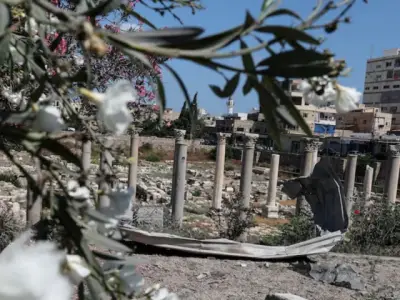
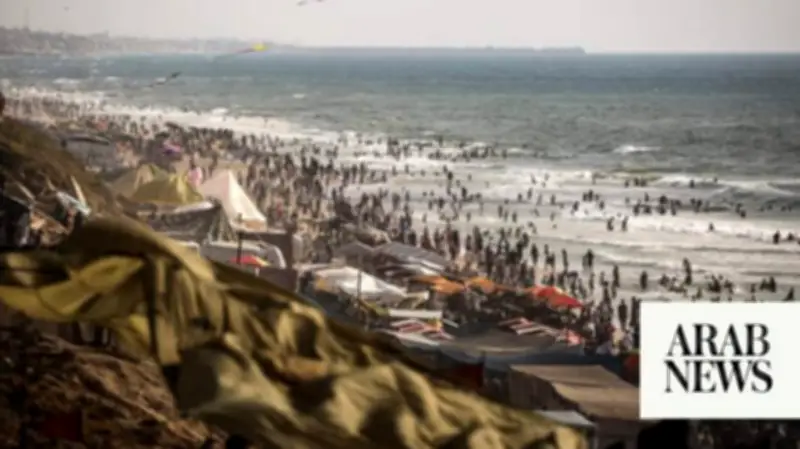
More than two-and-a-half years later, Gaza remains mired in a severe humanitarian crisis. A fragile ceasefire reached between Israel and Hamas in October 2025 has stalled, with efforts to end the war definitively failing for months. Although Iranian officials initially spoke of a region-wide agreement to end the Middle East war, the preliminary text endorsed by Tehran and Washington contains no mention of Gaza.
Shift in Regional Priorities
Analysts see this omission as a sign of shifting priorities. Hugh Lovatt of the European Council on Foreign Relations told AFP: "It reflects Hamas's declining strategic value in Iran's eyes." Iran has long armed and financed Hamas as part of its "axis of resistance," but the October 2023 attack appears to have fundamentally altered that relationship.
Israeli military expert Eado Hecht said: "Iranians do not really care about Gaza. Hamas was an ally, not an Iranian tool. It betrayed them. They did not want war in autumn 2023, it was too early for them." Michael Milshtein, another Israeli military analyst, argued that Tehran now places greater value on preserving Hezbollah as a pillar of the regional balance.
International Fatigue and Diplomatic Paralysis
There is a growing sense of international fatigue over Gaza. Lovatt noted: "Gaza is gradually fading from international attention." One diplomat involved in negotiations described a widespread belief among governments that most actors see the issue as insoluble in the short to medium term. Another veteran diplomat based in Jerusalem told AFP that Gaza's absence from the discussions reflected political paralysis rather than progress: "Gaza is absent from the agreement not because the war is over, but because no credible political framework exists for the day after."
Israel insists that Hamas must fully disarm before any political transition can begin, while Hamas refuses to surrender its weapons without guarantees that an alternative Palestinian governing authority will replace it. Neither an international stabilization force nor a credible transitional mechanism has emerged since the ceasefire took effect, both of which were called for in the US-brokered framework that halted the fighting.
Cairo Talks Continue
Behind the scenes, negotiations over Gaza's future continue in Cairo, bringing together Palestinian factions, including Hamas, alongside the Board of Peace set up by US President Donald Trump and regional players including Qatar and Turkiye. A source close to the negotiations said: "Trump may want to give this process a chance. Whether it succeeds remains to be seen."
Diplomatic and security sources told AFP that negotiators are working on a roadmap combining the gradual disarmament of Hamas with the creation of transitional governing authorities for Gaza. Israeli media has reported that the government would reject such a framework. Lovatt said: "For now, this diplomatic process exists only around the negotiating table. There has been progress, but reconstruction remains a distant prospect, and nothing is changing for the people on the ground."

Risk of Return to Combat
With diplomacy stalled, concerns are mounting that fighting could resume. Israeli media have reported military preparations for a possible summer 2026 offensive against Hamas should political negotiations fail. However, military expert Hecht cautioned: "Having the military opportunities is not the same as having the political opportunity. Preparations are not the same as implementation."
Analyst Milshtein argued that Israel had little leverage left. In his view, Washington could ultimately pressure Israel to accept a phased disarmament of Hamas alongside a transitional political framework — or even to withdraw from Gaza. "Alternatively, Israel could embark on another military adventure. Given this government's record... it cannot be ruled out," Milshtein said, adding that Israeli leaders still lacked a coherent long-term strategy.