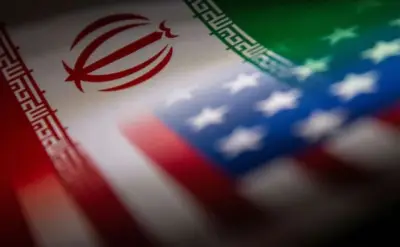
The United States of America and Iran have agreed on a purported 14-point Memorandum of Understanding (MoU) to end the Middle East war on all fronts, open the Strait of Hormuz for marine traffic without any toll, lift the blockade of Iranian seaports, and release $12 billion of its frozen assets, making the atmosphere congenial for 60-day technical talks to resolve the more contentious issues.
Ambiguity in the MoU
The MoU, couched in convoluted and ambiguous diplomatic and political language liable to interpretation by each party to claim victory in the 100-day war, presents, prima facie, a win-win situation. However, the devil lies in the details of the complex bilateral issues causing geopolitical tensions in the region. The war claimed more than 7,000 lives, and enormous infrastructural destruction, mostly borne by Iran. The Israeli attacks in southern Lebanon have displaced 1.2 million people and killed over 3,500 citizens.
Challenges Ahead
The decades-long hostility, mutual distrust and conflict would seriously overshadow the 60-day technical talks unless Iran makes big compromises to address the geopolitical concerns of the USA and Israel in the region. Therefore, the most significant question that comes to mind while thinking about the impending MoU, scheduled to be signed on June 19, 2026, in Geneva, is whether this deal will usher in a pleasant era of rapprochement between the USA and Iran, overcoming the mutual distrust and the conflicting geopolitical and strategic concerns that have kept the Middle East in a state of turmoil for many decades.

Historical Context
This question is prompted by chronically long years of political, economic and strategic dominance exercised by the USA in Iran during Muhammad Reza Pahlavi’s kingdom, and the protracted hostile and confrontationist policies followed by both countries towards each other since the Islamic Revolution, particularly after the hostage crisis and Iraq’s aggression against Iran in connivance with Washington DC. King Muhammad Reza Pahlavi was known as the policeman of the USA in the Middle East. He ruled Iran with an iron fist, suppressing left-wingers, liberals and democrats. He was incrementally ushering Iranian society into a westernised modern culture to the disgust of the highly religious and conservative segments of the population.
The Shah's Modernisation Campaign
The Shah’s coercive modernisation campaign strengthened the hands of the clergy, who were fiercely critical of the degradation of the moral and cultural ethos of Persian society, and the growing moral depravity in the new generation. Actually, Iran’s Islamic Revolution is anchored in a historically long and divergent cultural, geographical, ideological, political and economic background. The factors laying and solidifying the foundations of a violent revolutionary social and political change are still present in Persian society.
Misunderstanding Iran
The USA leaders failed to comprehend these currents in Persian society. They are still ignorant of the cultural and ideological pride of the Persian nation, and its strong sensitivity towards its political, economic and strategic freedom, sanctified by Shi’a Islam. The American leadership made the mistake of viewing Iran through the lens of the Arabs, and erroneously got trapped in the traditional Arab-Persian hostility which dates back to the defeat of the Sassanid Empire by the Muslim armies in 651 AD, transforming the region’s religious, cultural and political landscape. The USA leadership failed to comprehend the ideological, cultural and political sensitivities, and the resultant anger simmering in Persian society against foreign interference in its sovereign affairs. They continued displaying such ignorance even after the Islamic Revolution.
Post-War Political Developments
Let us not delve into the distant political and economic history of Iran. The leftists, liberals and democrats were doing very well in Iran after the Second World War. In their obsession to stem the advance of communism into this part of Asia, the USA ensured its military presence in the region to save Turkey and Iran from a communist takeover. The United Kingdom, though hastily retreating from the Subcontinent, was holding sway over the oil and petroleum industry of Iran with the connivance of the USA.

The Rise of Mossaddegh
The Tudeh Party, a communist political entity, won sufficient seats in the 16th National Assembly and supported Muhammad Mossaddegh to become prime minister of Iran in 1951. He made wider economic reforms, nationalising the oil and petroleum industry of Iran, and ordering the British Petroleum Company to wind up its assets and leave Iran. This was the end of a long and exploitative foreign intervention in the economic resources of the country. The Iranian people were loud in their support for the economic reforms of Prime Minister Mossaddegh. The sprawling oil industry of Iran was wrested from the iron claws of British fortune-seeking companies.
The Overthrow of Mossaddegh
The transformation of Iran into a democratic and progressive country did not bode well for Reza Pahlavi. He fled the country in July 1952. This created an alibi for his Western patrons to conspire against the democratic and nationalist government of Prime Minister Mossaddegh. The USA and the UK joined hands to undermine the democratically elected government of Iran. These champions of democracy sabotaged the budding plural and representative governance in Iran for the sake of their narrow economic interests. The Central Intelligence Agency and the British MI6, in a joint campaign, instigated monarchists, religious factions and ideological groups, showering them with funds to create unrest in the country. These groups organised small protests against the rule of Prime Minister Mossaddegh, which the Western press presented as chaos and anarchy in Iran. These powers also instigated the military to seize power.
The Return of the Shah
The Mossaddegh government was deposed by a military putsch, and the fugitive Muhammad Reza Shah Pahlavi returned as the king of Iran. The Shah turned Iran into a ruthless kingdom founded on coercion, suppression and oppression. He transformed SAVAK into a violent and coercive secret service which oppressed anti-monarch groups ruthlessly. This throttled the plural and representative governance in the country, paving the way for the rise of theocrats.
To be concluded
Ambassador M. Alam Brohi
The writer is a former member of the Foreign Service of Pakistan and has served as Ambassador for two terms. He is the author of five books.