Breakthrough in Iran-US Talks: Oil Sanctions Waivers Draft Agreed
In a major diplomatic breakthrough, Iran and the United States, with mediation from Pakistan and Qatar, have agreed on a draft regarding sanctions waivers for the sale of Iranian oil. Diplomatic sources confirmed that once final approval is granted, the waivers on Iranian oil sales will be issued soon. Technical talks are set to continue on Monday to finalize details and strategy for implementing the Islamabad Memorandum of Understanding on peace.
High-Level Mediation by Pakistan and Qatar
Prime Minister Shehbaz Sharif, Interior Minister Mohsin Naqvi, and Field Marshal Asim Munir mediated the talks alongside Qatar’s Prime Minister and Foreign Minister Sheikh Mohammed bin Abdulrahman bin Jassim Al-Thani. Iran was represented by Parliament Speaker Mohammad Bagher Ghalibaf and Foreign Minister Abbas Araghchi, while the US delegation was led by Vice President JD Vance, Special Envoy Steve Witkoff, and Jared Kushner, along with technical experts.
Leaders Express Hope for Middle East Peace
Declaring a desire to “turn over a new leaf” in the Middle East, leaders from Pakistan, the US, and Qatar expressed strong hope that the Bürgenstock talks would promote global peace, international security, and economic prosperity. “In today’s negotiations, we discussed the issue of our frozen assets and the arrangements for their release,” said Hussein Gurbanzadeh, a member of Iran’s negotiating team, as reported by state television. He added that discussions focused on sanctions relief tied to Iran’s energy sector. “In Switzerland, we discussed the temporary exemption from sanctions on oil and its derivatives, and the final draft of a proposal on this matter has been completed.” According to Iran’s Fars news agency, the talks ended after 80 minutes for “internal consultations.”

Iran Refuses Handshake and Photo with US Team
Iran’s negotiating team refused a planned exchange of handshakes and a group photograph with the US team before talks began. Iran’s semi-official Tasnim news agency reported the refusal, citing an unnamed source close to the negotiations. US officials and meeting organizers had arranged for a handshake and photo at the start of the multilateral talks in Bürgenstock, but the head of the Iranian delegation opposed the plan. Following Iran’s refusal, a live TV broadcast and photo session proceeded without the Iranian delegation, who entered the venue only after the media event concluded. The US delegation requested a five-minute delay to allow journalists to leave the negotiation room before talks began.
Pre-Talks Meetings and Statements
Ahead of the talks, the US delegation met Prime Minister Shehbaz Sharif and Field Marshal Asim Munir. Later, the Iranian delegation met the Pakistani side. Speaking to media before technical-level talks, Prime Minister Shehbaz Sharif, US Vice President JD Vance, and Qatari Prime Minister Sheikh Mohammed bin Abdulrahman Al Thani emphasized that joint collaborative diplomatic efforts marked the beginning of a vital process to build a sustainable future and achieve an agreement for global stability. The talks, hosted and mediated by Pakistan and Qatar, aim to iron out details of the Islamabad Memorandum of Understanding signed between the US and Iran to cease hostilities and negotiate a framework for durable regional peace.
Shehbaz Sharif Expresses Hope for Positive Results
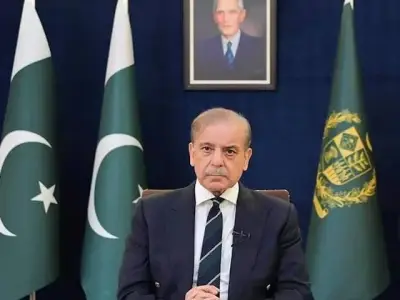
Prime Minister Shehbaz expressed hope that discussions between the US and Iran would lead to positive results and produce a document furthering peace, progress, and prosperity globally. He thanked US President Donald Trump for visionary leadership leading to the Switzerland meeting and lauded US Vice President JD Vance for his leadership during talks. He also appreciated Qatari Prime Minister and Field Marshal Asim Munir for outstanding roles. “I think together all these efforts have culminated here in this wonderful, humanistic Bürgenstock. Hopefully, when we go back, we’ll have some wonderful paper in our hands which will promote peace, progress, and prosperity around the globe,” he remarked.

US Vice President JD Vance Praises Pakistani Leadership
US Vice President JD Vance appreciated Prime Minister Shehbaz Sharif and Field Marshal Syed Asim Munir for their leadership and sustained peace efforts. “We would not be here without the Field Marshal who is a great military leader, statesman, and diplomat,” he said. “I have a few other notes of appreciation. First, to the Prime Minister of Pakistan — a dear friend of the President and mine, and a guy whose leadership and careful negotiations have gotten us to this point. Also to his Field Marshal in Pakistan, Asim Munir... I’ve probably talked to Field Marshal Munir more than anyone else over the last three months.” Vance also thanked the Qatari leader as an amazing friend of the US. “What we’re trying to accomplish is very simple: through diplomacy and working together, to transform the Middle East... Now, we see a future where everyone can work together to promote peace and prosperity for everyone.” Calling the meeting “historic,” he noted that never before have Iranian and American leadership met at such a high level. “What the President has asked us to do is turn over a new leaf, to transform our relationship with the people of Iran, and to extend an outstretched hand... That is certainly our goal. We’ve already made great progress over just the last few hours, and I expect we’ll make additional progress in the hours to come.”
Qatari Prime Minister and Iranian Speaker Respond
Qatari Prime Minister Sheikh Mohammed bin Abdulrahman Al Thani lauded the leadership of US Vice President, Prime Minister Shehbaz, and Field Marshal who initiated the process. “I think everyone has highlighted how important this meeting is, how historic this event is, and how significant this agreement is—not only for the security of the region, but also for the world and the global economy.” Meanwhile, Iran’s parliament speaker and head negotiator Mohammad Bagher Ghalibaf dismissed US threats, posting on X: “Don’t they think that if their threats had any effect, they wouldn’t have reached the point of desperation they are in today? We don’t count on American threats. They better be careful with their comments; our armed forces are ready to respond in a different way. Whatever they say, we are the ones who will act.”