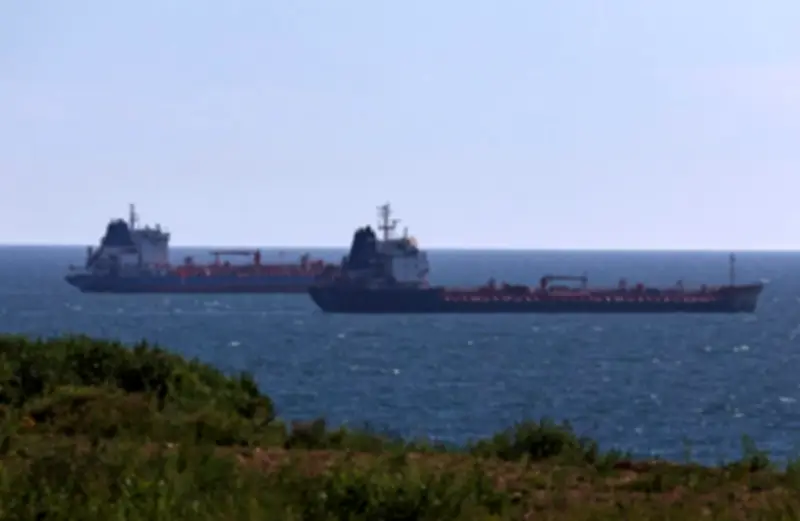
Iranian oil tankers have broken through a US naval blockade in the Strait of Hormuz for the first time in two months, according to a tracking website, as Washington and Tehran prepare to launch talks on a final peace deal. The TankerTrackers website reported that at least two supertankers carrying a combined 3.8 million barrels of Iranian crude oil exited the US Navy blockade perimeter. A third tanker also reportedly left the area.
Peace Talks Set to Begin
The talks on a final settlement are scheduled to begin Friday at Switzerland's Burgenstock mountain resort. Negotiations will cover Iran's nuclear programme and the lifting of international economic sanctions. The United States has agreed to allow Iran to immediately resume oil sales under the deal, according to the Wall Street Journal, with a waiver on sanctions taking effect after the signing ceremony.
Oil prices tumbled on the news, with Brent North Sea crude dropping to $78.74 a barrel and West Texas Intermediate falling to $75.85 a barrel. The reopening of the Strait of Hormuz has fueled optimism that the war triggered by US-Israeli strikes on Tehran in February may be coming to an end.

Israeli Strikes Cast Shadow
However, fresh Israeli strikes on south Lebanon have dented hopes for peace. The Israeli military said it conducted a strike after identifying a suspicious vehicle near its soldiers. Iran's central military command warned Israel to expect a harsh response. Lebanon's state news agency reported that two vehicles were targeted in Mayfadoun and another in Shukeen, killing four people.
Despite the deal announcement, analysts warn that the parallel conflict in Lebanon between Israel and Iran-backed Hezbollah poses the biggest threat to the diplomatic thaw. Ross Harrison, a senior fellow at the Middle East Institute, called it the biggest ultimate spoiler of the negotiations.
Key Details of the Agreement
The framework agreement has already been signed electronically by President Donald Trump, Vice President JD Vance, Iran's deputy foreign minister Majid Takht-Ravanchi, and top negotiator Mohammad Bagher Ghalibaf, according to a senior US official. Iranian Foreign Minister Abbas Araghchi confirmed that a new round of negotiations will begin on Friday to reach a final agreement on nuclear issues and sanctions.
Some conservatives have expressed concern over the deal. Senate Republicans have requested the text of the agreement and briefings from the Trump administration. Senate Majority Leader John Thune said they want to see what it actually is.
Broken Commitments and Cautious Optimism
Weeks of indirect negotiations mediated by Pakistan and Qatar have built momentum for an interim deal. However, a comprehensive agreement on Iran's nuclear ambitions and Western sanctions remains elusive. The US and Israel are pressing to strip Iran of its stockpile of highly enriched uranium, while Iran insists on its right to enrichment.
Araghchi struck a cautious note, acknowledging a history of broken commitments and agreements being torn up. Iranian ultraconservative newspaper Vatan-e Emrooz praised the agreement as a Trump surrender document. Vice President Vance said no US taxpayer money would go to Iran under the deal, while Iranian media reported that $12 billion of frozen assets would be released.
Analysts have warned that the conflict in Lebanon presents the biggest threat to the diplomatic thaw. Hezbollah launched rockets at Israel after the killing of Iran's supreme leader in March, prompting Israeli strikes and a ground invasion.