The NATO summit in Ankara this week focused overwhelmingly on Ukraine, with a renewed pledge of unwavering support, but the elephant in the room was Iran, Turkiye's eastern neighbor. The summit declaration included robust language on Iran, stating that Iran must never have a nuclear weapon and calling on Iran to fully respect freedom of navigation in the Strait of Hormuz. According to Luke Coffey, a senior fellow at the Hudson Institute, this language is new and significant, as it adds freedom of navigation as a priority.
Missile Exchanges Highlight Regional Tensions
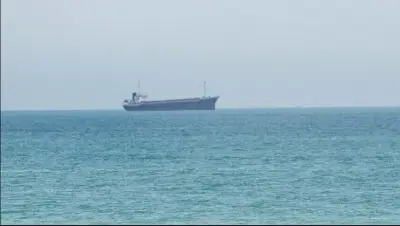
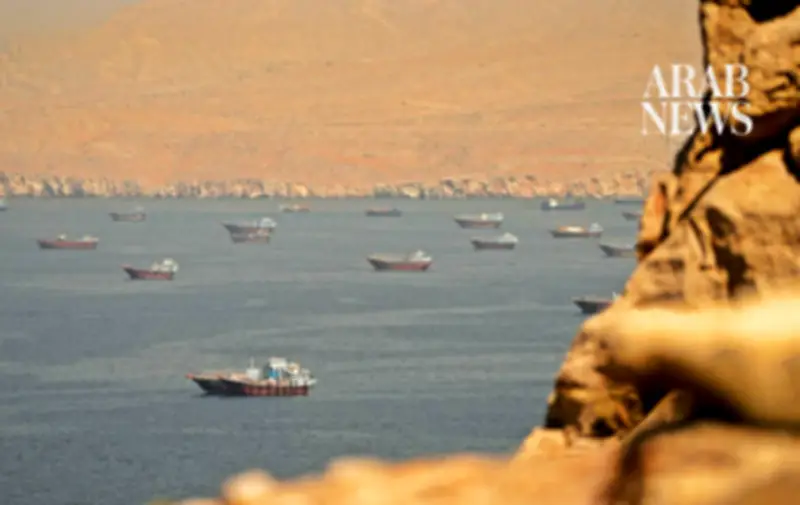
As if to remind delegates of the conflict on their host's eastern border, the US and Iran traded missiles once again. The latest exchange followed Iranian attacks on three tankers in the Strait of Hormuz. In response, the US struck more than 90 Iranian military targets, prompting Iran to launch missiles at Jordan, Kuwait, Bahrain and Qatar. At the summit, President Donald Trump declared the fragile ceasefire over and renewed criticism of NATO, complaining that its members did not want to help with Iran, which he called the number one state sponsor of terror.
NATO's Role in the Gulf: Capabilities and Limitations
NATO Secretary General Mark Rutte acknowledged the disappointment for the Americans when it comes to Iran, but noted that up to 5,000 sorties from European air bases had been flown. Throughout the conflict, NATO air defense systems intercepted numerous Iranian missiles aimed at allies and members, including Turkiye. However, Coffey said there are no signs NATO is likely to be drawn into direct action against Iran. Instead, he suggested NATO could do more in the Middle East and the Gulf, particularly in air defense, as many challenges facing the Gulf are shared concerns for Europe. He emphasized the need to work more closely with Gulf states to improve defensive capabilities, especially against unmanned systems often originating from Iran.

The Istanbul Cooperation Initiative: A Missed Opportunity?
Coffey also believes NATO could exploit the full potential of the Istanbul Cooperation Initiative (ICI), established in 2004 to promote security cooperation between NATO and partner countries in the broader Middle East. Four Gulf Cooperation Council countries—Bahrain, Kuwait, Qatar and the UAE—have joined the ICI, while Oman and Saudi Arabia participate in some activities. Coffey noted that the platform has been around for 22 years, yet it was not until this week's summit that the ICI met at the foreign ministers' level at a NATO summit. He argued that engagement has been ad hoc and would benefit from more consistent and routine engagement as NATO's main vehicle for outreach to the Middle East region.
Article 5 and Article 4: Direct Intervention Unlikely
Technically, several mechanisms could allow NATO to intervene directly in the Gulf, but attention usually focuses on Article 5, NATO's mutual defense clause. However, it could not be invoked in support of the US because America, alongside Israel, attacked Iran. Turkiye, a NATO member, has itself come under attack, with Iranian missiles intercepted on four occasions by NATO air defenses. But triggering Article 5 requires unanimous support from all 32 member states and has been invoked only once, after the Sept. 11, 2001 attacks. Article 4, which allows any member state to raise concerns when its security is threatened, has been invoked nine times since 2003, including five by Turkiye. Historically, NATO has operated in multiple theaters without invoking either article, such as in Bosnia, Kosovo, Libya, Iraq and Afghanistan.

Historical Lessons and Political Will
Sir John Jenkins, former British ambassador to Saudi Arabia, Libya, Iraq and Syria, said NATO's previous forays into out-of-area operations did not go well, citing Libya in 2011 as a test where strains were apparent. During Operation Unified Protector, NATO flew more than 26,000 sorties and struck 6,000 military targets, but the US led from behind and the UK and France eventually ran low on munitions. Jenkins said many NATO members will be very reluctant to commit to an open-ended conflict in the Gulf that does not look as if it will end any time soon. He added that the Gulf clearly matters to NATO members, as shown by involvement in policing and demining during the Iran-Iraq War in the 1980s, but times have changed. Europe has let its military capability erode, the US is half in, half out, and Ukraine is taking a lot of bandwidth. Iran and Ukraine have shown how conventional military superiority can be negated through drones and AI.
Regional Security Problem, Not NATO's Core Mission
Brian Katulis, a senior fellow at the Middle East Institute, also doubts NATO will become directly involved, not least because the US and Israel started this war without consultation and conducted it without enough meaningful cooperation with US partners in the Middle East. The Trump administration hasn't coordinated its Iran diplomacy with key partners in Europe and the Middle East. Other NATO members have not forgotten that Trump has continued to make clear he covets the territory of fellow NATO member states, referring to Greenland. European leaders can read polls, and neither Trump nor his war are particularly popular in the US. Katulis questioned why NATO would attach itself to a losing cause that has nothing to do with its core mission, especially at a time when Trump seems eager to abandon Europe to its fate.
Maritime Security: Existing Frameworks Preferable
Coffey is hesitant to say that NATO as an institution should lead any military operation in the Gulf, even in the context of maritime security. There are already existing maritime security frameworks under US and British command through the Combined Task Forces operating in the Gulf, headquartered in Bahrain, which often see European navies working alongside local Gulf navies. He believes this is the best arrangement for any naval operation, and NATO as an institution should remain focused on the defense and security of Europe.