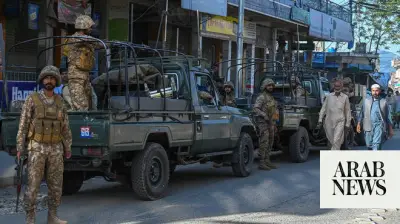
Israeli Prime Minister Benjamin Netanyahu denied reports on Sunday that the United States had restricted Israeli military operations in Lebanon. "I heard it was said in the media that President Trump asked not to act against terror tunnels in Lebanon. This is a legend, fake news. He didn't say anything to me about it, and I didn't ask him. We operate according to our considerations," Netanyahu said during a weekly Cabinet meeting.
Contradicting Earlier Reports
His remarks contradicted an earlier report by Israel's public broadcaster KAN late last month that Israel had provided US officials with detailed intelligence on alleged Hezbollah tunnels in the Ali al-Taher Heights in southern Lebanon in an effort to obtain US approval for military operations in the area. The report suggested Israel sought a US green light to continue its military activities in Lebanon, contrary to Netanyahu's assertion that Israeli military decisions are made independently.
Netanyahu's Stance on Gaza Reconstruction
Turning to Gaza, Netanyahu said there would be no reconstruction in the enclave before it is disarmed, a position that departs from the sequencing outlined in US President Donald Trump's plan to end the war. "There will be no reconstruction in Gaza without dismantling and demilitarising the Strip," he said in his comments carried by the daily Yedioth Ahronoth. Under the second phase of Trump's plan, a broader Israeli military withdrawal from Gaza and the launch of reconstruction are to proceed in parallel with the beginning of the disarmament of Palestinian factions. According to the paper, Netanyahu's remarks came amid reports that Trump's Board of Peace intends to move ahead with reconstruction in areas under Israeli military control without linking it to the disarmament of Hamas.

Iranian Speaker Reaffirms Stance Against US and Israel
Iranian Parliament Speaker Mohammad Bagher Ghalibaf said that Tehran remained at odds with the US despite a recently signed memorandum of understanding (MoU), describing implementation of the agreement as "difficult but achievable". Ghalibaf made the remarks during a meeting in Tehran with Mohammad Darwish, head of Hamas's leadership council, who was attending funeral ceremonies for the late leader of the Islamic Revolution, Ayatollah Seyyed Ali Khamenei. "We have no peace with the US and we will not recognise Israel," Ghalibaf said.
The Iranian parliament speaker, who also serves as Tehran's chief negotiator in talks with Washington, said Iran remained committed to supporting Muslim nations and the "resistance front" in accordance with the guidance of the country's leadership. "If needed with missiles, and if political pressure is required, pressure through negotiations," he said. Ghalibaf stressed that negotiations should not become an end in themselves and warned against engaging in "negotiation for the sake of negotiation".
Iran-US Talks Suspended After Israeli Strikes
He said talks between Tehran and Washington had been suspended on the eve of signing a Pakistan-brokered memorandum of understanding after Israeli military strikes targeted Beirut's southern suburb of Dahiyeh. "We told the American side that the territorial integrity of regional countries and the cessation of war against Iran's allies in the resistance groups must be part of the memorandum, and it was added to the text," he said. "Today, this memorandum is being implemented, and its enforcement is difficult, but possible."
Ghalibaf said diplomacy should be used to consolidate military achievements rather than replace them. "This can only be realised when the country, alongside diplomacy, remains prepared for defence," he said. He also argued that Muslim countries had come to realise that cooperation with the US and Israel would not guarantee their security.
Iranian Military Strengthens Capabilities
Iran's military says it is using the ceasefire to strengthen its combat capabilities, warning that any "enemy mistake" would be met with a "crushing and decisive response", Al Jazeera reported. Brigadier-General Mohammad Akraminia said the army was using the pause in hostilities to strengthen its armed forces. "We will not waste a single moment or neglect this," he said. "If the enemies make a mistake, they will definitely face a crushing and decisive response from the Iranian armed forces," he said.

Thousands of US and Israeli air attacks hit a range of military targets, energy facilities and civilian infrastructure during weeks of war that began with the killing of Ayatollah Ali Khamenei on February 28. The attacks killed more than 3,000 people in Iran, according to state media.