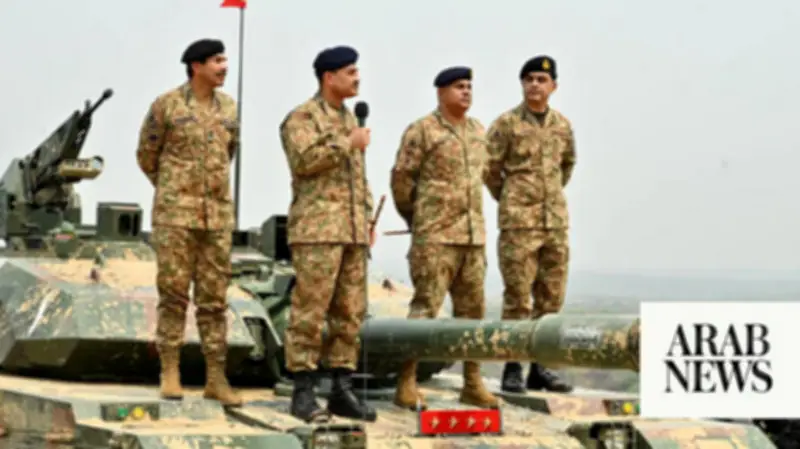
Prime Minister Shehbaz Sharif on Sunday reaffirmed Pakistan's commitment to stand with its armed forces against any internal or external threat, as the country faces a surge in militant attacks and ongoing tensions with India. The statement from the Prime Minister's Office (PMO) came during a ceremony marking the 27th anniversary of Captain Karnal Sher Khan's death in the 1999 Kargil conflict with India.
Rising Militancy in Khyber Pakhtunkhwa and Balochistan
Pakistan is witnessing a spike in militant violence, particularly in Khyber Pakhtunkhwa (KP) and Balochistan provinces bordering Afghanistan. On Saturday, a vehicle-borne suicide bomber targeted a Pakistan Coast Guards checkpost in Balochistan, killing at least three security personnel and injuring 15 others. The attack underscores the persistent security challenges facing the country.
Islamabad has repeatedly blamed India for supporting militant groups such as the Tehreek-e-Taliban Pakistan (TTP) and the Baloch Liberation Army (BLA), which it says carry out attacks against Pakistani citizens and law enforcement. Pakistan also accuses Afghanistan of providing sanctuary to these outfits. Both India and Afghanistan deny the allegations and accuse Pakistan of hosting militant groups.

Kargil Anniversary and National Resolve
The prime minister's remarks were made on the anniversary of Captain Karnal Sher Khan, who was killed during the Kargil conflict and later awarded the Nishan-e-Haider, Pakistan's highest military honor. The PMO statement said: “The prime minister reaffirmed the government’s and the people of Pakistan’s unwavering resolve to stand shoulder to shoulder with the country’s armed forces against any external or internal threat facing the nation.”
Ongoing Tensions with India
Relations between Islamabad and New Delhi have remained strained since May 2025, when a days-long conflict between the two nuclear-armed neighbors threatened to escalate into a full-scale war. The United States brokered a ceasefire that has held for over a year, but tensions persist. India has suspended a water-sharing treaty between the two countries, prompting Pakistan to warn that any attempt to divert or block its water flow would be considered an “act of war.”
The water dispute remains a key flashpoint, with Pakistan viewing it as a matter of national security. The ceasefire has prevented further military escalation, but diplomatic relations remain frozen.