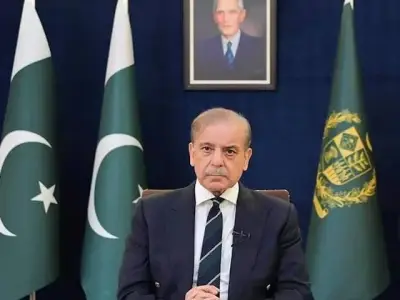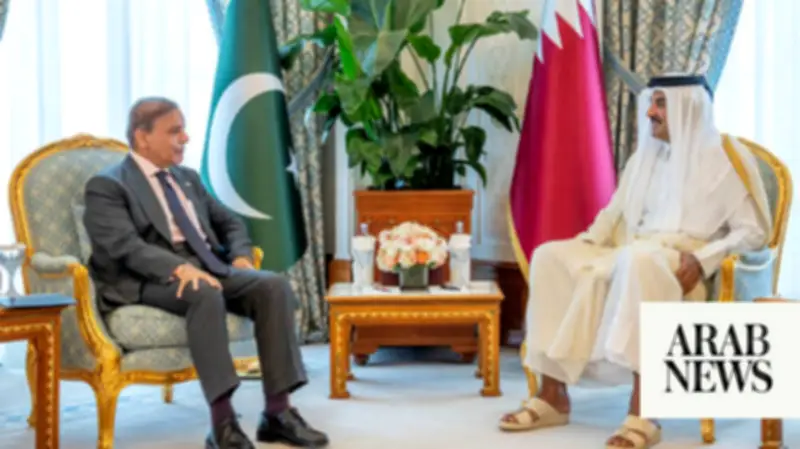
Prime Minister Shehbaz Sharif and Qatari Emir Sheikh Tamim bin Hamad Al Thani have expressed satisfaction over the progress achieved in the US-Iran technical-level talks held in Switzerland, according to the prime minister's office. The two leaders agreed on the need to safeguard the negotiations from “detractors” during a telephone conversation on Wednesday.
Mediation Role in US-Iran Talks
Pakistan and Qatar served as mediators in Bürgenstock, Switzerland, when the US and Iran held talks on implementing the Islamabad Memorandum of Understanding on Sunday. The Islamabad memorandum, signed earlier this month, ended months of conflict between the US and Iran that began in February.
Deputy Prime Minister Ishaq Dar told Al Arabiya this week that Israel’s attacks on Lebanon nearly “derailed” the US-Iran peace talks. During Iranian President Masoud Pezeshkian’s visit to Islamabad on Tuesday, Sharif warned of spoilers trying to “scuttle” the US-Iran peace deal, though he did not name any country.

Leaders Agree on Positive Momentum
“Both leaders expressed satisfaction with the first round of technical level talks held in Bürgenstock and stated that positive momentum must continue so that negotiations could be successful,” Sharif’s office said. “In this regard, the two leaders agreed that it would be important to safeguard the talks from detractors.”
The Prime Minister’s Office (PMO) said Al Thani appreciated Sharif’s leadership and expressed Qatar’s full support for Pakistan’s peace efforts. The Qatari emir expressed his willingness to visit Pakistan later this year to discuss bilateral cooperation and regional developments, the PMO added.
Outcome of US-Iran Talks in Switzerland
The US-Iran talks in Switzerland concluded with Pakistan and Qatar announcing that all parties had agreed on a roadmap to reach a permanent peace deal within 60 days. The discussions resulted in the formation of a high-level committee to provide political oversight on mediation that will focus on Iran’s nuclear program, sanctions and implementation of the MoU.
The talks also led to the formation of a communication line between the parties to avoid miscommunication and to secure safe passage for vessels through the Strait of Hormuz. A “de-confliction cell” to end military operations in Lebanon was also created to stop fighting in the country.
Both leaders agreed to continue close coordination between the two countries in the coming days, the statement concluded.