Pakistan's reported role in facilitating renewed communication between Washington and Tehran has triggered introspection at home rather than celebration abroad. The central question is not what Pakistan achieved, but whether such a moment would have been possible under Imran Khan's leadership, or whether it reflects a more pragmatic style of engagement under Prime Minister Shehbaz Sharif and Field Marshal Asim Munir. In Pakistan, foreign policy rarely stays foreign; it quickly becomes a debate about temperament, trust, and the kind of leadership the state believes it needs.
Imran Khan's Ideological Foreign Policy
For Imran Khan, foreign policy was often about drawing lines rather than blurring them. The phrase “absolutely not” became shorthand for a broader instinct: Pakistan should stop being what others need it to be and start being what it chooses to be. For his supporters, that represented overdue clarity in a system long accustomed to compromise dressed as strategy. However, diplomacy is rarely rewarded for clarity alone. In a region defined by shifting alignments and overlapping crises, rigid positions can narrow the space for quiet manoeuvring. In Pakistan's case, it is often that quiet space—not public posture—that produces relevance.
Shehbaz Sharif and Asim Munir's Operational Approach
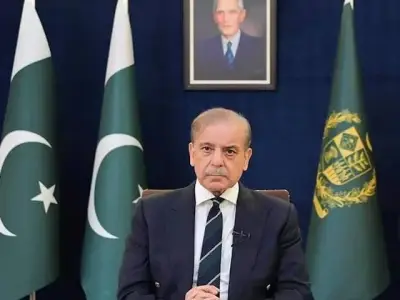
The governing approach associated with Shehbaz Sharif and Asim Munir is less ideological and more operational. It is not built on slogans, but on access: keeping Washington, Beijing, Riyadh, and Tehran within simultaneous reach without forcing premature choices. In this reading, diplomacy is not about declaring where Pakistan stands, but ensuring Pakistan is present wherever decisions are being made. The country has never struggled to appear in global conversations; it has struggled to shape what happens after it enters them. Episodes of reported facilitation—such as United States–Iran contact—fit a familiar pattern: Pakistan's value has rarely been in shaping outcomes directly, but it has been useful as a channel when others cannot speak openly.

Two Political Logics: Populist vs. Hybrid Governance
Critics call this transactional diplomacy; its defenders call it realism. In practice, it is often both at once. There is a deeper way to read this contrast beyond personalities. Pakistan today sits uneasily between two political logics. On one side is a populist-democratic impulse, associated with Imran Khan, driven by mass mobilisation, moral clarity, and direct public engagement over institutional mediation. Foreign policy in this mode becomes part of political identity: sovereignty is not just a strategy, but a statement. On the other side is a managed hybrid governance model, associated with the current civil-military configuration, prioritising stability, external credibility, and continuous engagement across multiple power centres—even if that requires ambiguity at home. Neither model is fully democratic nor fully technocratic, but they produce different diplomatic instincts: one seeks legitimacy through confrontation and clarity, the other through access and adaptability. Pakistan's foreign policy, more often than not, oscillates between these two logics rather than choosing between them.
The Deeper Architecture of Pakistani Statecraft
Reducing this debate to individuals misses the deeper architecture of Pakistani statecraft. Civilian governments and the security establishment rarely operate in isolation. When aligned, Pakistan can move quickly and appear strategically relevant. When fractured, even promising diplomatic openings lose traction. This is why Pakistan's external behaviour often feels cyclical: it is not simply who leads, but whether the system is coordinated enough to convert opportunity into direction. Would Pakistan's current diplomatic visibility have been possible under Imran Khan? Possibly—but it would have looked different. Under Khan, Pakistan projected sharper defiance and clearer ideological positioning, which may have created moments of symbolic independence but also risked narrowing the range of usable diplomatic channels.

The Trade-off: Broader Access vs. Narrative Distinctiveness
Under the current configuration, Pakistan may have broader access points but less narrative distinctiveness: more entry into conversations, but less ability to define them. The trade-off is real, even if rarely acknowledged. Pakistan's foreign policy debate often mistakes moments of visibility for moments of arrival, but visibility is not influence, and access is not leverage. The country has never struggled to appear in global conversations; it has struggled to shape what happens after it enters them. Pakistan's foreign policy dilemma is not that it lacks voices strong enough to define its position, but that every attempt to define a position eventually collides with a system designed to manage, rather than settle, contradictions.