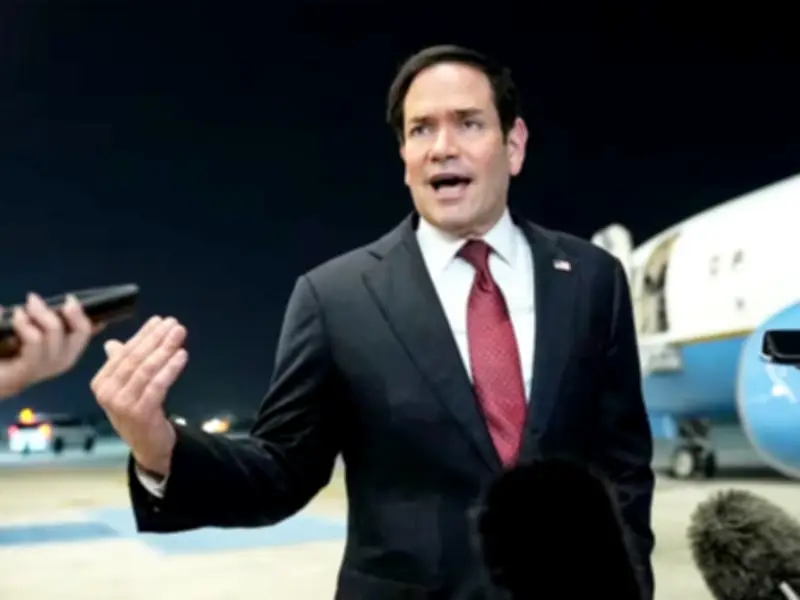
US Secretary of State Marco Rubio acknowledged he faces a delicate mission this week as he pitches Washington's Iran peace deal to Gulf Arab leaders who fear excessive concessions will strengthen Tehran and reshape the region's security balance and oil flows. America's top diplomat arrived in the United Arab Emirates late on Tuesday and is scheduled to travel in the coming days to Kuwait and Bahrain, where he will meet officials from the Gulf Cooperation Council (GCC), a grouping of monarchies that also includes Saudi Arabia, Qatar, and Oman.
Addressing Allies' Disquiet
When asked if he planned to address allies' disquiet with the accord, Rubio told reporters: "That most certainly will come up in these discussions." He added that they would also discuss issues not covered by the memorandum of understanding. At the heart of the matter are elements of a draft agreement that includes no limits on Iran's ballistic missiles, a proposed $300 billion reconstruction fund, and provisions that could expand Tehran's regional influence and control over critical oil shipping lanes.
Regional Security Concerns
Gulf Arab leaders are particularly worried that the deal, as currently structured, could embolden Iran and alter the security dynamics in the Persian Gulf. The absence of restrictions on Iran's ballistic missile program is a major point of contention, as these missiles can reach GCC capitals. Additionally, the $300 billion reconstruction fund, intended to support Iran's economy, is seen by some as a tool that could be diverted to fund proxy groups and further destabilize the region.

Oil Shipping Lanes at Risk
Another critical issue is the potential for Iran to gain greater control over strategic oil shipping lanes, including the Strait of Hormuz, through which about 20% of the world's oil passes. Gulf states fear that enhanced Iranian influence could threaten their own oil exports and global energy security. Rubio's mission is to reassure allies that the deal does not come at their expense, but the skepticism remains high.
Upcoming Diplomatic Engagements
Rubio's itinerary includes stops in Kuwait and Bahrain for meetings with GCC officials. The discussions are expected to cover not only the Iran deal but also broader regional security issues, including the conflicts in Yemen and Syria, and the ongoing threat from extremist groups. The US seeks to maintain strong alliances while pursuing diplomatic engagement with Iran, a balancing act that Rubio acknowledged will be challenging.