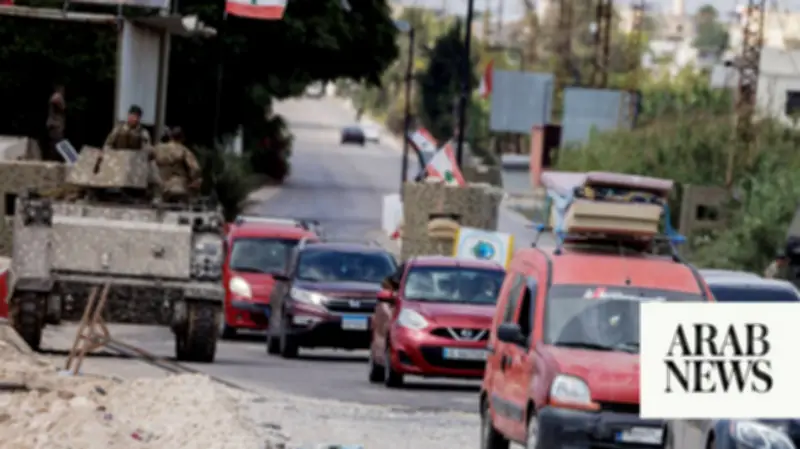
Some southern Lebanon residents cautiously headed back to their hometowns on Sunday after fighting paused between Israel and Hezbollah the previous evening, even as Lebanon's army warned locals to delay returns. In the southern city of Nabatieh, AFP correspondents saw just a few residents trickling back to inspect homes and businesses. Mohammed Salloum said he had come back briefly to check on his shop but would return to the city of Sidon, further north, where he has taken refuge.
Residents Inspect Damage in Nabatieh
"Nabatieh is disaster-stricken," Salloum said while inspecting the damage. "But God willing, the city will return to life within two or three months." Lebanon's army on Sunday emphasized "the need for residents to delay their return to southern border villages and towns" and to comply with army instructions "to preserve their safety from the danger of Israeli violations and attacks." In the southern Tyre region, an AFP correspondent reported a cautious return of some residents, but said many were waiting for the outcome of further Middle East war talks on Sunday and the green light from local authorities.
Ceasefire Announced but Israeli Strikes Continue
The latest Israel-Hezbollah ceasefire was announced on Friday, but Lebanese authorities said Israeli strikes on the country's south and east on Saturday killed at least 30 people before fighting paused in the evening. Israel's Defense Minister Israel Katz on Sunday said Israeli forces had standing orders to act against any threat inside Lebanon, insisting troops would remain in a so-called security zone inside Lebanese territory. Israeli military operations have recently been focused on the Nabatieh region, and Lebanon's Central Bank on Saturday said an Israeli strike targeted its branch in the city. Mayor Abbas Badreddine said that "the scope of destruction on the city of Nabatieh in the past 48 hours amounts to about half of what happened" during the rest of the war.

War Toll and Hezbollah's Position
Lebanon says Israeli attacks have killed more than 4,000 people since Hezbollah drew the country into the Middle East conflict on March 2 with rocket fire at Israel in support of Tehran. Israel's military chief said Hezbollah had suffered a severe blow fighting Israeli forces and was now in a "very difficult position," as he met with troops in southern Lebanon. "Hezbollah has suffered a severe and significant blow, and we are committed to remaining prepared to continue operating and prevent its rebuilding," Lt-Gen. Eyal Zamir said, according to a military statement. "Hezbollah is in a very difficult position," he added. Zamir vowed to defend the communities of northern Israel from Hezbollah rockets. "This is the purpose guiding all our efforts ... The ceasefire that has been declared is fragile, and we must maintain a high level of readiness for the renewal of combat operations," Zamir said.
Central Bank Calls for International Protection
Lebanon's Central Bank called on the US and allies "to guarantee the protection of civilians and Lebanese official institutions." The appeal came after an Israeli strike targeted its branch in Nabatieh, further escalating concerns over the safety of civilian infrastructure.