Pakistan and Qatar on Monday reported "encouraging progress" in the first high-level talks between the United States and Iran held under the framework of the Islamabad Memorandum of Understanding (MoU), announcing the establishment of mechanisms aimed at steering the two sides towards a comprehensive agreement within 60 days.
Lake Lucerne Summit Outcomes
A joint statement issued by Pakistan and Qatar after the conclusion of the Lake Lucerne Summit in Burgenstock, Switzerland, said the talks were conducted in a "positive and constructive atmosphere" and resulted in the creation of a roadmap for further negotiations as well as technical working groups tasked with addressing key issues. The four-way talks were attended by senior figures from Iran, the United States, Pakistan and Qatar. Vice President JD Vance led the US side, while Muhammad Bagher Ghalibaf, the Iranian Parliament Speaker, headed the Iranian side. Prime Minister Shehbaz Sharif and the Qatari Prime Minister Sheikh Mohammed bin Abdulrahman Al Thani moderated the talks, which at times became tense. Despite the Iranian side not showing up for a photo-op and walking out of the talks as a protest over President Trump's latest threats, the mediators managed to bring the process back on track and eventually persuaded the two sides to agree on certain points.
Key Agreements and Mechanisms
The joint statement said the parties agreed to establish a "High-Level Committee" to provide political oversight of the mediation process. "Chief negotiators from both sides will report regularly to the committee and lead working groups focusing on nuclear issues, sanctions, monitoring and dispute resolution mechanisms, along with other matters," it said. "The High-Level Committee has agreed upon a roadmap towards reaching a final deal within 60 days, laying the foundation for the immediate commencement of further technical talks," the statement added. As part of confidence-building measures, the parties also agreed to establish a direct communication line to prevent incidents and miscalculations in the Strait of Hormuz and ensure the safe passage of commercial shipping through one of the world's most strategic waterways. The mediators further announced the creation of a de-confliction cell involving Iran, the United States and Lebanon to oversee implementation of provisions related to the cessation of military operations in Lebanon envisaged under the Islamabad MoU.

Pakistani Leadership's Response
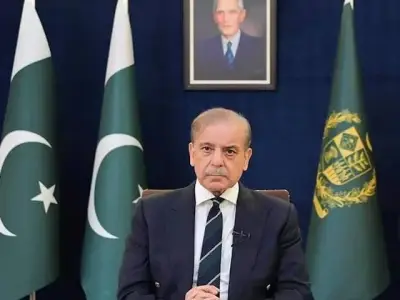
Prime Minister Shehbaz Sharif welcomed the "significant progress" in the talks, pointing out the "agreement on a roadmap toward a final deal within 60 days, the establishment of a High-Level Committee to provide political oversight, and the commencement of further technical talks." He commended the leaderships of both the United States and Iran for their continued commitment to constructive engagement and thanked friendly countries for supporting the diplomatic process. He paid special tribute to Qatar for its role in facilitating the negotiations. Sharif praised Chief of Defence Forces and Chief of Army Staff Field Marshal Asim Munir for helping advance the process, saying his "untiring efforts made these talks a success" and that there would have been "no progress" without his dedication and perseverance. Reaffirming Islamabad's commitment to diplomacy, the prime minister said Pakistan would continue to play its "honest and sincere role" in promoting dialogue aimed at achieving a peaceful and lasting resolution.
Contrasting Public Statements
While the joint statement projected optimism, public comments from Iranian and American officials highlighted significant differences over what exactly was achieved during the marathon negotiations. Iranian Foreign Minister Abbas Araghchi described the outcome as a result of "tireless Pakistani and Qatari mediation," saying the talks had delivered major progress towards ending the Lebanon conflict. According to Araghchi, the understandings reached include waivers for oil and petrochemical exports, lifting of the naval blockade, release of some frozen Iranian assets and the launch of a major reconstruction and development plan for Iran. "The first real test will be the Lebanon de-confliction cell," he said.

US Sanctions Waiver and Commitments
In a major move signaling Washington's commitment to the process, the Trump administration announced a temporary 60-day waiver on sanctions relating to Iranian oil exports. US Treasury Secretary Scott Bessent said the waiver was issued after "productive talks" in Switzerland. "Iran has committed to free and open transit in the Strait of Hormuz and to permit International Atomic Energy Agency (IAEA) inspectors into their country," Bessent wrote on X, adding that the Treasury Department had issued a temporary general licence authorising the production, delivery and sale of Iranian oil. The waiver allows Iran to export oil without sanctions restrictions until August 21, potentially providing significant relief to Tehran's economy after years of punitive measures. US Vice President JD Vance also painted an optimistic picture, calling Sunday's negotiations a "very, very good" day and saying the two sides had laid the groundwork for a broader agreement. "We set the foundation - we haven't built the house - but we've laid a successful foundation to get to a good place for the American people," Vance said. The vice president identified four key priorities moving forward and claimed Iran had agreed to admit IAEA inspectors, describing the move as "a major milestone" and the first step towards permanently ending any Iranian nuclear weapons programme. Vance also cited progress in discussions aimed at preventing renewed escalation between Israel and Hezbollah in southern Lebanon and outlined a framework for the possible unfreezing of Iranian assets under a mechanism involving US and Qatari oversight.
Iranian Rebuttals
However, Iranian officials quickly challenged some of the claims made by Washington, underscoring the difficult path ahead despite the positive atmosphere surrounding the talks. Iranian Foreign Ministry spokesman Esmail Baghaei rejected suggestions that Tehran had accepted new commitments regarding nuclear inspections. According to Iran's state news agency IRNA, Baghaei said Iran remained bound by decisions of parliament and the Supreme National Security Council. Under legislation adopted last year, cooperation with the IAEA and inspections remain suspended. Responding directly to American assertions, Baghaei said Iran had not undertaken any new obligations during the talks. IRNA, citing officials familiar with the negotiations, reported that Tehran did not discuss the nuclear issue during approximately 18 hours of talks and did not accept any new commitments. The report added that any future arrangements regarding access to damaged nuclear facilities or Iran's stockpile of enriched uranium would depend on a specific mechanism to be negotiated as part of a final agreement during the 60-day process.
Outlook and Next Steps
The conflicting public statements reflected the same pattern that had emerged before the Switzerland talks, when American and mediating officials repeatedly described negotiations as progressing smoothly while Iranian media and officials signaled reservations over key issues. Despite those differences, diplomats involved in the process believe the establishment of formal working groups, a political oversight mechanism and direct communication channels represents the most concrete progress achieved since the Islamabad MoU was signed. Technical-level discussions are expected to continue throughout the week in Burgenstock as negotiators seek to translate the broad understandings reached at the Lake Lucerne Summit into a comprehensive agreement capable of addressing nuclear concerns, sanctions relief, maritime security and regional stability.