The United States imposed new sanctions on Tuesday against five Cuban state-owned entities, including companies linked to the military-run conglomerate GAESA, which controls nearly 40 percent of Cuba's gross domestic product. Analysts say the measures are expected to deter foreign investment and worsen the island's already crumbling economy.
Sanctions Target GAESA and Key Economic Sectors
US Secretary of State Marco Rubio announced the sanctions, which target three entities under Grupo de Administración Empresarial S.A. (GAESA): Almacenes Universales S.A. (AUSA), Rafin S.A., and Banco Financiero Internacional S.A. Also sanctioned were state-owned mining company Geominera S.A. and steel producer Empresa Siderúrgica Jose Martí. Additionally, Annalie Lilliam Rueda Cardero, daughter-in-law of former President Raúl Castro, was blacklisted.
GAESA, run by Cuba's Revolutionary Armed Forces, held $14.5 billion in liquid reserves as of early 2024. Rubio accused regime elites of using GAESA to "steal the island's few resources, diverting them for repression, anti-American subversion and spying instead of schools, power plants, and basic necessities."

Impact on Foreign Investors and Trade
Michael Bustamante, a professor and chair in Cuban and Cuban-American Studies at the University of Miami, warned that the sanctions would "spook foreign investors" and make business operations in Cuba logistically difficult. AUSA, the main logistics and warehousing company, holds up Cuba's export and import system and is used by the state, private sector, and foreign investors. "If you don't have a bank where you can go as a foreign investor, it makes your operations logistically quite difficult," Bustamante said of Banco Financiero Internacional.
Max Meizlish, a former US Treasury sanctions enforcement officer, described the bank as "a key nexus for GAESA-related funds," calling the sanctions "significant." Rafin S.A., described as a "very opaque" corporate financial arm within GAESA, also holds capital from the government and GAESA.
Cuba Rejects Sanctions; Economic Reforms Announced
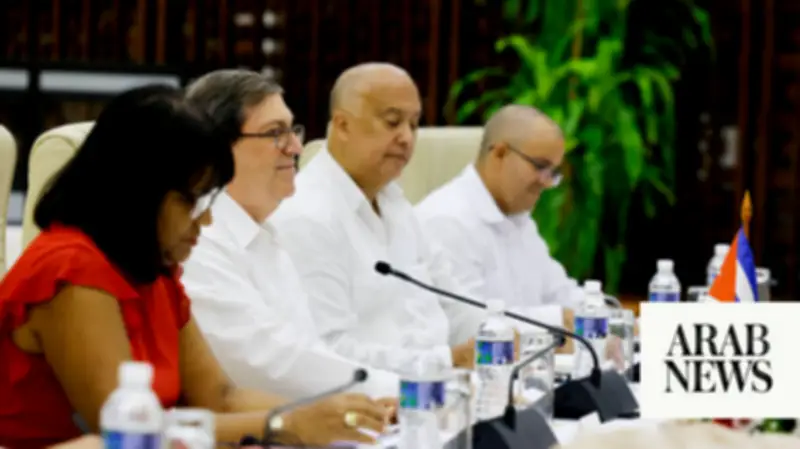
Cuban Foreign Minister Bruno Rodríguez rejected the sanctions, calling Rubio "dishonest and mendacious." He wrote on X: "Cuba has proven stronger, more capable, and more effective than he anticipated in the face of the ruthless aggression and collective punishment inflicted upon its people." Last week, Cuba announced economic reforms allowing the private sector to bypass the state when importing goods. Bustamante called them "potentially the most significant liberalization of the Cuban economy in 60 years," though he noted questions remain.
A US State Department spokesperson dismissed the reforms as "modest, long overdue and ultimately superficial smoke signals from the Cuban regime." Meizlish added, "The US administration is going to continue applying pressure on the regime until the regime is a different beast entirely."
Humanitarian Concerns Amid Existing Crisis
Cuba already faces severe blackouts, food and water shortages, and a crumbling healthcare system, partly due to the US energy blockade. In January, Trump threatened tariffs against countries providing oil to Cuba, which previously relied on Venezuelan shipments. Bustamante warned that disrupting business with storage entities could disrupt the flow of goods and lead to humanitarian consequences.