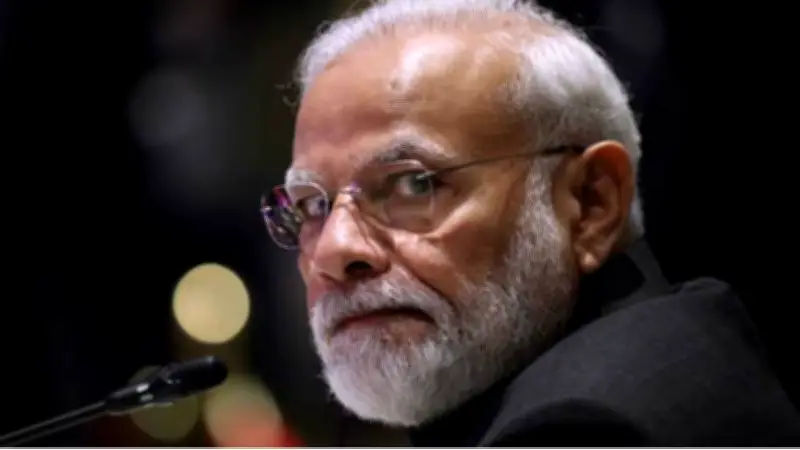
The notion that India might attack Pakistan in 2028 is primarily rooted in the growing economic and political challenges confronting Narendra Modi. This analysis examines both factors separately and then explains how they converge to create a compound effect as Modi enters the pre-election year of 2028. It is this convergence of pressures that could compel him to launch another strike on Pakistan. The temptation will be real and compelling.
Economic Projections and Youth Unemployment
Calculations of the Indian economy using advanced econometric methods, based on conservative data from credible and independent sources, have been undertaken. The inputs include figures from the Reserve Bank of India, the IMF, MUFG, Crisil, CMIE, PLFS and Azim Premji University. In constructing these projections, a stable global environment has been assumed: the US-Iran ceasefire holds throughout 2026–28, oil prices remain reasonably stable, and no extraordinary circumstances disrupt the flow of remittances, which currently help finance India's $119.3 billion trade deficit.
Two conclusions hold across all scenarios. First, GDP growth remains respectable, between 6 and 6.7 per cent in FY27, slipping somewhat in FY28 under stress. Secondly, youth unemployment continues to rise regardless of which oil-price or geopolitical scenario materialises. It rises from approximately 15.2 per cent today to somewhere between 16.4 and 19 per cent by FY28, even under the most optimistic assumptions.

Headline growth is not the problem. The labour market for young and educated Indians is, and it deteriorates in every scenario, not merely the adverse ones. The economics, therefore, present Modi with a structural problem that none of the scenarios resolves before the next election cycle. It establishes the precondition for the central argument: a leader unable to solve this problem through growth alone will increasingly look for something else to be seen doing.
That combination—stable but unsatisfying—is arguably more dangerous for an incumbent. Even the most benign trajectory points to rising youth unemployment over the next two years. Graduate unemployment, estimated at between 25 and 28 per cent, compounds the problem. A large and growing segment of India's most visible, digitally connected and politically vocal demographic will enter 2028 economically worse off than today under every plausible external condition.
The study also indicates that the growing use of AI has already reduced graduate employment opportunities in India. Over time, these effects are likely to extend into labour-intensive industrial sectors as well.
Political Fallout and Domestic Pressures
It is this environment that produced the Cockroach Janata Party, a satirical movement launched in May 2026 by Abhijeet Dipke, a Boston University graduate, after India's Chief Justice was reported to have referred to unemployed youth as 'cockroaches' and 'parasites'. Within days, the movement had acquired more Instagram followers than the BJP and Congress combined. Dipke is a trained political communications strategist who previously worked with the Aam Aadmi Party, and movements rarely grow at such speed without some organisational support behind them.
More troubling for Modi is that a movement mocking his own party's name, founded entirely upon economic grievances, reached tens of millions of young Indians faster than either of the country's principal parties has managed in years. The Financial Times and CNN both treated their scale as a genuine barometer of generational frustration that the government could not dismiss lightly.
That frustration already has an electoral record. In 2024, the BJP's tally fell from 303 seats to 240, depriving it of a parliamentary majority for the first time since 2014 and forcing Modi into a coalition government. Multiple post-election studies, including those by Singapore's Institute of South Asian Studies, identified unemployment as a contributing factor. A prime minister who has built his political brand upon strength and inevitability has already seen what economic anxiety can do to his numbers.

Moreover, the May 2025 military adventure against Pakistan weakened Modi politically. Domestically, critics labelled him 'Surrender Modi' after President Trump announced the ceasefire. Modi has attempted to maintain the initiative through rhetoric, repeatedly insisting that 'Operation Sindoor is going on' and warning that if Pakistan crosses the line again, it will resume. This 'not over' framing has been repeated at several rallies and has been endorsed by BJP president J. P. Nadda as party policy. Having adopted this public position, Modi will have little room to retreat from his own rhetoric when domestic political pressures intensify. He may feel compelled to live up to his words.
Geopolitical and Military Factors
After Modi declined to acknowledge Trump's role in the ceasefire, Trump punished India with an additional 25 per cent tariff, raising duties on Indian exports from 25 per cent in April 2025 to 50 per cent by August, explicitly linking the measure to India's continued purchases of discounted Russian oil. Relief came only in February 2026, when tariffs were reduced to around 18 per cent. However, the price was substantial. India agreed to halt Russian oil purchases and commit itself to purchasing $500 billion worth of American goods over time. This had direct implications for India's labour-intensive industries and, by extension, for employment.
In January 2026, the Pentagon's National Defence Strategy omitted both India and the Quad for the first time in years. The Delhi Policy Group described this as a wake-up call, forcing India to rely more heavily upon strategic autonomy because Washington no longer intended to anchor regional security around alliance guarantees. A further shock followed in June 2026, when US forces struck three tankers crewed largely by Indian sailors in the Gulf of Oman. Three Indian sailors were killed aboard the Settebello, yet New Delhi confined itself to a muted diplomatic protest. The episode fed domestic criticism that Modi's government had become reluctant to challenge Washington.
Meanwhile, India has moved closer to Israel. During Modi's February 2026 visit to Jerusalem, the two countries elevated their ties to a 'Special Strategic Partnership'. Agreements reportedly worth between $8 and $10 billion covered precision-guided munitions, air defence systems and drone warfare. There are also reports of Indian and Israeli forces conducting joint high-altitude exercises, although little information has appeared in the public domain. India is therefore rebuilding precisely those capabilities most relevant to a future limited conflict.
Scenarios and Conclusion
With Pakistan grappling with its own economic and political difficulties, likely to deepen if present trends continue, the temptation for Modi to launch a limited strike will only intensify as 2028 approaches. Driven above all by his insistence that Operation Sindoor remains unfinished, and by the political cover such an operation could provide against mounting domestic frustrations, the incentive will be strong.
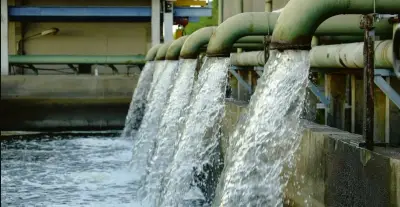
Scenario Two is even more troubling. Should the US-Iran ceasefire collapse, the Strait of Hormuz close, Iran again strike the UAE and Israel, and Pakistan find itself compelled to become openly involved in the Middle East—where approximately 8,000 Pakistani troops are stationed in Saudi Arabia—Modi may be even more tempted to settle scores with Pakistan, with Netanyahu standing firmly behind him. The pretext could be anything: the Indus waters dispute, a terrorist incident, or any other crisis that circumstances or imagination might provide. Such a conflict would simultaneously serve geopolitical ambitions, appeal to the xenophobic impulses cultivated by Hindutva ideology, and divert attention from mounting domestic political and economic pressures.
2028 is unlikely to pass quietly.