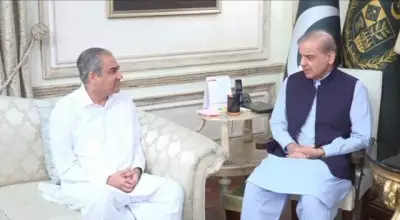
On June 4, one day before the federal budget was originally scheduled to be presented to parliament, Prime Minister Shehbaz Sharif chaired a review meeting and approved in principle a sweeping new faceless tax operating model. Field officers would lose the power to issue notices and conduct audits. A National Faceless Audit Wing would operate from an undisclosed location in Islamabad, allocating cases by algorithm. A National Assessment Wing would hold hearings online. Taxpayers would receive pre-populated returns. All interactions would be digitally logged. The reform, officials said, was modelled on systems used in the United Kingdom, Australia, the Netherlands, Singapore, and India. Rollout would begin in October.
It was, by any measure, a serious-sounding announcement. It was also Pakistan's latest. The Federal Board of Revenue (FBR) has been the subject of serious-sounding announcements about digital transformation for three decades. The Pakistan Revenue Automation Limited (PRAL) was established in 1994 for precisely this purpose. Thirty years on, it was PRAL's own systems that the June 4 announcement credited with exposing how comprehensively tax evasion had flourished on PRAL's watch.
In April 2024, Finance Minister Aurangzeb announced at the World Economic Forum in Riyadh that Pakistan had signed a contract with McKinsey & Company for the end-to-end digitisation of the FBR. By July, the Prime Minister chaired a four-hour review meeting at which a spokesperson for the FBR declared that the initial results were promising. McKinsey's fees were funded by the Bill and Melinda Gates Foundation, channelled through Karandaaz because PRAL, as the FBR's own LinkedIn page noted with some candour, has not been able to produce the results.

In August 2024, a separate Prime Ministerial task force on FBR digitalisation was constituted. In March 2026, the FBR launched a National Cargo Tracking System described at its signing ceremony as a cornerstone of the broader vision for a digital and transparent economy, with full implementation expected within three years. Thirteen months after McKinsey was hired, the June 4 announcement arrived: a new faceless model, a new hub in Islamabad, a new October rollout date.
The pattern is not incompetence. It is a charade, the repeated staging of reform to satisfy external creditors and domestic audiences while the underlying political settlement remains intact. None of this is to say the new model is doomed to fail. Faceless assessment genuinely transformed tax compliance in India after its introduction in 2020, and the diagnostic data the government has published this time is uncommonly specific: 8,697 individuals holding a combined Rs750 billion in bank deposits reported zero income; 98.9 per cent of high-deposit individuals materially under-reported their bank flows; 80 per cent of top property purchasers systematically under-declared transaction values while maintaining active filer status.
The FBR knows exactly where the money is. It has been known for years. The only question that has ever mattered is whether the political will exists to collect it from the people who matter. No algorithm resolves that.
The Real Crisis: A Rs1.7 Trillion Gap
Which brings us to the real crisis the budget has laid bare. The federal government is staring at a gap of roughly Rs1.7 trillion heading into FY2026-27. To plug it, it is pressing the provinces for concessions that would effectively claw back hundreds of billions already promised under constitutional revenue-sharing arrangements — approximately Rs700-800 billion from Punjab's share, Rs500 billion from Sindh's, Rs200 billion from Khyber Pakhtunkhwa's, and around Rs100 billion from Balochistan's, largely by revisiting which taxes flow into the divisible pool.
Simultaneously, under commitments made to the International Monetary Fund (IMF), provinces have been told to generate an additional Rs430 billion in own-source revenue equivalent to 0.3 per cent of GDP, primarily through agricultural income tax and sales tax on services, with specific targets of Rs200 billion assigned to Sindh, Rs175 billion to Punjab, Rs45 billion to Khyber Pakhtunkhwa, and Rs20 billion to Balochistan. They are also expected to contribute towards fertiliser subsidies.

The combined federal and provincial revenue amount under the IMF programme amounts to Rs860 billion, placing a total additional tax burden of more than Rs1.1 trillion on an already squeezed economy. The budget itself was originally scheduled for June 5 and has now been postponed to June 10 after unresolved discussions with the IMF and provincial governments arrived under the tightest fiscal constraints in recent memory.
The State Bank Windfall That Masked the Problem
To understand how the country arrived here, the State Bank's balance sheet is the place to start. In FY2024-25, the State Bank of Pakistan recorded a net profit of Rs2.5 trillion, a decline of roughly 21 per cent from Rs3.4 trillion the previous year, as falling policy rates compressed interest income. Yet the Bank simultaneously transferred Rs2.428 trillion to the federal government as a dividend, a payout that surged approximately 180 per cent year-on-year.
The apparent paradox dissolves once you understand the State Bank of Pakistan Act's revised payout structure: under rules changed in 2022, the government no longer receives quarterly profit transfers but instead receives the full-year audited surplus in a single post-audit payment the following year. The record FY25 dividend, therefore, largely reflected FY24's peak-rate earnings, paid out in arrears after audit, a one-time gift from the era of punishingly high interest rates, delivered with a lag.
That windfall propped up non-tax revenue, helped compress the overall fiscal deficit to a nine-year low, and delivered the primary surplus demanded by the IMF as a condition of continued programme support. Without it, the revenue side would have buckled entirely under the weight of constitutional transfers and fixed national obligations. That windfall is now finished. With monetary policy normalised and inflation retreating from its recent peaks, the pipeline has run dry.
Structural Failure: Interest Payments Devour Half the Budget
What remains is the underlying structural reality: a federal budget proposed at Rs17.1 trillion for FY2026-27, in which interest payments on debt alone are projected at Rs7.824 trillion, nearly half the entire framework, alongside Rs2.665 trillion for defence. The federal development programme, which stood at 2.6 per cent of GDP in 2018, has since collapsed to just 0.6 per cent, as Planning Minister Ahsan Iqbal publicly acknowledged this week.
Of the Rs1 trillion allocated for development in FY2025-26, ministries managed to spend only Rs528 billion by late May, and even the expanded Public Sector Development Programme of Rs1.1 trillion pencilled in for FY27 is under pressure given the IMF's insistence on a primary surplus of 2 per cent of GDP.
Compounding the squeeze, the FBR is running a shortfall of around Rs683 billion against its target in the first ten months of FY26, its second consecutive year of missing by more than Rs1 trillion on an annualised basis. The IMF-backed framework for FY27 sets an FBR target of Rs15.267 trillion, requiring 14 per cent growth, alongside a petroleum levy target of Rs1.727 trillion, an increase of Rs259 billion, or nearly 18 per cent precisely because the levy flows entirely to the Centre and need not be shared with provinces under the National Finance Commission (NFC) formula.
Even that aggressive push cannot close a Rs1.7 trillion gap.
Fiscal Federalism: A Broken Compact
The 7th NFC Award of 2009 was a genuine compact. It replaced the population-only distribution formula with a multi-criteria one and raised the provincial share of divisible taxes to 57.5 per cent, on the explicit understanding that larger fiscal transfers would be matched by provincial investment in health, education, and social protection and, critically, by meaningful revenue mobilisation from each province's own economic base. Fifteen years on, the second half of that bargain has been honoured in rhetoric only.
The evidence is not ambiguous. The IMF's own staff report noted that agriculture contributes 24.6 per cent of Pakistan's value added, yet faces an effective tax rate of just 0.3 per cent compared to a staggering 166 per cent effective rate on petroleum products. Agricultural income tax collections remain well below even the modest targets set, with implementation delays and enforcement failures cited in every successive review.
Urban property taxes are similarly symbolic: Sindh collected just Rs21.4 billion in stamp duties in the first nine months of FY26, compared to Rs38 billion in Punjab, both figures a fraction of the potential yield in two of South Asia's most densely urbanised economies. The wholesale, retail, and trading sectors collectively account for close to 18 per cent of GDP yet contribute less than 3 per cent of direct tax collections, with provinces doing almost nothing to leverage their constitutional authority over sales tax on services to document or tax this vast informal economy.
Real estate functions as a preferred parking lot for untaxed wealth; large landholdings enjoy a de facto exemption; trader networks operate with minimal scrutiny. None of this is accidental dysfunction. It is deliberate elite protection, dressed up as provincial autonomy.
The Cycle of Evasion
The federation bears the political cost of aggressive extraction while the provinces preserve local patronage arrangements and low-tax political bargains. Every budget speech promises base-broadening. The pattern never changes: organised lobbies carve out exemptions before the ink dries; the salaried class, exporters, and formally documented businesses are squeezed through withholding mechanisms, advance taxes, levies, and inflation; agriculture, wholesale trade, and real estate sail through largely untouched.
The federal government has, in effect, increasingly substituted divisible-pool taxation with non-divisible levies, above all, the petroleum levy, thereby eroding the very pool whose size provinces invoke to defend their autonomy. The irony is exquisite: the Centre responds to each provincial revenue failure by shifting more burden onto instruments that bypass sharing arrangements entirely, which shrinks the pool, which generates fresh provincial complaints about fiscal marginalisation, which produces more levy hikes, and so the cycle turns.
Provincial Resistance and the 18th Amendment
Provincial governments will invoke the Eighteenth Amendment in response to current pressure. That is their right, on paper. Article 160 of the Constitution does protect the provincial share, and no credible voice is calling for the NFC to be scrapped. But the Amendment's spirit was never take the money and shield the rich. It was a compact: greater autonomy in exchange for genuine service delivery and genuine tax effort. The provinces have accepted the autonomy and deferred the effort indefinitely.
An 11th NFC was constituted in August 2025 to reopen these long-deferred debates, though even its inaugural session was repeatedly postponed, a fitting metaphor for the pace of structural reform in Pakistan. The immediate demand is straightforward: enforce existing provincial tax laws aggressively enough to deliver the Rs430 billion and prevent either a raid on the divisible pool or a fresh round of borrowing that crowds out private credit and risks reigniting the inflation Pakistan has only recently tamed.
The medium-term imperative is a more fundamental performance-linked NFC framework that rewards genuine revenue mobilisation rather than simply transferring resources based on population and inertia. The World Bank has estimated that Pakistan could collect agricultural income tax equal to 1 per cent of GDP, worth roughly Rs1.22 trillion at current economic size, if provincial laws were properly enforced at rates comparable to federal income tax. The gap between that potential and current collection is not a technical problem. It is a political choice, repeated annually, by governments at every level.
The Faceless Model: Tool or Distraction?
The new faceless tax model, if implemented with genuine fidelity, could help at the federal margin. Removing discretion from field officers matters; the evasion data PRAL has published proves that the current system is riddled with complicity between assessors and assessed. But digitisation is a tool, not a strategy. India's faceless system worked because it was backed by aggressive criminal prosecution and political commitment from the top — not because the technology was novel.
Pakistan has had the technology, in various iterations, for three decades. What it has lacked is the will to use it against the people who matter. The budget to be presented on June 10 will tell us whether anything has changed. The Rs430 billion provincial ask, the IMF's presence in the room, the FBR's consecutive shortfalls, and now a prime ministerial imprimatur on yet another digitisation drive have created an unusually explicit moment of accountability.
History suggests Pakistan will find a way to paper over the gap — a creative accounting adjustment here, a delayed expenditure there, a levy hike buried in the fine print — without confronting the structural evasion beneath. The question is whether the magnitude of the current crisis is finally large enough to force the reckoning that fifteen years of deferred reform have made inevitable. The provinces face a simple choice: tax their elites across agriculture, property, and trade, or watch the entire edifice crack under the weight of unsustainable debt and the next inevitable crisis. Pakistan has faced this choice before. It has always found a way to avoid answering it. That option is running out.
Tags: Pakistan budget crisis, fiscal federalism Pakistan, FBR tax reform Pakistan, IMF Pakistan economy, agricultural tax Pakistan, TFT, Friday Times