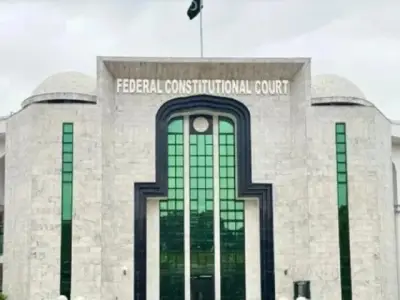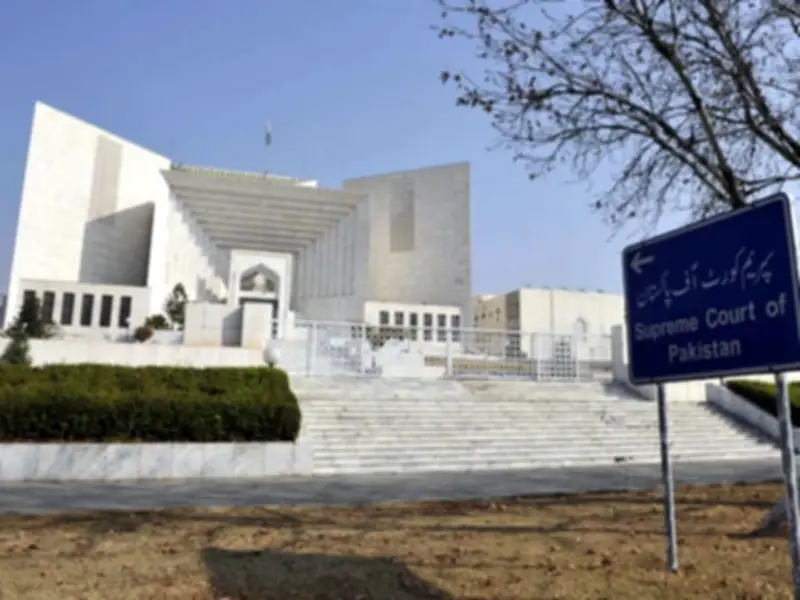
The Supreme Court of Pakistan on Tuesday declared that all executive and judicial authorities, including high courts across the country, are bound to comply with its directions issued under Article 187 of the Constitution. A five-page judgment authored by Justice Jamal Khan Mandokhail emphasized that this constitutional provision empowers the apex court to issue necessary directions for ensuring complete justice in pending cases.
Constitutional Authority Under Article 187
The judgment stated: "Under Article 187 of the Constitution, the SC possesses the authority to issue such directions, orders, or decrees as may be necessary for doing complete justice in any case or matter pending before it. This constitutional power obligates all executive and judicial authorities, including the High Courts, throughout Pakistan to act upon the directions of the SC to ensure effective implementation of statutory mandates for the purpose of regulating judicial process."
Case Background
The observations were made during a hearing seeking directions for the completion of a complaint filed under the Illegal Dispossession Act, 2005, within the stipulated 60-day period. A division bench comprising Justice Mandokhail and Justice Malik Shahzad Ahmad Khan noted that the complaint had been filed in 2016, yet the trial court failed to conclude proceedings within the statutory timeframe required by Section 5(2) of the Act.

Court's Directions
The bench ruled that it is the constitutional responsibility of the Supreme Court to issue appropriate directions to ensure adherence to the law. The court directed:
- Every trial court handling a complaint under the Act must complete proceedings within 60 days of taking cognizance, maintaining a day-to-day order sheet.
- If a trial cannot proceed on a scheduled date, the court must record sufficient reasons for the delay in the order sheet.
- Bare references to 'non-availability of witnesses' or 'adjournment sought by counsel' shall not constitute sufficient reasons.
- No adjournment should be granted as a routine; any adjournment must be based on a justifiable reason.
Monitoring Mechanism
The judgment also directed members of inspection teams of respective high courts and directors general of district judiciary to periodically monitor all pending cases under the Act. They must track the date of filing, date of taking cognizance, status of proceedings, and reasons for any delay beyond 60 days.