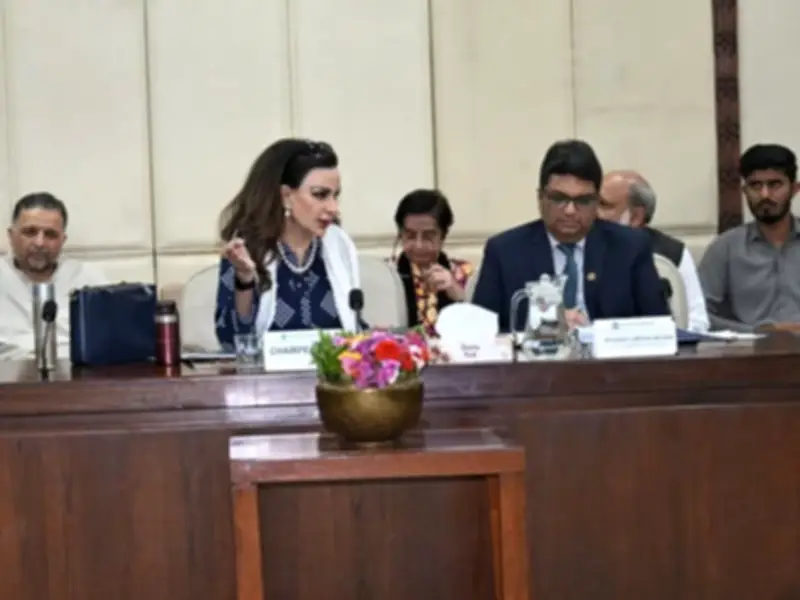
ISLAMABAD: Senate Standing Committee on Climate Change and Environmental Coordination Chairperson Senator Sherry Rehman on Thursday termed continued cuts in climate allocations as "shocking," warning that Pakistan is entering a period of heightened climate vulnerability marked by intensifying heatwaves, accelerated glacier melt, erratic rainfall, worsening water insecurity, and growing environmental stress in urban centres.
Concerns Over Shrinking PSDP Allocation
Chairing a meeting of the committee, Rehman expressed concern over the shrinking Public Sector Development Programme (PSDP) allocation for the climate ministry, which stands at Rs2.478 billion for 2026-27 after declining from Rs3.5 billion to Rs2.7 billion in the previous fiscal year.
"Climate risks are increasing, not decreasing. Yet allocations continue to shrink while implementation challenges persist," she said, while also noting that the ministry had struggled to fully utilise previously allocated funds.

Questioning the Climate Change Authority
The senator questioned the rationale behind establishing the Climate Change Authority, arguing that climate governance required stronger coordination rather than additional bureaucratic structures.
"What is the function of this authority, and what is it doing that the climate ministry cannot achieve?" she asked, describing it as another state-owned entity (SOE) without clearly defined objectives.
Referring to government figures, she noted that losses incurred by SOEs reached Rs832.8 billion in FY2025, while cumulative losses had climbed to Rs6.56 trillion. She added that Rs451 billion had again been allocated to SOEs in the current budget.
Monsoon Season Preparedness
The committee also reviewed Pakistan's preparedness for the upcoming monsoon season, with detailed briefings from the National Disaster Management Authority (NDMA) and the Capital Development Authority (CDA).
NDMA Chairman Inam Haider Malik informed lawmakers that the 2026-27 period was expected to be influenced by El Niño conditions, increasing the likelihood of extreme weather events and greater climate variability across the region.