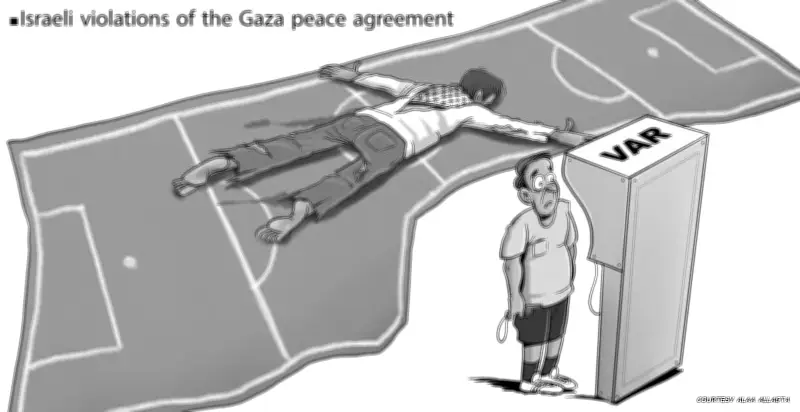
A satirical cartoon published on June 21, 2026, in a leading Pakistani newspaper offers a sharp visual commentary on the nation's ongoing political and economic challenges. The artwork, attributed to a prominent cartoonist, uses allegory and humor to reflect public sentiment regarding governance and policy decisions.
Visual Elements and Symbolism
The cartoon depicts a scene where a figure representing the common citizen is shown carrying a heavy burden labeled "inflation," while political leaders are seen engaging in a tug-of-war over a cake labeled "national resources." The backdrop includes a crumbling infrastructure and a rising sun with the word "hope" fading in the sky. This imagery underscores the disconnect between public struggles and political infighting.
Context and Public Reaction
The publication comes amid rising inflation rates and political instability in Pakistan. According to economic reports, the consumer price index increased by 12% year-on-year in May 2026, while political parties remain deadlocked over budget negotiations. The cartoon has garnered widespread attention on social media, with many users sharing it as a representation of their frustrations. "This cartoon says what we all feel but cannot say," tweeted one user.

Role of Political Cartoons in Pakistan
Political cartoons have a long history in Pakistan as a form of social commentary. They often serve as a barometer of public opinion, providing a satirical lens on governance. This particular cartoon continues that tradition, using visual metaphors to critique the status quo. Experts note that such cartoons can influence public discourse by simplifying complex issues. "Cartoons distill complex political realities into a single frame, making them accessible to a wider audience," says media analyst Dr. Ayesha Khan.
Impact on Governance and Policy
While cartoons alone do not drive policy change, they contribute to the broader narrative of accountability. The timing of this cartoon, coinciding with parliamentary debates on the budget, may amplify calls for transparency. Some lawmakers have acknowledged the public mood reflected in such art. "We take note of the people's concerns, even when expressed through satire," remarked a government spokesperson.
Conclusion
The June 21 cartoon serves as a poignant reminder of the power of visual satire in highlighting societal issues. As Pakistan navigates its economic and political challenges, such artistic expressions remain a vital part of the democratic dialogue, prompting reflection and, ideally, action from those in power.