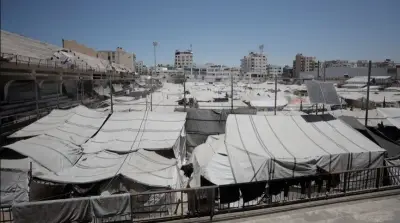
The Hamas group announced on Monday that it has dissolved its government in Gaza and is preparing to transfer power to a technical committee supported by the United Nations, as part of a U.S.-brokered ceasefire deal. The decision was described by Hamas as evidence of its commitment to Gaza's reconstruction after years of war, but it did not specify whether it plans to disarm or hand over security to an international force.
Details of the Announcement
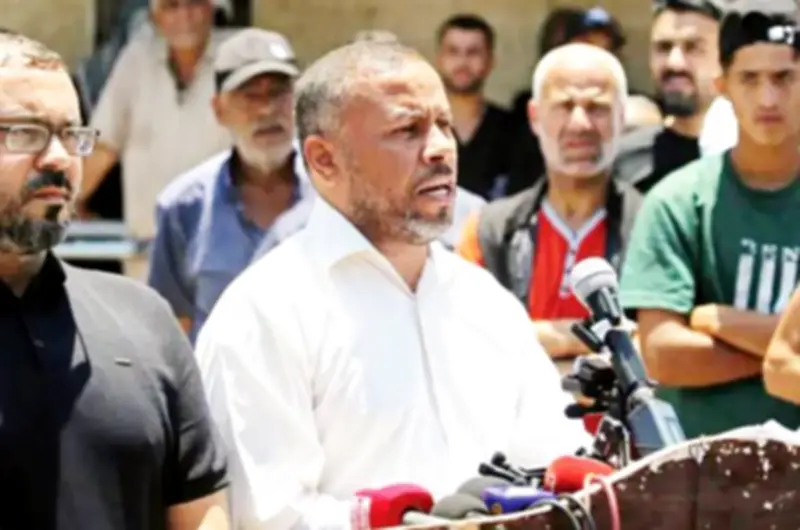
At a news conference in the courtyard of Al-Aqsa Hospital in Deir al-Balah, Ismail al-Thawabta, general director of the Hamas-run Government Media Office, stated that “only technical and professional staff” would remain in their positions to manage the enclave’s day-to-day affairs. He added, “All employees working in service provision are ‘state employees’ and are fully prepared to work under the National Committee for the Administration of Gaza.”
Hamas spokesperson Hazem Qassem called the move “a positive step forward on the path to implement the ceasefire deal.” However, it remains unclear if the announcement will lead to meaningful changes on the ground.

Response from the Board of Peace and Israel
The Board of Peace, the new entity led by President Donald Trump with the mandate of governing and rebuilding Gaza, acknowledged the Hamas announcement but said it would assess the impact based on “actions, not promises.” The board stressed in a statement on X that the technocratic committee must control all weapons in Gaza, as outlined in the ceasefire agreement.
Israeli Foreign Minister Gideon Saar dismissed the move, stating it was designed to avoid disarmament. “As long as Hamas retains its weapons, any civilian government will of course operate as Hamas dictates,” he wrote on X.
The Technocratic Committee
The committee of technocrats, based in Cairo, is chaired by Ali Shaath, a Gaza-born engineer and former official with the Palestinian Authority. It has a mandate to restore essential services and oversee civilian affairs under the supervision of the U.N. and the Board of Peace. In a statement on X, Shaath acknowledged the announcement and emphasized that for the committee to function effectively, there must be “a single governing authority operating under one legal framework” and “a unified security apparatus accountable to that authority.”
Ceasefire and Conflict Background
Nine months after the ceasefire was signed, negotiations between Israel and Hamas remain largely deadlocked over the implementation of its second phase, which includes disarmament of Hamas and reconstruction of Gaza. Hamas has insisted on implementing the first phase before discussing its weapons.
The Oct. 7, 2023, attack by Hamas-led militants that sparked the war killed some 1,200 people in Israel and saw 251 others taken hostage. Israel’s retaliatory offensive in Gaza has killed 73,098 Palestinians, according to Gaza’s Health Ministry. The ministry, part of the Hamas-led government, is staffed by medical professionals and maintains detailed records viewed as generally reliable by U.N. agencies and independent experts. It does not distinguish between civilians and militants but says women and children make up around half of all fatalities.