A mass shooting in South Africa this week has once again drawn attention to the deadly trend of killings in the country's most impoverished areas. Experts attribute these incidents to organized crime syndicates that exploit police failures and, in some cases, the complete absence of law enforcement.
Latest Mass Shooting in Johannesburg
The shooting occurred in an informal settlement of shacks in Johannesburg, where multiple suspects opened fire, leaving 12 people dead and at least 15 wounded. Authorities have reported no arrests so far. This incident is part of a disturbing pattern of violence in marginalized communities.
Government Response and Criticism
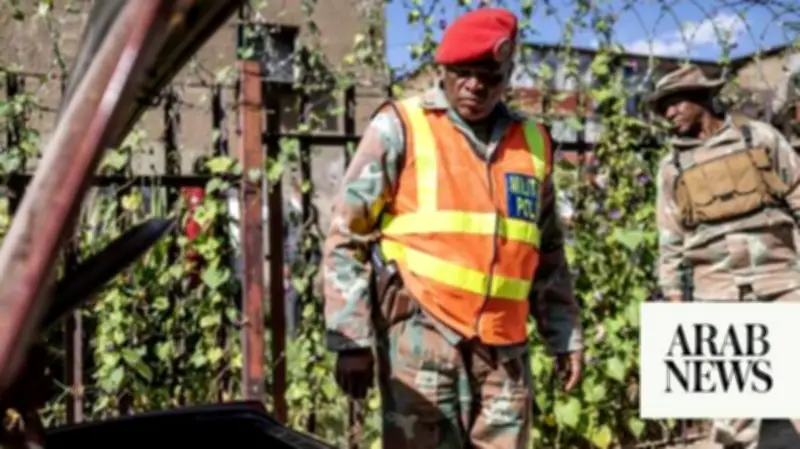
South African President Cyril Ramaphosa earlier this year deployed the army to several hotspots in an attempt to combat organized crime. Critics view this as an admission that the police force, in Africa's most developed country, is losing the battle in these areas. The police force itself has been plagued by corruption allegations and collusion with criminal syndicates, leading to the arrest of over a dozen senior officers and the suspension of top officials, including the police minister and national police commissioner.

Organized Crime in Poor Neighborhoods
Recent mass shootings, including two in December that killed more than 20 people, have occurred in poor areas far from city centers. Criminals take advantage of conditions such as lack of security, poor lighting, and slow police responses. Jacob Mofokeng, a criminology professor at the University of South Africa, told the Associated Press: "Criminal syndicates explicitly capitalize on this to hide weapons, execute hits, and vanish into the shadows."
Inequality and Crime
South Africa has extremely high levels of violent crime, with an average of over 60 homicides per day. However, the vast majority of killings occur in poor townships or informal settlements. The country's deep inequality is reflected in its crime rates: affluent neighborhoods enjoy significantly lower levels of violent crime.
Illegal Mining Gangs
Illegal mining gangs, known as zama zamas (roughly meaning "hustlers" or "chance-takers" in Zulu), have long been a problem in and around Johannesburg, which sits on some of the world's largest gold reserves. These gangs establish bases in impoverished, poorly policed areas and engage in turf wars or use violence to maintain control. Many gang members are migrants from neighboring countries who are in South Africa illegally, making them difficult for police to track. As Mofokeng explains: "They have no legal identification, no registered address, and no fingerprints or DNA profile. They are effectively a ghost."
The South African government estimates it loses over $3 billion annually to illicit mining. The zama zamas have been a persistent problem for decades and were a key reason President Ramaphosa authorized a yearlong military deployment to fight organized crime in specific areas. Residents of the Johannesburg neighborhood hit by this week's mass shooting reported that illegal mining gangs were known to operate there. Police have not yet determined a motive but are focusing on mining gangs as part of their investigation.
Illegal Firearms
South Africa has strict regulations on legal firearm ownership, but an estimated 2 to 3 million illegal guns circulate in a country of 62 million people, according to independent studies and civil society organizations. Firearms are the most common cause of homicides. Willem Els, an analyst at the Institute for Security Studies, said the combination of illegal guns and police failures creates an ideal environment for criminality: "In South Africa, we actually managed to create conditions that are very conducive for violent crime and also for organized crime syndicates to operate with impunity. We've got a lot of unregistered firearms that are not being controlled by the police."

Lack of Trust in Police
Analysts note that South African police are underresourced, but corruption allegations have severely undermined their credibility. A recent allegation by a provincial police commander that top officers and officials were colluding with organized criminals prompted President Ramaphosa to announce a national investigation into police corruption, leading to a wave of arrests of senior officers. Private investigator and security specialist Mike Bolhuis said police corruption affects on-ground policing, as citizens are hesitant to share information or assist authorities. "The public doesn't trust the police, they don't trust the authorities, and they don't trust each other," Bolhuis stated.