The Punjab Police, responsible for law and order in a province of over 120 million people, presents a stark paradox. While its technological advancements and counter-terrorism efforts earn international acclaim, the force is marred by systemic corruption, extrajudicial violence, and fatal operational errors. This duality defines an institution struggling to reconcile modern capabilities with a legacy of impunity.
Structural Framework and Specialized Units
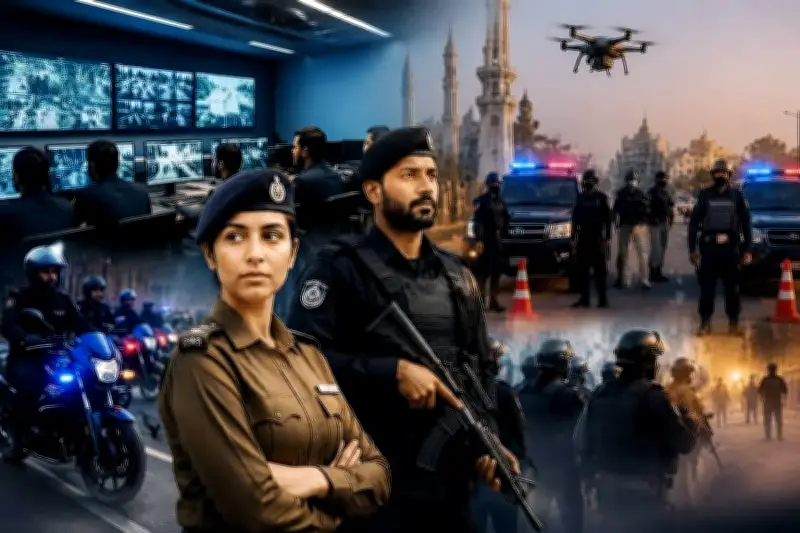
The force operates through multiple specialized branches. The Operations Branch manages daily district policing, while the Investigation Branch handles forensic science and crime scene analysis. Field patrolling units include the Punjab Highway Patrol (PHP), which secures major highways; the Dolphin Force, a motorized urban unit for real-time street crime interception; the Special Protection Unit (SPU), tasked with safeguarding foreign nationals and mega projects; and the Punjab Constabulary, a reserve force for public order crises.
High-risk threats are addressed by the Elite Police (Punjab Elite Force), trained in counter-sabotage and hostage rescue; the Counter Terrorism Department (CTD), an intelligence-driven tactical arm; the Anti-Riot Force (ARF) for non-lethal crowd control; and the Special Branch, which gathers political and security intelligence. The Organized Crime Unit (CIA) and Crime Control Department (CCD) focus on high-profile cartels and syndicates. Technological support comes from the Traffic Police, Punjab Safe Cities Authority (PSCA), and the Training Branch.

Counter-Terrorism and International Recognition
Punjab Police has played a frontline role in national defense. During Operation Maarka-e-Haq, officers fought alongside the armed forces to secure sensitive installations, earning state honors including the Sitara-i-Imtiaz. In early 2026, the CTD conducted over 425 intelligence-based raids, dismantling active terror cells and arresting high-threat militants.
International accolades include presentations of digital governance models at the World Police Summit in Dubai. Female officers have broken barriers: SSP Riffat Bukhari was celebrated by the International Association of Women Police (IAWP), and SP Aisha Butt won the IAWP Global Excellence in Performance Award 2025 for traffic management reforms. The PSCA achieved AI Management System Certification by SGS. Virtual Women Police Station and Virtual Centre for Child Protection improved reporting for vulnerable groups. The PHP's e-Police Post App matches suspect data against databases, recovering hundreds of stolen vehicles annually.
Extrajudicial Killings and Rights Abuses
Despite these achievements, the force is plagued by extrajudicial killings known as "police encounters." A Human Rights Commission of Pakistan (HRCP) report revealed hundreds of suspect fatalities with virtually no police injuries, indicating pre-planned executions. The CCD faced legal petitions in the Lahore High Court, accusing it of fabricating supplementary statements in FIRs to frame detainees before killing them. Police commanders dismissed the findings as "baseless social media rumors," citing a 60% drop in crime, but the controversy eroded public trust.
Operational blunders have led to civilian deaths. In Chakwal, CCD officers opened fire on a civilian vehicle mistakenly believed to carry robbers, killing nine-year-old Hania and wounding her father and brother. The provincial command admitted "criminal negligence" due to failure in target verification. This echoed the Sahiwal Incident, where CTD officers killed a couple, their daughter, and their driver based on faulty intelligence, leaving three traumatized siblings.
Corruption and Internal Accountability
Systemic corruption pervades the force. Internal inquiries revealed senior CIA officers accepted kickbacks to shield cartel leaders and drug traffickers, including suspects linked to the "Cocaine Queen" network. In Rawalpindi, the City Police Officer suspended and arrested seven officers—including an Inspector and Sub-Inspector—after video evidence showed them running an extortion racket inside a judicial complex.

The July 2026 Lahore gang rape case exposed gaps in the SPU's surveillance. Two female nationals from the Netherlands and Venezuela were lured into Lahore's Defence area, held at gunpoint, and blackmailed for $1.5 million in cryptocurrency. The Investigation Branch used modernized forensics to match DNA from the crime scene to three suspects, including Muhammad Raza Dar, grandson of Deputy Prime Minister Ishaq Dar. The victims recorded testimonies under Section 164 of the Criminal Procedure Code before leaving the country, leaving the police to navigate political influence and forensic accountability.
Critical Crossroads for Reform
The Punjab Police possesses the infrastructure, specialized units, and international validation to become a world-class force. However, digital innovations cannot mask human rights violations, lethal negligence, and internal protection rackets. To evolve, leadership must prioritize radical internal reform: enforce judicial accountability for extrajudicial killings, mandate situational de-escalation training for combat units like the CCD and CTD, and establish independent oversight to protect whistleblowers. Until operational blunders are treated with the same urgency as external threats, technical milestones will remain overshadowed by a profound trust deficit.