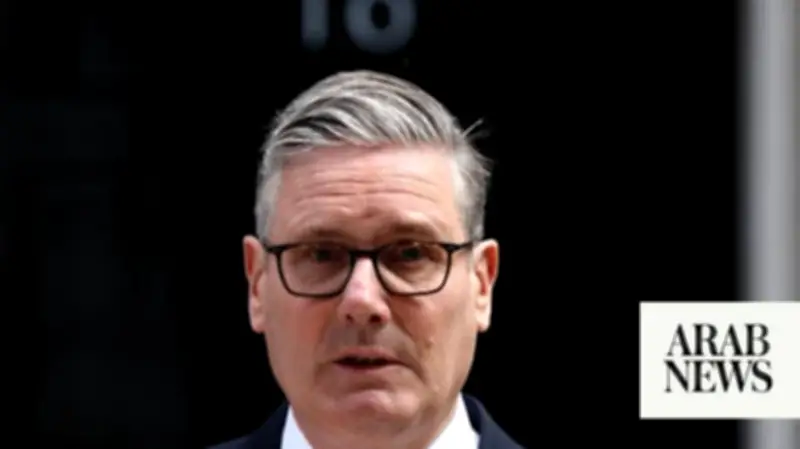
Starmer Resigns as Prime Minister After Loss of Party Confidence
UK Prime Minister Keir Starmer resigned on Monday, ending a tenure marked by a landslide 2024 election victory followed by a series of political missteps. He announced he would step down as Labour Party leader but remain caretaker prime minister until a successor is chosen. The resignation paves the way for Britain to have its seventh prime minister in just over a decade.
Starmer, speaking from a lectern bearing the royal coat of arms, said: “The question my party is asking now is whether I am best placed to lead us into the next general election. I have heard the answer of my parliamentary party to that question. And I accept that answer with good grace.” His voice choked with emotion as he concluded his brief statement.
Andy Burnham Confirms Candidacy, Wes Streeting Offers Support
Former Manchester Mayor Andy Burnham confirmed he will run to succeed Starmer, announcing his candidacy on X. He thanked Starmer for his service and said: “The country expects stability, seriousness and a continued focus on the issues that matter most.” He added that political change should not distract from improving people’s lives, citing priorities such as economic growth, cost of living, public services, housing, and opportunities for the next generation.

Health Secretary Wes Streeting, considered a leading contender, announced he would back Burnham, making it likely that Burnham will be selected without a leadership contest. Nominations open on July 9 and close on July 16, when Parliament breaks for summer recess. If unchallenged, Burnham could become prime minister soon after. Even with a contest, Starmer said a successor would be selected by September 1.
Political Reactions: Lib Dems, Greens, and International Leaders Respond
Liberal Democrat Leader Ed Davey called for a change in “our broken politics,” stating: “The British people are sick of being let down by an endless merry-go-round of prime ministers while nothing really changes for them.” Green Party Leader Zack Polanski echoed the need for a “bold change of direction,” warning that Burnham “must be bold or he will be bust.”
German Chancellor Friedrich Merz’s spokesperson, Stefan Kornelius, described Starmer as “a reliable and close partner in foreign policy questions, particularly regarding Ukraine.” The spokesperson confirmed that a planned meeting of the “E5” nations (Germany, France, Britain, Italy, and Poland) in Berlin on Wednesday would proceed as scheduled, as part of preparations for the upcoming NATO summit.
European Commission President Ursula von der Leyen praised Starmer’s legacy on X, writing: “It can take many leaders years to grow into the statesman you became in just two years. European and Ukrainian security is stronger because of you.”
Starmer’s Legacy and the Context of UK Political Instability
Starmer won a landslide victory in the 2024 general election, ending 14 years of Conservative rule. He succeeded Rishi Sunak (2022–2024), who followed Liz Truss (45 days in 2022), Boris Johnson (2019–2022), Theresa May (2016–2019), and David Cameron (2010–2016). Starmer’s tenure was intended to bring stability but was undermined by a series of missteps that damaged his credibility.
In his resignation speech, Starmer reflected on his journey: “Walking up this street two years ago was the proudest moment of my life. A new Labour government. The first in 14 years. … The chance to change the lives of millions of people for the better.” He confirmed he had informed King Charles III of his decision and would ensure an orderly handover of power.