The Performance of Power in U.S. Cabinet Meetings
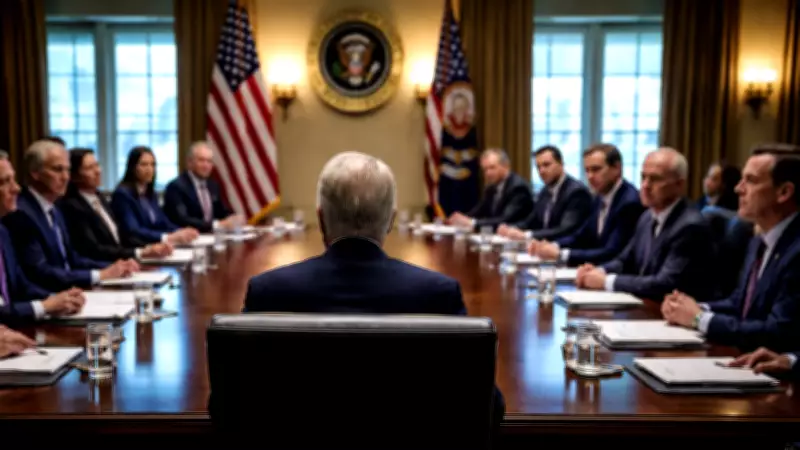
A recent U.S. cabinet meeting and press conference, widely discussed in public discourse, offers a profound opportunity to analyze how political authority is expressed in contemporary America. This event stood out not only for its significant policy implications, including the decision to move towards war without prior congressional authorization, but also for its distinct linguistic patterns. Phrases such as "Under your leadership...," "Because of your vision...," "As you instructed...," and "It's an honour to serve you" were frequently used. These expressions invite an anthropological interpretation as a ritualized performance of power, where language, hierarchy, and spectacle converge to shape perceptions and legitimize authority.
Historical Parallels: From Mughal Courts to Modern Politics
Historically, courtly settings, such as those of the Mughal Empire, were not merely administrative spaces; they were carefully orchestrated theatres of sovereignty. Authority was enacted through codified forms of speech and gesture that continually reaffirmed the ruler's centrality. The repeated use of deferential and leader-centric language in the cabinet meeting, such as "Following your direction...," "Under your leadership...," and "Because of your vision...," reflects this performative logic. These expressions do not simply describe political authority; they actively reproduce it by positioning the leader as the singular source of decision-making and success.
Sociological Shifts: From Rational-Legal to Charismatic Authority
From a sociological perspective, this pattern suggests a shift from impersonal, institutional forms of authority to a more personalized approach to governance. As Max Weber argued, modern democratic systems ideally function under rational-legal authority, in which legitimacy derives from rules, procedures, and offices rather than from individuals. However, statements such as "You've achieved more than any administration..." or "Your leadership has been extraordinary" indicate the increasing prominence of charismatic authority, where legitimacy is associated with the individual leader. This trend is further reinforced when significant decisions, such as moving towards war without congressional approval, are framed as arising from presidential will rather than institutional deliberation. This does not entirely replace bureaucratic governance; rather, it creates a hybrid political culture in which formal institutions coexist with symbolic practices reminiscent of patrimonial or court-like traditions.

Anthropological Insights: Staged Performances and Ritualized Affirmations
Anthropologically, performances such as cabinet meetings are best understood as structured and strategic rather than incidental. Using Erving Goffman's The Presentation of Self in Everyday Life, we can interpret these meetings as carefully staged presentations aimed at a broader audience. Power in modern politics is exercised not only through institutions but also through language, ritual, and spectacle. In this context, phrases such as "It's an honour to serve you" or "Because of your vision..." function as ritualized affirmations of loyalty and unity. They help clarify power relations, signal alignment with authority, and project a cohesive image of governance. Whether or not these statements express genuine feelings is secondary; their primary role is to maintain a specific public representation of political order.
Mediated Spectacle: The Press Conference as a Dramatized Stage
This dynamic is further illuminated by Clifford Geertz's Negara: The Theatre State in Nineteenth-Century Bali, where power is demonstrated through spectacle as much as through administrative actions. The modern press conference, especially when broadcast and widely shared, becomes a mediated stage on which authority is dramatized. Phrases such as "As you instructed..." or "Following your direction..." turn policy discussions into performances of hierarchy, reinforcing the image of centralized, decisive leadership. Announcing or justifying war in such a context, particularly without congressional approval, intensifies this theatrical aspect, portraying executive action as both decisive and personalized.

Impacts on Democracy: Blurring Office and Officeholder
The impacts of this performative shift on American democracy are significant, though they unfold gradually rather than suddenly. A key effect is the blurring of the distinction between the office and the officeholder. When policies are consistently presented as originating from an individual, through phrases such as "As you instructed..." or "Because of your vision..." rather than from institutional processes, this can reshape public perceptions of where authority lies. When this extends to serious decisions, such as war, which is traditionally subject to congressional oversight, it raises important questions about the balance of power and the strength of institutional constraints. Over time, this may weaken the cultural foundations of bureaucratic accountability, as governance becomes increasingly associated with personal leadership rather than institutional deliberation and collective responsibility.
Internal Governance: Hierarchical Relationships and Discouraged Dissent
At the level of internal governance, the ritualization of praise and deference can significantly influence how political actors interact with one another. Phrases such as "It's an honour to serve you" or "Your leadership has been extraordinary" reflect not only public communication but also the cultivation of hierarchical relationships within the political elite. In such contexts, officials may feel pressured to demonstrate loyalty through their language, which can discourage dissent and limit opportunities for critical debate. Although disagreement may still exist, it is less likely to be expressed openly in highly visible settings. This dynamic reshapes decision-making, particularly during crises like war.
Normalization of Vertical Power Relations
Furthermore, adopting a personalized, leader-centric language contributes to the normalization of vertical power relations that conflict with democratic ideals. Democracies rely on a balance between leadership and institutional constraints, where authority is distributed across multiple centers and subjected to scrutiny. However, frequent invocations of personal authority, such as "Under your leadership..." or "You've achieved more than any administration...," reinforce a top-down conception of governance. In this view, authority flows from the leader to subordinates rather than emerging from collective processes. When combined with unilateral decisions on issues like war, this shift carries both cultural and institutional implications.
Resilience of Democratic Structures
At the same time, it is essential to recognize the resilience of the U.S. democratic system. Constitutional checks and balances, electoral competition, judicial oversight, and a pluralistic media landscape continue to impose constraints on executive power. Congress retains the authority to approve funding, conduct oversight, and challenge executive decisions, even if these mechanisms are not always activated immediately. These structural features differentiate contemporary governance from historical court systems and limit the extent to which personalized political performance can effect lasting institutional change.
Comparative Context: Broader Anthropological Insights
In a comparative context, this phenomenon highlights a broader anthropological insight: modern democracies are not insulated from older power dynamics. In times of strong leadership projection or political polarization, the language and rituals of governance may draw upon quasi-monarchical or courtly expressions to consolidate authority. The repeated use of deferential phrases, such as "Following your direction...," "Because of your vision...," and "It's an honour to serve you," places the leader at the center of the political narrative, reinforcing a personalized understanding of power even in formally democratic systems.
Conclusion: The Future of Authority in American Democracy
Ultimately, this situation illustrates that power in modern politics is exercised not only through institutions but also through language, ritual, and spectacle. The increasing prominence of leader-centric political performance, combined with consequential executive decisions, such as going to war without Congress, suggests a shift in the aesthetics and practice of governance. While democratic structures remain intact, this symbolic and procedural reorientation raises important questions about the future balance between institutional authority and personalized executive power in American democracy.