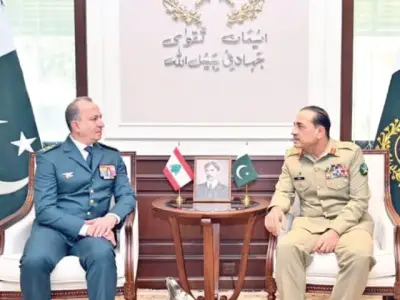
There is something quietly remarkable happening on the world stage right now, and Pakistan is at the centre of it. As the United States of America and Iran inch toward a negotiated resolution of their conflict, it is Islamabad, not any other country, that has emerged as the trusted go-between. Pakistan has hosted high-level talks, shuttled proposals between two sides that do not even speak to each other directly, and done what seasoned diplomats describe as the hardest thing in any dispute: made both parties feel heard without fully siding with either.
Why Pakistan Succeeded as Mediator
What made Pakistan credible was not military strength or economic leverage. It was neutrality, access, and the willingness to sit in a room and listen. In other words, it was mediation. Now here is the question worth asking: if mediation can help two adversarial countries find common ground, why are we so reluctant to use it closer to home?
The Crisis in Pakistan's Courts
Pakistan's courts are carrying a weight they were never designed to bear. Over 2.3 million cases are pending across the country's judicial system, with the heaviest burden falling on district courts where ordinary citizens, not corporations or governments, come seeking justice. Many of these people will wait years. Some will wait longer than that. And a significant portion of these cases are civil disputes that, at their core, do not need a judge to declare a winner. They need someone to help both sides find a way forward. That is precisely what mediation does, and it does it better than most people give it credit for.

Mediation: Not a Soft Option
Mediation is not the soft option. It is not what you resort to when you have already lost. It is a structured process where a neutral third party helps disputing parties reach an agreement on their own terms. The outcome belongs to the people in the room. That sense of ownership is exactly what makes it work. And when people shape the resolution themselves, they tend to honour it.
Arbitration vs. Mediation
The alternative that gets mentioned most often is arbitration. And while arbitration has its place, particularly in complex commercial matters where a binding decision is genuinely needed, it is far too heavy a hammer for most everyday disputes. Arbitration is, in essence, a private courtroom. It involves legal submissions, appointed arbitrators, procedural timelines and costs that can rival regular litigation. One party still walks away having lost. Relationships that could have been preserved are not. And in Pakistan's context, enforcing an arbitral award can itself become a fresh source of litigation.
Mediation, by contrast, is faster, cheaper and far more likely to produce an outcome both parties can live with. It does not clear your name or establish legal precedent, which is why it is not the right tool for every situation. But for the enormous volume of property disputes, commercial disagreements and civil matters clogging our district courts, it is a far more sensible first step than filing a case and joining a queue that stretches into years. Even in my professional practice, I prefer to include tailored mediation clauses in every contract I draft or review, not as boilerplate, but because a responsible lawyer's job is to keep clients out of court, not lead them into it.
A Global Lesson for Local Problems
When Pakistan stepped in between Washington and Tehran, it did so because it had something both sides needed: a relationship with each, no hidden agenda, and the patience to hold space without forcing a premature conclusion. The same principle applies in a boardroom or a family property dispute. The mediator does not win or lose. They create conditions for resolution. Undoubtedly, Pakistan has demonstrated on a global stage that this approach works. What truly needs to change is the instinct, from the moment a dispute arises, to reach for dialogue before reaching for a lawyer. Our courts are exhausted. Our litigants are tired. And somewhere between those two truths lies an answer we already know how to use.